
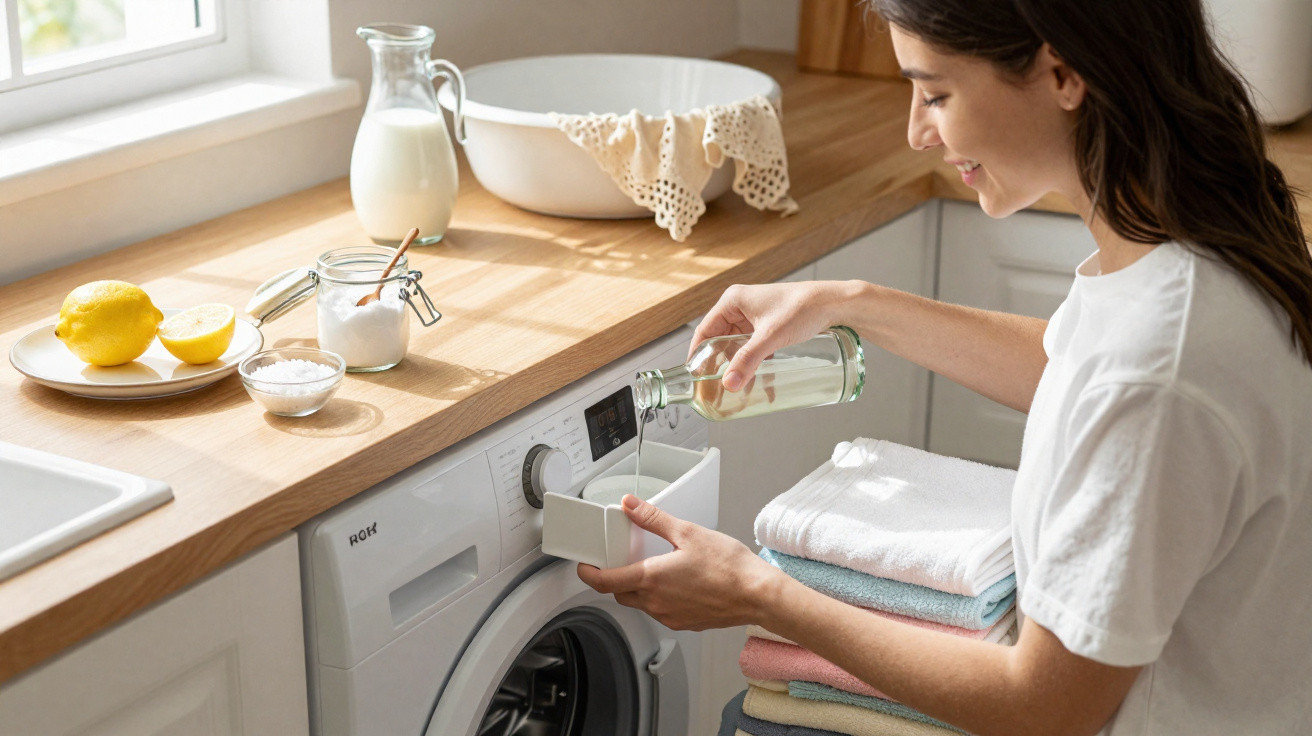
Fortunately, a few straightforward ingredients from the kitchen can help.
Many households automatically reach for washing powder or liquid detergent. Yet clothes can suffer, colours lose their intensity and the environment is affected too. Anyone who cares about their T-shirts and wants to look after their washing machine can turn to unexpected cupboard staples. Some foods clean remarkably well – provided they are used correctly.
Why using less detergent is often better
Manufacturers are often keen to recommend generous doses. In reality, the smallest amount is usually enough, especially for everyday clothes that are only lightly soiled. Using too much detergent can leave residues in the fibres, create a grey cast on whites and irritate the skin.
“The less chemistry there is on clothing, the gentler it is on fibres, colours and the environment – household remedies can make up for a great deal here.”
What is more, many fabrics do not need to go in the machine after every wear. Airing them out is often sufficient, including jeans, knitted jumpers and blazers. When washing is necessary, overlooked kitchen favourites can be useful.
Vinegar: the all-rounder for odours and limescale
Household vinegar is among the best-known alternatives in the laundry room. It breaks down limescale, neutralises odours and leaves laundry feeling softer.
How to use vinegar correctly
- Pour around 50–100 ml of clear household vinegar into the fabric-softener compartment.
- It is suitable for normally soiled laundry, particularly towels and sportswear.
- Start the machine as usual; no extra detergent is needed for lightly soiled items.
Vinegar tackles limescale deposits inside the machine and reduces stale odours. This is particularly helpful in hard-water areas. Take care with very delicate textiles, such as wool and silk, and if in doubt test it on a small section first.
Baking powder and bicarbonate of soda against grey whites
Baking powder and pure bicarbonate of soda are classic household products. Both absorb odours and support the cleaning process, especially for white laundry.
Add baking powder straight to the laundry
Sprinkle one sachet of baking powder, or one tablespoon of bicarbonate of soda, directly into the drum with the clothes. Then select a short or economy programme. It is particularly useful for:
- Yellowed white T-shirts
- Musty tea towels
- Slightly discoloured bed linen
“Baking powder brightens and neutralises odours – ideal when whites no longer look properly bright.”
For heavily soiled laundry, the powder is not a replacement for a full detergent, although it can significantly reduce the amount needed. Those who frequently wear sportswear may notice a distinctly fresher basic clean.
Lemon: a fresh scent and gentle bleaching
Lemon juice has a mild bleaching effect, is antibacterial and adds a fresh scent. It works well for light-coloured cotton laundry and kitchen towels.
The lemon method for light laundry
Here is how it works:
- Add the juice of one lemon to around 500 ml of warm water.
- Soak light-coloured, hard-wearing items in it for 30 minutes.
- Then put them in the machine and wash on a short programme without detergent.
This can often lessen stains caused by tea, coffee or fruit. The lemon method is only suitable for coloured laundry to a limited extent, as lemon juice may slightly fade intense colours.
Salt: a secret weapon against fading colours
Salt is more commonly associated with cooking or icy pavements. In the laundry room, it can help stabilise colours and lift light dirt.
“New, boldly coloured items in particular benefit from a salt-water soak before going into the machine for the first time.”
How to use salt for clothing
- For new coloured textiles, use one tablespoon of salt per litre of cold water.
- Soak the clothing for one hour, then rinse it briefly with clean water.
- Next, wash it on a gentle programme; for lightly soiled items, this can be done without detergent.
The salt solution helps bind excess dye so it does not run as much later. For regular washing, add two to three tablespoons directly to the drum to help colours stay vibrant for longer.
Milk for delicate fabrics
It may sound unusual, but it works surprisingly well in certain situations. Milk can help soothe and brighten fibres, particularly with delicate fabrics or slight discolouration.
A milk soak for blouses and lace
Whole milk, or at least milk with some fat content, is ideal. Proceed as follows:
- Pour cold milk into a bowl or basin.
- Soak delicate, light-coloured clothing in it for one to two hours.
- Rinse with cold water afterwards and give it a short wash on the delicates cycle.
Slightly yellowed lace and thin summer blouses in particular can look fresher again after this treatment. However, this method is not enough for stubborn stains.
Which household remedy is best for what? A quick overview
| Household remedy | Use | Suitable laundry |
|---|---|---|
| Vinegar | Odours, limescale, softness | Towels, sportswear, everyday laundry |
| Baking powder / bicarbonate of soda | Brightening, odours | White T-shirts, bed linen, tea towels |
| Lemon | Gentle bleaching, freshness | Light cotton, kitchen laundry |
| Salt | Colour protection, light cleaning | New, coloured clothing |
| Milk | Delicate fabrics, slight discolouration | Lace, fine blouses |
When these washing-without-detergent tricks really replace detergent
These methods are most useful without conventional detergent for lightly soiled clothing: T-shirts worn only briefly, unstained blouses or bed linen that mainly needs to smell fresh.
For heavy soiling, oil or grass stains, children’s clothes after the playground, or workwear from trades and catering, kitchen remedies alone are not enough. At most, they can be combined with detergent, such as detergent plus baking powder for greyish whites.
Common mistakes when washing without detergent
It is easy to make familiar mistakes when experimenting. Three points are particularly important:
- Using too much: More is not better – excessive vinegar or bicarbonate of soda can eventually damage rubber parts and seals.
- Choosing the wrong textiles: Wool, silk and technical sports fabrics react sensitively. Check first or use only a very mild approach.
- Using programmes that are too hot: Many kitchen remedies do not require 60°C. Lower temperatures protect both fibres and the machine.
Anyone who is unsure should first test the method on an older, less-loved item. This quickly shows how the fabric and colour respond.
How often should you wash without detergent?
Giving up detergent entirely and permanently is hardly realistic in an average household. A mixed approach makes sense:
- Light everyday laundry: occasionally use only vinegar or baking powder.
- Delicate textiles: treat them by hand where possible, using mild household remedies.
- Heavily soiled laundry: use normal detergent, but in a more economical dose.
Those who dose carefully and switch to kitchen helpers from time to time can noticeably reduce their annual detergent use. This is good for the household budget and eases the burden on waterways and wastewater treatment works.
Risks, limits and sensible combinations
Even if many of these methods sound tempting, kitchen remedies are not a free pass. Very sensitive skin may react to vinegar residue, for example. Dyes in cheap textiles can behave unpredictably when lemon juice is involved. Milk can also develop an unpleasant smell in warm conditions if it is left in the laundry for too long.
A sensible strategy relies on combinations: for instance, one-third less detergent plus baking powder for white laundry. Or use an economical wash with vinegar in the fabric-softener compartment to draw odours from sportswear. Running the machine regularly on a short cycle with vinegar helps prevent mould and musty drum smells – and means fewer strong cleaners are needed over time.
Ultimately, it is worth looking closely at your own laundry routine: how dirty are the clothes really? Which items are worn only briefly, and which get genuinely grubby? Anyone who doses more honestly and selectively reaches for vinegar, baking powder, lemon, salt or milk can achieve a surprising amount of cleanliness with items already waiting in the kitchen cupboard.






Comments
No comments yet. Be the first to comment!
Leave a Comment