
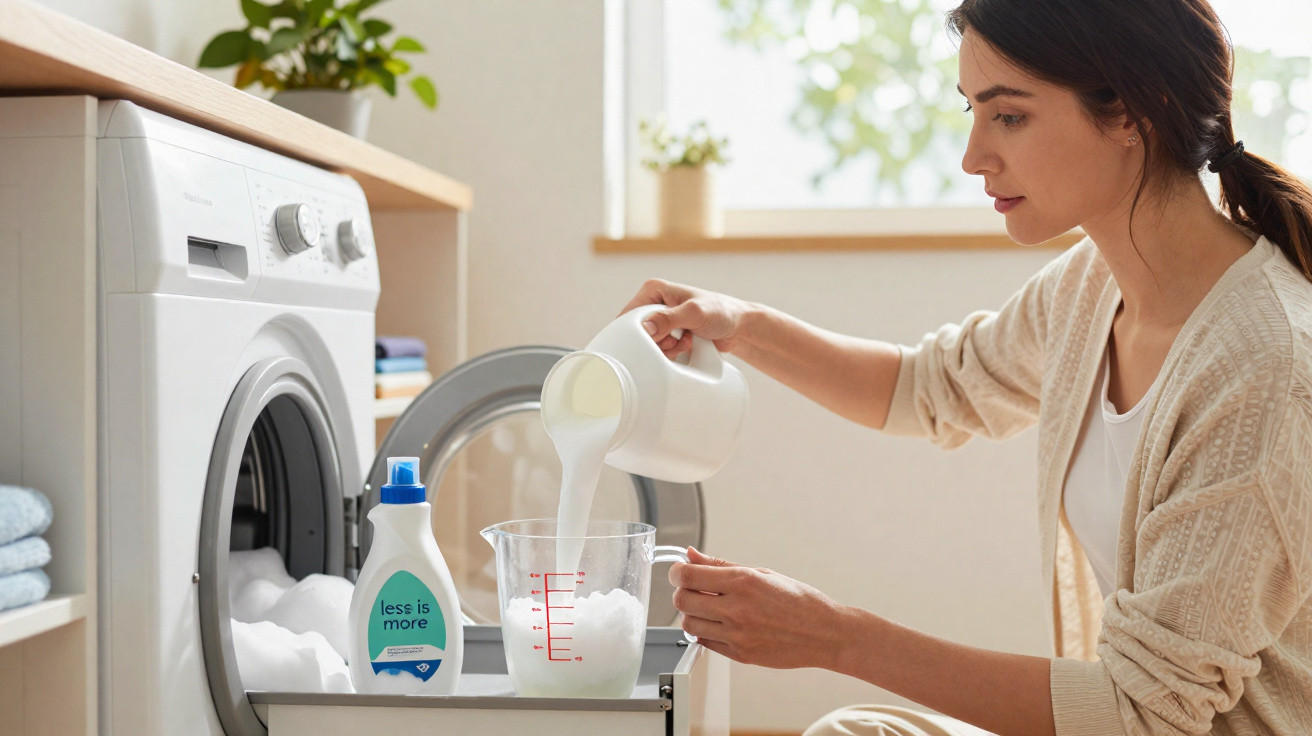
Most people hold hard water responsible for every rattle, odour and fault in the utility room. But, according to a cleaning expert I followed, the real washing-machine destroyer is sitting openly on the shelf, wrapped in pastel packaging and claims of “ultra clean”. It is a routine we repeat with every wash because we believe it helps. It does not.
The homeowner pulled open the drawer, poured in an extra capful of liquid “for good measure”, placed a pod on top because the towels seemed particularly grubby, and shut the door. The machine drew in water, hummed, and then slowed as suds climbed behind the glass like a storm cloud. The sweet fragrance was noticeable before the spin began. This is the detail detergent adverts never mention. The expert could only watch and wince. It was one minor but expensive error.
The silent saboteur is not limescale - it is too much detergent
As the cycle struggled on, the expert calmly explained what was happening. Modern washing machines use small amounts of water rather than vast quantities, and that is intentional. Pouring in extra liquid, using two pods or adding softener for more fragrance leaves the drum unable to rinse away the mixture. Foam cushions the laundry, sensors incorrectly interpret the water level, and the machine keeps trying to restore a balance it cannot achieve. Too much detergent does not produce cleaner clothes. It creates deposits on fabrics, in hoses and in hidden areas that may only become apparent when something fails.
Most of us have experienced laundry that smells “not quite clean”, then responded by adding more detergent on the next load. That is where the cycle begins. I watched the programme labour on, with the pump whining and the window full of suds like a bubble bath. The owner shrugged: “It always does that on towels.” The expert inspected the drain filter and removed a grey, waxy sludge made up of soap, softener and lint. The machine was not broken yet, but it was becoming slower and more worn. If you listen carefully, you can hear that weariness.
The expert set out the unattractive reality in clear stages. Excess foam triggers additional rinse cycles, making the motor and pump run for longer, get hotter and wear out sooner. Suds can enter the pressure tube and fool the washing machine’s control system into believing there is more water present than there really is. That postpones spinning and puts pressure on the bearings. A sticky coating builds up on the door seal and spider arm, becoming acidic over time and damaging rubber and alloy. Hard water acts like sandpaper: gradual, abrasive and predictable. Overdosing behaves like sugar: it caramelises, causes blockages and damages components internally - quickly.
How to dose detergent like a professional and make your washing machine last longer
The expert’s solution begins with a smaller dose: use only the amount of detergent needed. Choose a high-efficiency (HE) detergent and reduce the amount to one-third to one-half of a cap for a normal load, or less for lightly soiled items. Base the dose on the size of the load and how dirty it is, rather than on routine. In many machines, powder rinses away more cleanly, particularly for everyday washing. Liquid detergents are useful for cold washes and oily marks, but should be used sparingly. Pods are suitable only for large, full loads - one pod equals one measured dose. Then, once a month, run an empty hot maintenance wash at 60°C (140°F) with a scoop of oxygen bleach rather than chlorine bleach.
Then remove the additional products that quietly create blockages. Do not use fabric softener on towels or sportswear, as it coats the fibres and leaves a greasy residue throughout the machine. If you enjoy fragrance boosters, use them infrequently because they are concentrated and cling to surfaces. Keep the door and detergent drawer slightly open so the drum can air out. Wipe the door seal after heavy or hot loads. Clean the drain filter every three months, or following a particularly messy wash. Let’s be honest: nobody really does this every day. Still, a handful of five-minute routines is preferable to replacing an entire pump or living with a damp, unpleasant-smelling utility room.
Here is the straightforward checklist the expert shares with clients.
“Use less, rinse better, go hotter sometimes, and let the machine dry. That’s the whole game. Most breakdowns I see are soap, not scale.”
- Detergent: begin with 1/3 of a cap for regular loads; alter the amount according to soil, not anxiety.
- Type: use powder for routine washing, liquid for cold washes, and only one pod for full loads.
- Monthly: run one hot maintenance cycle with oxygen bleach.
- After washing: leave the door and drawer open, then quickly wipe the door seal.
- Quarterly: clean the drain filter and look for coins, hairpins and compacted lint.
What this means for your home, clothes and budget
A washing machine is now a small ecosystem, with restricted water use, intelligent sensors and delicate routes where detergent, lint and body oils come together. Look after it as a system and the noise reduces, odours disappear and the spin becomes more even. You may find that clothes feel cleaner with fewer products rather than more. The machine will sound more settled, while your energy bill may fall slightly because programmes no longer finish with repeated rinses. Perhaps you mention it to a neighbour, they laugh, try it, and then message you to say their towels came out fluffier without softener. That is the change: subtle, noticeable and infectious. It begins by using less.
| Key point | Detail | Benefit for the reader |
|---|---|---|
| Overdosing causes damage faster than limescale | Foam confuses sensors, puts pressure on pumps and leaves a corrosive coating | Fewer repairs, less noise and a longer machine lifespan |
| Dose for soil, not fear | HE detergent at 1/3–1/2 cap; one pod only for full loads | Cleaner laundry, with less residue and more effective rinsing |
| A simple monthly routine | A hot maintenance wash with oxygen bleach; air the drum and drawer | No musty odour, fewer blockages and more consistent spins |
FAQ
- Is powder really better than liquid? Often, yes. Powder usually rinses away more cleanly and leaves less coating in low-water machines. Liquids are helpful for cold washes and greasy stains when used lightly.
- Can I use vinegar as a softener? Using it occasionally in the rinse is fine for many machines, but use only a small amount. Do not combine it with chlorine bleach, and do not depend on daily doses.
- What is the right amount of detergent for hard water? Start with a modest dose, then increase it slightly if clothes feel slick or look dull. Use the lowest amount that removes soil while rinsing away completely.
- How often should I clean the drain filter? Every three months, or after loads involving hair, sand or pets. Check it sooner if programmes take a long time or the machine smells.
- Do I still need a descaler? If you live in an area with very hard water, an occasional descaler or a hot wash with oxygen bleach may help. However, reducing detergent residue must come first.






Comments
No comments yet. Be the first to comment!
Leave a Comment