
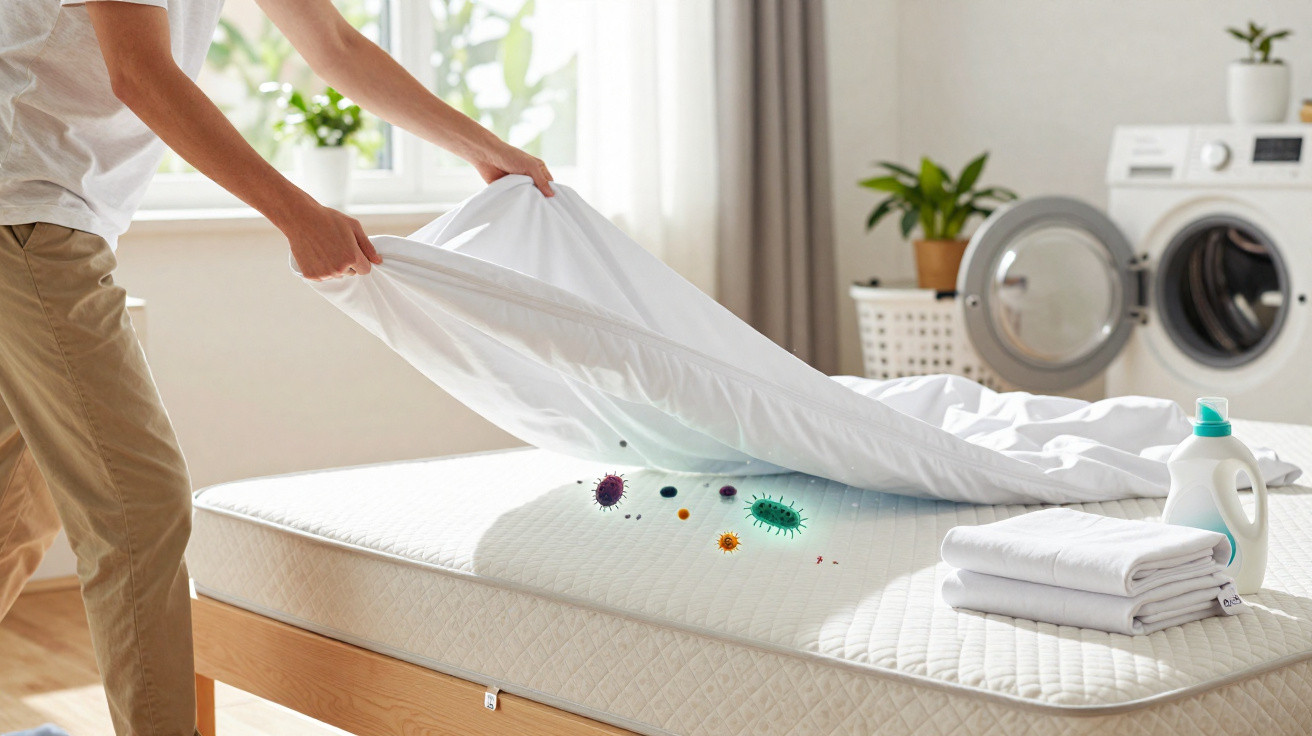
It sounds sensible, smells fresh – yet can still be a haven for dust mites.
When people put fresh bedding on the bed, they expect it to feel clean and hygienic. The washing machine is usually set to 40 °C, often using an Eco programme. Energy is saved, there is a fresh scent, and everything appears fine. Specialists in bacteriology and allergology take a far more critical view: the combination of sweat, skin flakes and moisture turns the mattress into a food source for dust mites – and at 40 °C, they survive with very little disruption.
What happens in your bed every night
A bed may look clean on the surface, but plenty is happening within it. Every night, we release moisture and organic matter, which is absorbed directly into the textiles.
- up to one litre of sweat each night
- skin flakes and skin oil (sebum)
- dust particles from the room
- pollen when sleeping with the window open
This mixture is absorbed by pillows, sheets and duvet covers. What looks “freshly washed” to us is an ideal feast for dust mites. Bacteria are also added to the mix, thriving in warm, damp conditions, especially in bedrooms with high humidity.
The cloud of fresh fragrance after a 40 °C wash can easily conceal the fact that dust mites, their droppings and some germs remain in the fibres.
For healthy people without allergies, this is not automatically a major problem. However, anyone with allergies or chronic respiratory conditions may soon notice the effects: a blocked nose in the morning, an urge to cough, itchy eyes or irritated skin.
What studies really show about 40 °C
The rise of the 40 °C programme is closely linked to saving energy. Many modern washing machines offer Eco programmes at around 40 °C, frequently combined with enzyme-based detergent. A study from 2025 produced mixed findings.
Its central conclusions can broadly be summarised as follows:
| Temperature | Effect on bacteria | Effect on dust mites |
|---|---|---|
| 40 °C, with enzyme detergent | up to 99 % reduction in normally soiled household laundry | only around 6–10 % of dust mites are removed |
| ≥ 60 °C, around 1 hour | Most common bacterial types are killed | virtually complete elimination of the dust mite population |
Enzymes in detergent break down stains and organic residues, and they work even at low temperatures. The drawback is that they have little effect on dust mites and their allergens. The mites themselves are resilient, while their faecal particles are even more so. As a result, the sheet may feel clean and soft, but the real allergy triggers remain.
Bacteriologists stress that temperature remains the most important physical factor for everyday disinfection. In effect, 40 °C is “body temperature plus a little extra”. That is enough to put microorganisms under stress, but not enough to kill them reliably.
When 60 °C is essential for bedding
Specialists recommend using a 60 °C programme selectively. Not every wash needs to use a high-temperature cycle, but there is little room for compromise in certain situations.
Typical situations requiring 60 °C
- Contagious illnesses in the household: Following stomach bugs, flu or inflammatory skin conditions, a 60 °C wash substantially reduces the germ load.
- House dust mite allergy: For a diagnosed allergy, medical specialists advise washing bedding at 60 °C at least once a month.
- Heavily soiled textiles: Blood, vomit or urine can be removed more safely at higher temperatures, not only visibly but also hygienically.
From around 60 °C, maintained for at least one hour, dust mites are reliably killed and most common bacteria are rendered harmless.
In a healthy household without particular allergy concerns, a lower-temperature programme is sufficient for many washes. Even so, it is worthwhile adding occasional “hygiene peaks” by scheduling a 60 °C cycle every few weeks, for example for pillowcases or fitted sheets.
A sensible washing routine for bedding
A clean sleeping space with fewer dust mites does not require extreme measures, only a consistent and straightforward routine.
How often should bedding be changed?
- every 7 to 10 days with normal perspiration and a healthy immune system
- every 4 to 7 days for heavy sweating, evening exercise or sleeping with pets in the bed
- at least weekly for allergy sufferers and people with sensitive airways
Anyone who sweats heavily at night or spends extended periods sleeping in high summer temperatures should shorten these intervals further. Children’s beds and baby bedding generally need changing more frequently too.
Wash programme, detergent and drying
For genuinely hygienic results, experts recommend traditional programmes such as “cotton” or “bedding” rather than the shortest express cycles. They run for longer, maintain the temperature more steadily and rinse more effectively.
- Detergent: A good all-purpose or colour detergent containing enzymes is generally enough. Laundry sanitiser is not normally necessary.
- Temperature: For everyday washing, use 40 °C on a long programme; around once a month, wash heavily used items such as pillowcases at 60 °C.
- Do not overload the machine: Fabric needs enough room for water and detergent to reach every fibre.
- Vinegar trick: Half a glass of clear household vinegar in the fabric-softener compartment can reduce odours and help counter limescale deposits.
Drying is at least as important. Dust mites love moisture. Bedding should be dried completely, either in a tumble dryer at a sufficiently high temperature or outdoors in the sun. UV light has a mild germ-reducing effect, while moving air removes residual moisture from the fibres.
How dust mites trigger allergies – and what helps besides washing
Dust mites are too small to see and do not bite. Their droppings are the problem: the proteins they contain trigger an immune response in sensitive individuals. When these particles enter the body through the airways or through direct skin contact, typical symptoms can develop.
Common signs of a dust mite allergy include:
- bouts of sneezing immediately after getting up
- a blocked or runny nose at night and in the morning
- coughing, sometimes with wheezing
- itchy, reddened eyes
- worsening asthma
Washing bedding at a sufficient temperature is only one element. Allergologists also advise:
- dust-mite-proof covers (encasings) for the mattress, pillow and duvet
- avoiding carpets and heavy curtains in the bedroom
- airing the room regularly, preferably with short, wide-open ventilation rather than windows left permanently ajar
- maintaining a constant room temperature of around 16–18 °C and relatively low humidity
Why low temperatures still have their place
Although 40 °C does little harm to dust mites, the programme is not entirely without value. In households without particular risks, it saves energy, helps textiles retain their colour for longer and is gentler on fibres. Modern detergents in particular are designed for lower temperatures.
The key point is not to assume that 40 °C creates a completely hygienic sleeping environment. It cleans everyday laundry, removes dirt and most germs in a normal household – but no more than that. Once this distinction is understood, the two approaches can be combined deliberately: wash more often at 40 °C for cleanliness and fabric care, and use 60 °C regularly when health protection matters or there has been illness in the home.
Anyone reconsidering their laundry habits does not need to change everything overnight. A realistic first step is to wash pillowcases at 60 °C every second or third time, include the fitted sheet in the same cycle, and at the same time keep the bedroom cooler and drier. This can noticeably reduce the dust mite load without causing electricity bills to soar.




Comments
No comments yet. Be the first to comment!
Leave a Comment