
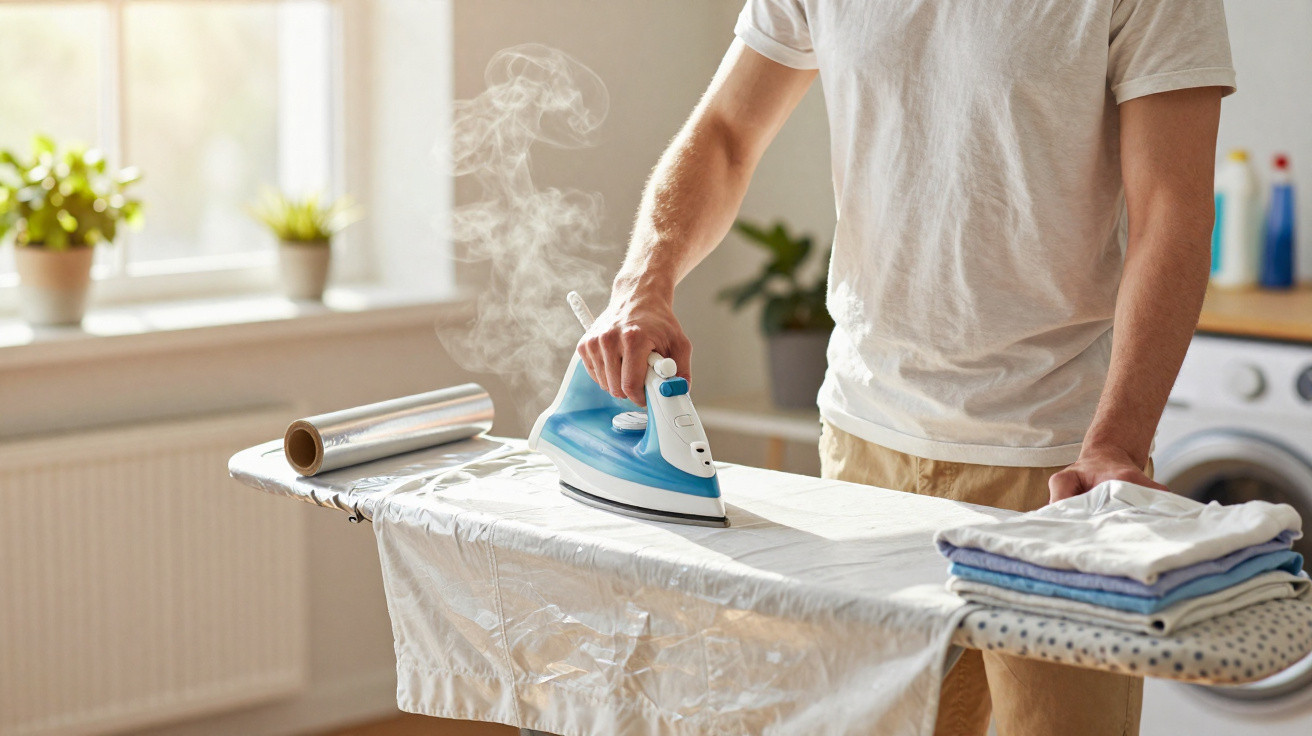
Putting aluminium foil on an ironing board has become a familiar practice in many homes, particularly for people looking to make household chores easier. Popularised by social-media tutorials, this method uses aluminium’s ability to reflect heat to smooth fabrics more effectively, speed up ironing and reduce the effort needed for heavily creased garments.
What does putting aluminium foil on an ironing board mean?
Putting aluminium foil on an ironing board means covering its surface with a layer of the material, normally underneath the cover or padding. The intention is to turn the board into a “heat reflector”, sending some of the iron’s heat back towards the garment.
In effect, the aluminium provides a thermal base that indirectly warms the underside of the fabric. The item is therefore heated from both sides, which can make ironing quicker, especially for dress shirts, heavier cotton fabrics and sheets that are difficult to smooth.
What is aluminium foil on an ironing board for, and what benefits does it offer?
The main purpose of aluminium foil on an ironing board is to boost the iron’s heat and make better use of steam. As a result, fabric responds to the temperature more quickly, something that may be especially noticeable in households with a large amount of laundry.
It can also help support older ironing boards by making the surface smoother and more even. The benefits most often mentioned by people who use this technique include:
- Speeding up ironing, particularly for badly creased items;
- Reducing the number of passes needed over the same area;
- Making better use of steam with irons that have this feature;
- Improving the finish on hems, collars and stitched areas;
- Minimising slight marks left on fabric by the board’s foam or internal structure.
How can aluminium foil be used safely on an ironing board?
For this approach to be both effective and safe, the layers must be fitted carefully. The following basic steps cover preparing, using and maintaining the ironing board.
Prepare the ironing board
The surface should be clean, dry and free from loose fabric, crumbling foam or rust. This helps prevent tears in the aluminium and marks on clothing.Place the aluminium foil
The shinier side is generally positioned facing upwards, covering the entire usable ironing area so that it reflects the iron’s heat more effectively.Secure the material
The edges can be attached underneath with heat-resistant tape or held in place beneath the original cover, preventing direct contact with the iron.Put the cover back on
The padding and cover above the foil shield it from tears and continual friction, helping the arrangement last longer.Monitor its condition during use
If the foil becomes very creased, torn or loose, it should be replaced so that it does not affect how smoothly the iron glides.
What precautions and limitations apply when using aluminium foil on an ironing board?
This technique does not replace the iron manufacturer’s instructions or the care guidance on garment labels. Delicate materials, including silk, lightweight viscose and heat-sensitive synthetics, still require lower temperatures, even when the ironing board has a reflective base.
It is also important to avoid prolonged direct contact between the aluminium and the iron’s soleplate, particularly with very hot appliances or those producing intense steam. This can prevent residue from building up and affecting the iron’s glide. With regular care of the board, cover and iron, aluminium foil can be a useful household tip for making ironing faster and more efficient without compromising safety.

Comments
No comments yet. Be the first to comment!
Leave a Comment