
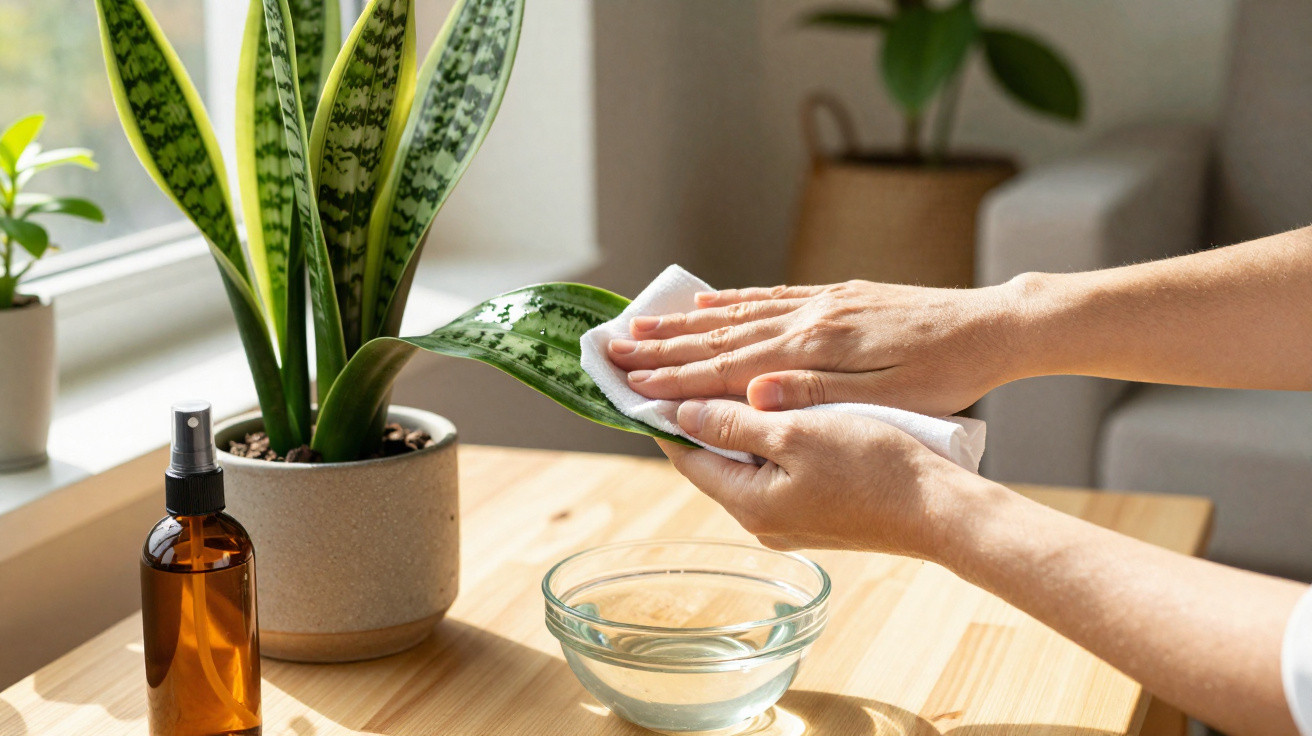
The plant commonly called the snake plant, a familiar sight in flats and offices, is often overlooked in everyday care. Although it is hardy, its upright, firm leaves collect dust, diminishing their natural sheen and affecting gas exchange. In enclosed settings, where windows remain shut for longer, a straightforward cleaning routine helps it retain a healthy appearance and function well, alongside essential care such as moderate watering and good light.
Why clean the snake plant with water and vinegar regularly?
Cleaning snake plant leaves with water and vinegar clears away the dusty film and can help limit unwanted micro-organisms. White vinegar contains low concentrations of acids that loosen light dirt without the need for harsh cleaning products, while the water dilutes the vinegar and makes the mixture easier to use.
Regular cleaning supports photosynthesis because heavy dust restricts the light reaching the leaves and may even block the stomata. Build-up is greater in places affected by pollution, cooking grease or high footfall; removing it lets the plant make better use of available light and maintain steadier growth. In addition, the snake plant is often mentioned in indoor air-quality studies as one of the species that may assist with filtering volatile compounds in interior spaces. Clean leaves enhance this effect by increasing the active surface available for gas exchange.
How to make and apply a cleaning solution for a snake plant
A water and vinegar solution for snake plants takes only moments to prepare, using room-temperature water and culinary white vinegar. A mild ratio prevents overly strong concentrations, which may be harsh on paler leaves or variegated varieties.
- Combine approximately 250 ml of filtered or standing water with 1 tablespoon of white vinegar.
- Transfer the mixture to a clean container, ideally one with a lid if it will be stored briefly.
- Lightly moisten a soft cloth, preferably microfibre, or a piece of cotton with the solution.
- Carry out a preliminary test on a small section of one leaf, particularly on varieties with yellow-edged foliage.
- If the colour remains unchanged after a few minutes, clean each leaf using gentle strokes.
Usually, wipe from the base upwards, following the leaf’s direction of growth and taking care not to soak either the plant or the growing medium. Once the damp cloth has been used, go over the leaves with a second, dry cloth to remove excess moisture, avoid dull marks and bring out their shine. For snake plants kept near very sunny windows, it is best to clean them during the cooler part of the day, preventing solution droplets from acting like tiny lenses and causing heat-related marks.
How often should a snake plant be cleaned and what signs should you watch for?
The right interval for water-and-vinegar cleaning depends on the plant’s setting. In sheltered indoor rooms, such as bedrooms and living rooms away from the street, monthly cleaning is generally enough. Near main roads, kitchens or open windows, however, it may be needed roughly every two weeks.
Several straightforward signs show when the plant needs attention and can also guide other routine care:
- Leaves look dull, feel rougher and have visible dust on their surface.
- Dry tips or dark patches may point to overwatering or intense cold.
- Very yellow leaves at the base can suggest waterlogging or compacted growing medium.
- Slow growth in a heavily shaded spot indicates a need for more indirect light.
What additional care supports a healthy snake plant?
Alongside gentle cleaning, a few basic measures keep a snake plant strong for many years indoors. The species copes well with periods without water, so allow the growing medium to dry out partly between waterings. Always use a pot with effective drainage to prevent root rot.
Keeping the plant in a spot with bright indirect light, turning the pot from time to time, and avoiding strong sunshine at peak hours-especially for pale-leaved plants-helps preserve its green colour and upright form. Changes in colour, texture or markings act as a natural “thermometer”: the sooner these signs are noticed, the easier it is to adjust water, light and products used in routine care. In very cold areas, shielding the snake plant from icy draughts and direct contact with cold windows also helps prevent leaves becoming soft or waterlogged-looking during winter.





Comments
No comments yet. Be the first to comment!
Leave a Comment