
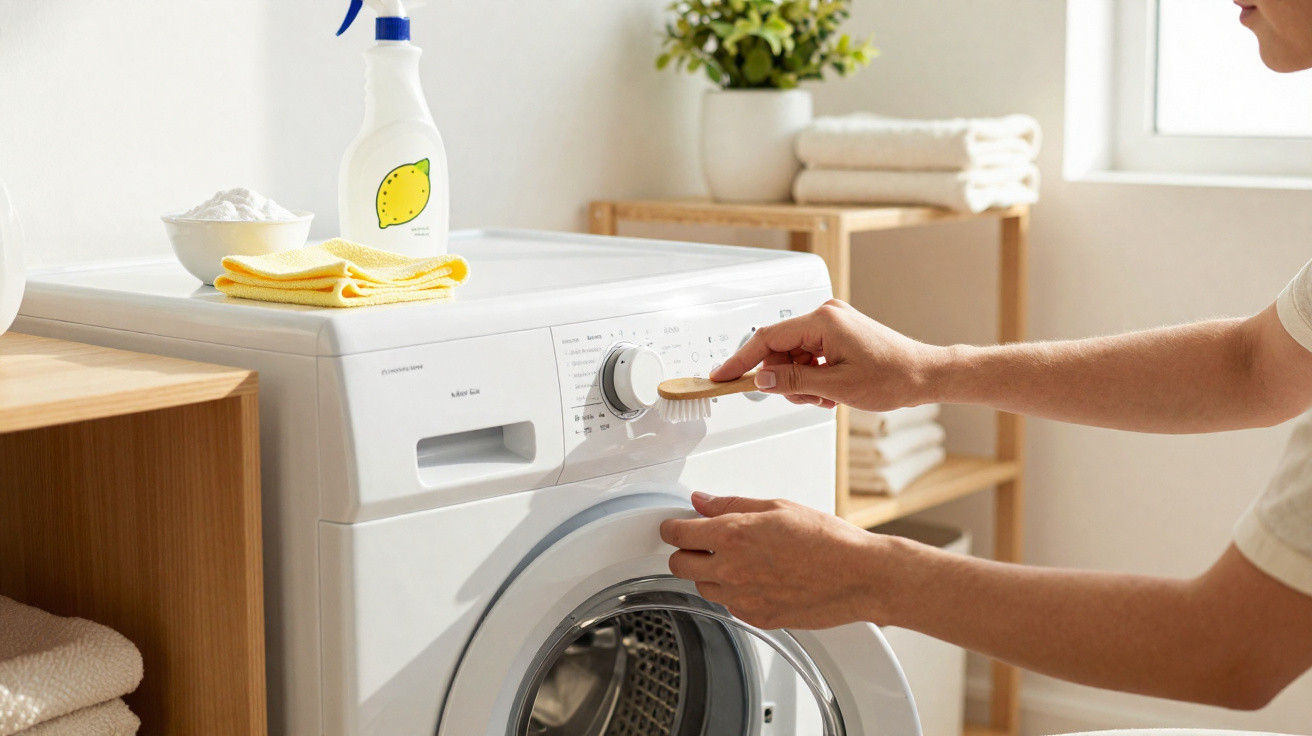
You open the washing machine door and notice it straight away: a sour, damp odour that certainly was not there when your towels came out freshly washed. You move closer for a look. The drum appears spotless, as does the detergent drawer. But when you ease back the rubber seal, you find grey streaks, slimy patches and a small row of doubtful black dots tucked into the fold as though they belong there.
That is when it hits you: your washing machine is hiding a dirty little secret, and it is living in the seal.
The hidden dirt inside your washing machine seal
The door seal should form a barrier that prevents water escaping. In reality, it can become a quiet collection point for everything left behind by your laundry: hair, lint, detergent deposits, fabric-softener sludge, stray coins, dog hair and even fluff from that missing sock. All of it is forced into the soft rubber ring, where it remains warm and damp.
At first, it is easy to miss. Looking at it from the front, the seal seems to be nothing more than grey rubber. Inside its folds, however, conditions are very different. Moisture lingers there, air cannot properly circulate and bacteria begin having their own private party.
One woman I spoke with was convinced that her machine had developed a fault because every wash emerged smelling like a damp cellar. She changed detergent, rewashed items at 90°C, moved to “eco” cycles and even put washing outside to air during winter. Nothing made a difference. Then, one evening, frustrated by the problem, she pulled the seal forwards with her fingers.
Inside, she discovered a compressed strip of slime, scraps of tissue and a black ring around the bottom. It was as if somebody had drawn inside the seal using a mouldy marker. For months, she had effectively been washing her clothes in a miniature swamp. The worst thing was that the machine had looked “clean” on the outside throughout.
The same situation happens in thousands of households. Mould does not simply appear from nowhere; it begins with residue. When detergent and fabric softener are not rinsed away completely, they stick to the rubber and combine with the tiny fibres shed by clothes. Add the water left standing after every cycle and the conditions are ideal for growth.
Mould is only the visible end result of this process. Before black marks become apparent, biofilm and bacteria have already built up. This is why the smell usually arrives before the dots. Once the seal starts to darken, the issue has normally been developing quietly for weeks.
The exact routine that prevents mould before it begins
This straightforward, almost dull routine is the one that genuinely works. There is no miracle cleaner or secret trick involved, only a set order of steps. Open the washing machine door fully, then carefully draw back the rubber seal with your fingers. You should see an inner lip hidden behind it, and possibly a drainage hole at the bottom. This is the problem area.
Take a clean microfibre cloth and soak it in warm water with a splash of white vinegar. A ratio of roughly one part vinegar to three parts water will do. Wring out the cloth, then clean the inside of the seal all the way around, working into the folds and running your fingers along the rubber. Take your time: you are not merely “passing over” it, but lifting away concealed grime.
Next comes the stage most people leave out: drying. With another dry cloth or an old hand towel, work around the entire seal again to remove all remaining moisture. It may add a minute to the task, but it makes all the difference. Water held in that fold turns stale, while dry rubber is far less welcoming to mould.
Follow this routine weekly if the machine is used every day, or every ten days if you do less washing. It may sound demanding on paper, yet it takes no more than three minutes in practice. Let’s be honest: no one is likely to do it every day, and that is not necessary. The important thing is not allowing mould to have a permanent pool party in the seal.
Another quiet error many of us make is shutting the door as soon as a cycle ends. We press the final button, take out the laundry, close the door and leave. It looks “tidy” from the outside, but the inside becomes a sauna: warm, humid air held in a dark, enclosed space. Mould could hardly request a better home.
A washing machine technician I interviewed put it bluntly:
“If I could change one habit in every home, it wouldn’t be detergent choice. It would be: stop suffocating your machine between washes.”
Between cleans, treat your machine as something that needs air. At a minimum, leave its door slightly open and pull the seal forwards with your fingers so that it can dry out.
- Clean the seal weekly with a cloth dampened in vinegar water.
- Use a dry cloth afterwards, ensuring no moisture is left concealed.
- Keep the door and detergent drawer open after every wash.
- Use less detergent than you might expect to limit sticky deposits.
- Run an empty hot “maintenance” cycle once each month.
Living with a washing machine that does not secretly smell
Something shifts at home once your washing machine no longer smells like a neglected changing room. You open the door and smell only… nothing. Better still, there is the neutral, clean scent of slightly warm metal. Towels feel truly fresh again, and T-shirts no longer develop that odd “re-wet and it stinks” smell when caught in the rain.
You also gain a little more faith in your laundry. When you give somebody a towel or sweatshirt, you are no longer quietly wondering whether they will notice a hidden musty smell. It is a modest, practical reassurance, but it reduces a small piece of daily background worry.
With time, this quick cleaning habit becomes part of everyday life. You take out the final T-shirt, wipe the seal, leave the door open and get on with your day without another thought. There is no fuss and no enormous “deep clean” every six months once mould has already taken hold.
The simple reality is that the seal does not need to be flawless; it only needs to stay ahead of mould. A little lint now and then will not spoil a wash. The real priority is preventing a damp, sticky coating from forming and sitting there for days. That layer is where odour, bacteria and those tiny black dots begin.
You are also helping your machine behind the scenes. A clean, dry seal is less prone to cracking, becoming misshapen or leaking. The glass door remains clearer, the drum smells fresher and the pump takes in less debris. Quietly, in this very ordinary job, there is a small feeling of control.
You cannot control all the chaos of everyday life, but you can pull back this rubber ring, wipe it clean and know with certainty that your laundry is genuinely clean rather than merely seeming so.
| Key point | Detail | Value for the reader |
|---|---|---|
| Clean inside the seal folds | Once a week, use a vinegar-water cloth followed by a dry cloth | Prevents residue accumulating until it becomes mould and unpleasant odours |
| Let the machine breathe | After every wash, leave the door and detergent drawer slightly open | Cuts down moisture, making it harder for mould and bacteria to grow |
| Light maintenance habits | Use less detergent and run a hot empty cycle each month | Keeps the complete machine fresher and helps extend its lifespan |
FAQ:
- How often should I clean the washing machine seal? For a family household, or where the machine is used frequently, once a week is best. If you wash only a few loads each month, cleaning it every 10–14 days is generally sufficient, provided you also leave the door open between washes.
- Can I use bleach on the seal to remove mould? You can, although it should be used with care and not for every clean. Over time, bleach may weaken rubber. Begin with warm water and vinegar. For stubborn, visible mould marks only, use a highly diluted bleach solution and rinse thoroughly afterwards.
- What if my seal is already covered in black spots? Give it a thorough clean using vinegar water, then scrub gently with an old toothbrush. Where the rubber is cracked, sticky or mould has penetrated deeply into the material, having the seal replaced is the best option.
- Does the type of detergent affect mould in the seal? Yes. Excess liquid detergent and large amounts of fabric softener create more residue. Using slightly less, and occasionally choosing powder or a lighter detergent, reduces the sticky coating that mould feeds on.
- Is leaving wet laundry inside the drum a big deal? Leaving clothes for an hour is not a problem. Regularly leaving them for half a day or overnight traps moisture and encourages bacteria. If this happens often, a smelly seal will almost certainly develop eventually.



Comments
No comments yet. Be the first to comment!
Leave a Comment