
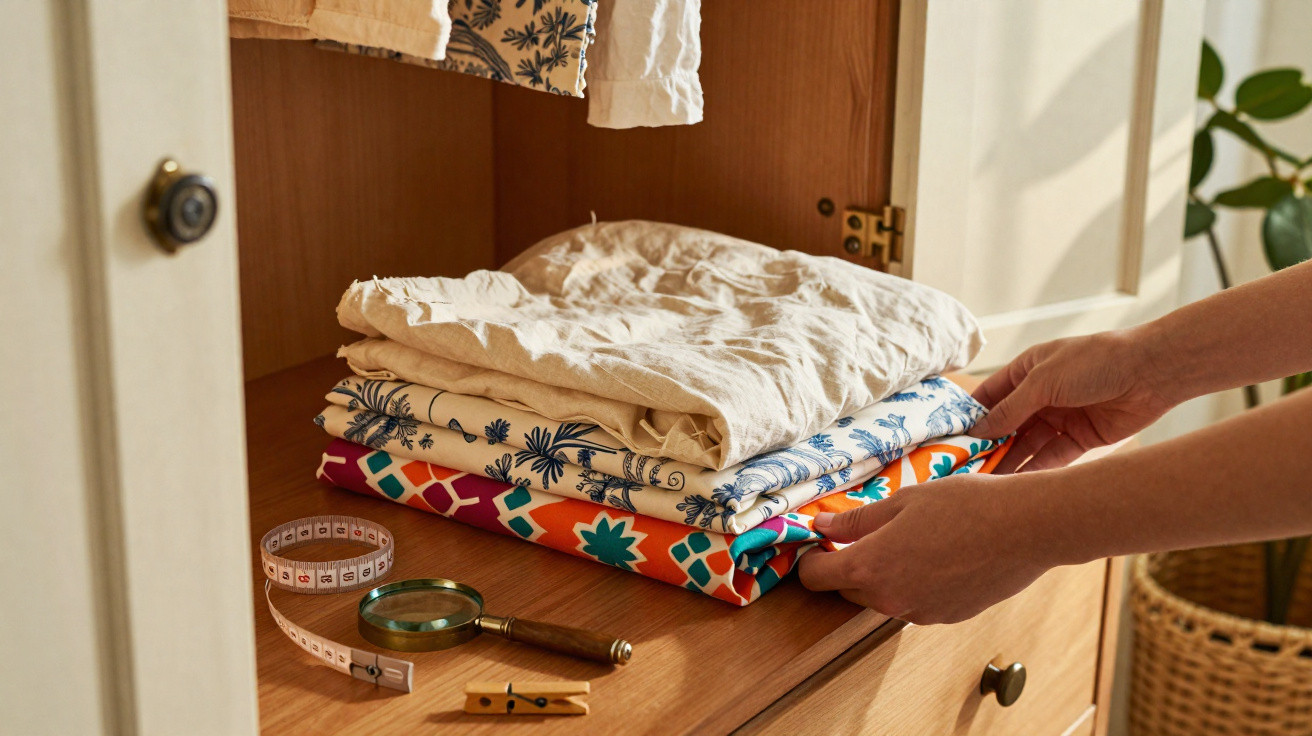
Anyone who has inherited old bed sheets, tablecloths or fabric remnants rarely thinks of money. Yet the market for historic fabric is booming. Certain textiles from family collections are so appealing to designers, collectors and interior decorators that they readily pay three-figure sums per metre.
Why old fabric can suddenly be worth serious money
The second-hand textiles market has developed rapidly in recent years. It is no longer solely about vintage fashion, but specifically about fabrics that are scarcely produced in comparable quality today.
“Fabrics made before around 1960 in particular combine a high thread count, durable natural fibres and historic dyes that are clearly superior to modern mass-produced goods.”
Specialist institutes have pointed this out for years: natural fibres from earlier decades were grown, processed and woven differently, and more densely. Traditional dyeing methods also play a part – such as madder root for red shades or natural indigo for blue – developing a distinctive depth over time.
On specialist platforms, collectors and professionals now pay between €50 and €150 per metre for original fabrics from this period. Heavy linen sheets, historic decorative textiles with cult motifs and vividly coloured cotton fabrics from the 1970s and 1980s are especially sought after.
How to tell whether an old fabric is among the desirable pieces
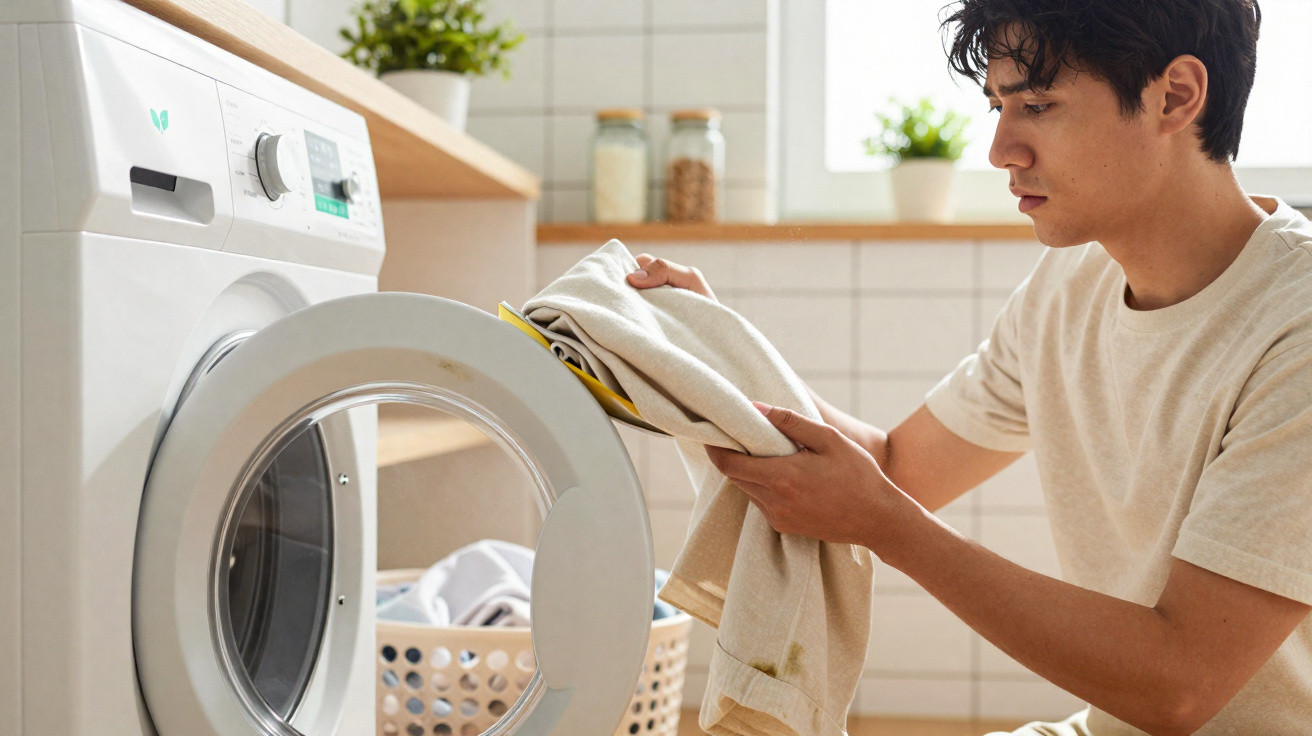
Before anything goes into the textile recycling bag, it is worth taking a systematic look through wardrobes, chests and boxes:
- Bring everything out: trousseau linen, embroidered sheets, table linen, curtains, fabric on rolls and forgotten remnants.
- Handle the fabric: high-quality material has weight, drapes softly and, in the case of linen or hemp, feels rather cool against the skin.
- Hold it up to the light: a dense, even weave indicates good quality.
- Inspect the reverse: if the pattern remains clearly visible on the back, this suggests a high-quality printing or weaving technique.
Anyone unsure which fibre is involved can, with great care, use the traditional burn test – preferably outdoors and only on a tiny thread.
A simple burn test to identify the fibre type
A small thread taken from the edge is enough:
- Pure natural fibres (for example linen and cotton): burn quickly, smell like burnt paper and leave a grey ash that crumbles easily.
- Synthetics or blended fabrics: melt, crackle and form a hard black bead.
Once this initial sorting is complete, it is worth focusing on three specific categories that are currently in particularly high demand: heavy linen sheets, classic cotton scenic fabrics and colourful cult prints from the second half of the 20th century.
The three types of fabric collectors are actively seeking
1. Heavy linen sheets from trousseau collections
Old linen sheets often date from around the turn of the 20th century. At the time, they were bought as part of a wedding trousseau and used rarely, or only carefully. Typical identifying features include:
- embroidered monograms or initials
- substantial weight, often more than 800 grams per sheet
- a cool, smooth feel and a slightly stiff drape
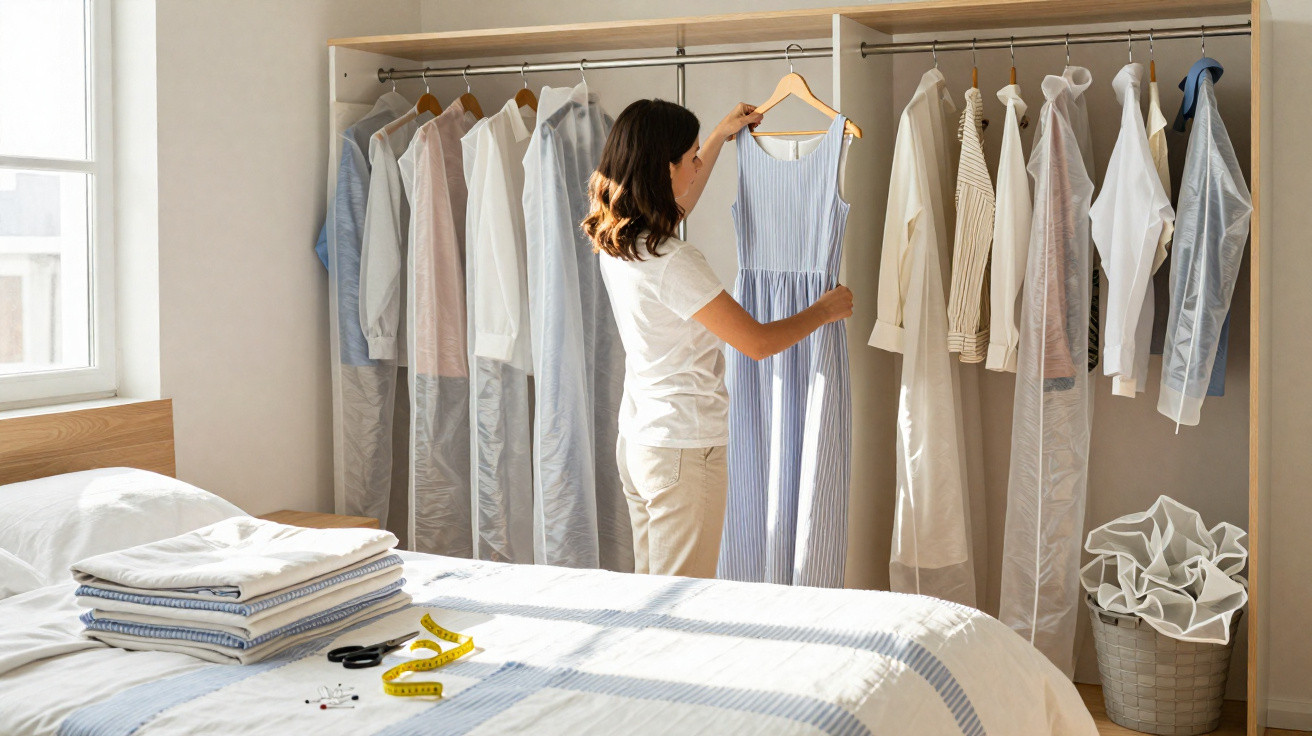
Designers now cut them into high-quality summer dresses, loose-fitting trousers or jackets with a vintage character. In interiors, they become cushion covers, curtains or upholstery covers. A larger set of intact sheets can fetch several hundred euros from professional upholsterers and makers.
“Old linen is exceptionally hard-wearing, breathable and softened by years of washing – that exact combination is scarcely affordable in newly made fabric.”
2. Historic scenic fabrics for country-house enthusiasts
Printed cottons featuring rural or romantic scenes are highly sought after – hunters, shepherdesses, dancing groups and pavilions, often in a single colour on a pale ground. These fabrics were long used in country-house interiors, castles and manor houses.
How can a valuable piece be recognised?
- a single-colour print in red, blue or violet on a cream or slightly yellowed ground
- a reverse side that is almost as clear as the front, without heavy bleeding
- larger, continuous picture scenes rather than small motifs repeated constantly
Professional interior decorators use these fabrics for cushions, wall hangings, chair covers or decorative panels. The crucial factor is that the scenes have not been cut apart and still exist as larger sections.
3. Colourful cult prints from the 1970s and 1980s
Another insider tip is printed cotton fabric from the late 1970s and 1980s. This means bold patterns with crisp outlines, often geometric, floral or featuring graphic symbols.
Signs that a piece is sought after include:
- strong colours that have barely faded despite their age
- clearly legible information in the selvedge, such as the manufacturer’s name and sometimes a year
- an uncut fabric remnant where possible, meaning full width and a complete pattern repeat
These fabrics now appear in limited fashion collections, streetwear capsules or as statement panels in modern homes. Complete pieces command particularly good prices, while individual scraps fetch considerably less.
How the value of vintage fabric is assessed
At first glance, the price ranges may seem high, but they follow clear criteria. The main factors are:
| Factor | Effect on price |
|---|---|
| Condition | Stains, holes and fading reduce the value substantially |
| Rarity of the motif | Unusual scenes or colour variations attract higher bids |
| Documented provenance | Selvedge prints, monograms and old labels create confidence |
| Usable length | The larger and more uniform the piece, the higher the price per metre |
For particularly coveted designs, collectors pay €50 to €150 per metre. A set of clean, heavy linen sheets can bring several hundred euros from an upholstery workshop or design studio if all pieces have a similar appearance and show no major damage.
Where vintage fabrics sell best
Anyone looking to turn their finds into cash should not simply rely on the nearest car-boot sale. Using several routes in combination makes sense:
- Specialist online platforms: collectors can filter by fibre type, decade, provenance or manufacturer.
- Online auctions: particularly suitable for rare motifs or complete rolls of fabric.
- Markets and fairs: fabric and textile markets, vintage fairs and antiques markets.
- Selling directly to professionals: designers, tailoring studios, upholsterers and set designers.
For colourful cotton fabrics, an uncut remnant is especially attractive. Scenic textiles score highly when the lengths retain complete rows of motifs. Heavy linen is most convincing when offered as a set with similar texture and colour.
How to prepare fabrics for sale
A little care is worthwhile before photographing the fabrics and creating a listing. Old sheets and tablecloths in particular often look yellowed after decades in a cupboard, even when their structure remains excellent.
“Many badly yellowed linen pieces can be brightened remarkably with one wash and a little oxygen bleach – without ruining the fibre.”
Practical steps:
- Wash gently; linen can generally tolerate hotter temperatures, while decorative fabrics require more caution.
- Use an oxygen-based bleach rather than chlorine for white linen pieces.
- Dry flat and iron carefully to avoid creases.
- Take large, sharp photographs of both the front and reverse.
- Record details such as selvedge prints, monograms and any defects.
A listing should always state the exact measurements, the suspected fibre type, approximate age and condition. Anyone who has carried out the burn test can mention it openly, as this helps build buyer confidence.
Risks, pitfalls and how to avoid them
Not every old textile is a treasure. Common issues include hidden mildew stains, moth damage and brittle fibres. Cotton in particular may have suffered badly when stored incorrectly. Check first: if the fabric tears when pulled gently, it is unusable for most purposes.
Counterfeits or modern reproductions in retro patterns are another consideration. Some manufacturers reissue popular historic motifs. These textiles may be attractive, but they do not reach the prices achieved by originals. Signs include modern labels, colours that look overly perfect and synthetic fibres blended into the weave.
Anyone uncertain can consult local upholsterers, tailoring businesses or textile historians. Some offer an assessment for a small fee. At markets, an experienced dealer’s eye is often enough to distinguish genuine treasures from decorative but less valuable mass-produced goods.
How the trend affects sustainability and everyday life
The expanding market for old fabrics also has an environmental dimension. Every reused length of linen and every historic decorative textile saves new production, land use and chemicals. At the same time, family history remains visible: a great-grandparent’s sheet becomes a modern kimono, while an aunt’s curtain becomes a sofa throw.
For many buyers, this very history is what matters. A dress made from linen dating to 1910 or a cushion made from 1970s fabric carries an identity that off-the-peg fashion cannot provide. The next time you open an old chest in the cellar, it is worth thinking of collector prices rather than bulky waste – and examining every strip of fabric closely before discarding it for good.

Comments
No comments yet. Be the first to comment!
Leave a Comment