

An overlooked fabric helper from the linen cupboard can often protect your clothes far more effectively.
Spring brings sunshine as well as the annual wardrobe clear-out. Heavy coats, wool jumpers and scarves are moved to the back, while lighter clothing takes centre stage. Winter garments often end up in cheap plastic covers – a practical idea, but something of a nightmare for fabrics. An old sheet or unwanted duvet cover can perform the same job far more gently.
Why plastic harms your clothes over time
Moisture, heat and mould: the invisible plastic chamber
Plastic garment bags may initially seem like a smart answer: they zip up, are transparent and can be stacked. In reality, however, they create a microclimate that puts real strain on your clothes.
- Moisture gets trapped: Even the slightest remaining dampness after washing is enough. It has very little opportunity to escape from plastic.
- Heat builds up: On warm days, the bag can quickly become a miniature sauna for your favourite items.
- The risk of mould increases: Dampness and warmth provide perfect conditions for mildew marks and musty smells.
- Odours linger: Plastic does not absorb moisture, so smells practically “stick” to the fibres.
There is also the static charge produced by synthetic covers. It attracts dust and may roughen delicate wool fibres. Sensitive garments such as cashmere, silk and quality suits can therefore age more quickly, even while they appear to be “protected”.
Plastic does not preserve your clothes – it seals them inside an airtight bag where moisture and odours have little chance to escape.
Why fabric offers better “armour” for your wardrobe
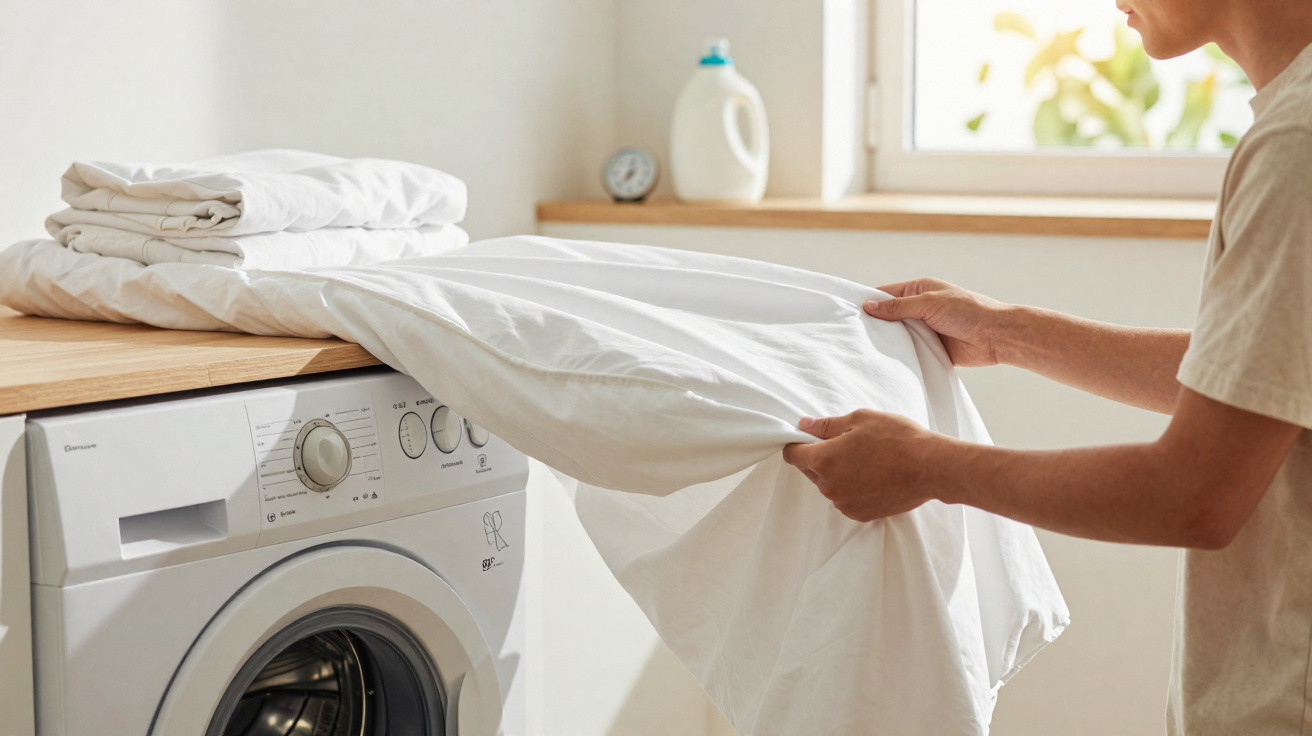
This is where a material that almost everyone has at home becomes useful: old bedding. Sheets, pillowcases or a worn duvet cover made from cotton or linen can do far more than simply go into a textile recycling bag.
Natural fibres such as cotton and linen:
- allow air to circulate,
- absorb excess moisture,
- release it gradually,
- provide reliable protection from dust,
- prevent heat from building up in the wardrobe.
This creates a kind of breathable protective layer around each garment. Fabrics hang undisturbed, retain their shape and are exposed to less stress from heat, condensation and static electricity.
Turn an old sheet into a fabric garment cover
A materials list using items already at home
You do not need a sewing studio to turn old bedding into a protective solution. A few basic supplies are entirely sufficient:
- an old sheet or duvet cover, ideally in tightly woven cotton or linen
- sharp fabric scissors
- a needle and thread
- several sturdy wooden hangers or robust clothes hangers
The fabric should be reasonably strong. Very thin, heavily worn sheets are better used as cloths or dust covers for shelving rather than for heavy wool coats.
Step-by-step: from sheet to cover
This method works for most coats, dresses and suits:
- Cut the fabric: Cut rectangles measuring roughly 100 cm long and 60 cm wide from the sheet. Make them a little larger for long coats.
- Fold it: Fold each rectangle in half lengthways to form a long, narrow shape.
- Sew the side seams: Stitch both long sides and the bottom edge closed. This makes a fabric pocket.
- Create the hanger opening: In the middle of the closed top edge, cut a small semi-circular opening. The hook of the clothes hanger will later pass through here.
- Finish the edges: Secure the edges with a few stitches so the fabric does not fray around the opening.
- Fit the cover: Hang the garment on its hanger, pull the hook through the opening and slip the cover over the item – done.
With a few straight seams, a forgotten sheet becomes a made-to-measure protective cover that lasts for years – completely without plastic.
How fabric covers change the condition of your clothes
No more mustiness or yellow marks
Anyone taking a coat from a fabric cover after several months will notice the difference immediately: it smells neutral or faintly fresh, rather than of a cellar or plastic. Cotton absorbs excess moisture from the air, helping to prevent condensation marks, which commonly appear on collars and shoulders.
Light-coloured shirts and blouses benefit in particular. In plastic covers, they can quickly develop yellowish patches, especially where traces of deodorant or small amounts of perspiration remain. Beneath a breathable fabric cover, these residues dry out instead of being left to “ferment”.
A longer life for your favourite pieces
Clothing keeps its shape better when it is not constantly exposed to heat, dust and tension. Suit jacket shoulders stretch out less, wool fibres are less likely to felt, and delicate materials such as viscose retain their drape for longer.
Over time, this can save a substantial amount of money:
- less dry cleaning because garments remain neutral-smelling,
- replacing basic items less often when they “suddenly” look old,
- no need to buy more short-lived plastic garment covers.
More order in the wardrobe without an extra budget
Fabric covers as part of a more mindful wardrobe
Taking proper care of clothing often leads people to sort it more critically as well. While sewing the covers, many realise: I do not actually need so many items. This often encourages a more considered approach to buying new clothes and creates room for a wardrobe centred on favourite pieces.
Using old bedding as a wardrobe helper reduces waste and gives the inside of the wardrobe a calm, consistent appearance. Covers in natural shades or white look neat and clear without seeming clinical.
More ways to use old bedding
Once you have acquired a taste for it, unwanted bedding can be repurposed in many other ways. For example:
- dust covers for top shelves or open clothes rails
- fabric bags for scarves, hats or handbags
- shoe bags to stop footwear rubbing against clothes
- simple curtains in front of open bedroom shelving
This is especially helpful in small flats, where it creates visual calm and avoids the need to keep buying new plastic storage boxes.
What to consider when using fabric garment covers
Cleanliness, airing and choosing materials
A few details matter if this method is to work properly:
- Wash the fabric first: Use only clean, odour-neutral bedding, otherwise its smell may transfer.
- Allow clothes to dry: Always make sure garments are completely dry before putting them into a cover.
- Air the wardrobe regularly: Leave wardrobe doors open for a while from time to time, particularly if the room is humid.
- Choose the right material: Pure cotton or linen is ideal; blended fabrics with a high polyester content offer fewer benefits.
In very damp rooms, you can also place small bags of rice or specially filled moisture-absorbing granules in the wardrobe. They draw in some of the humidity and provide additional support for the fabric covers.
Use plastic only where it makes sense
It is not possible to condemn plastic completely in the home. Sturdy boxes can be useful for moving house or for very dusty lofts. For everyday use, particularly with higher-quality clothing, fabric shows its strengths. Many users report switching entirely to fabric covers after one or two seasons because their clothes look fresher and better cared for.
When you come across old sheets during your spring clean, do not discard them too quickly. With just a few simple steps, they can become a protective cover that treats your clothes better than any crackling plastic bag – while also making your wardrobe a little calmer, more natural and more durable.



Comments
No comments yet. Be the first to comment!
Leave a Comment