
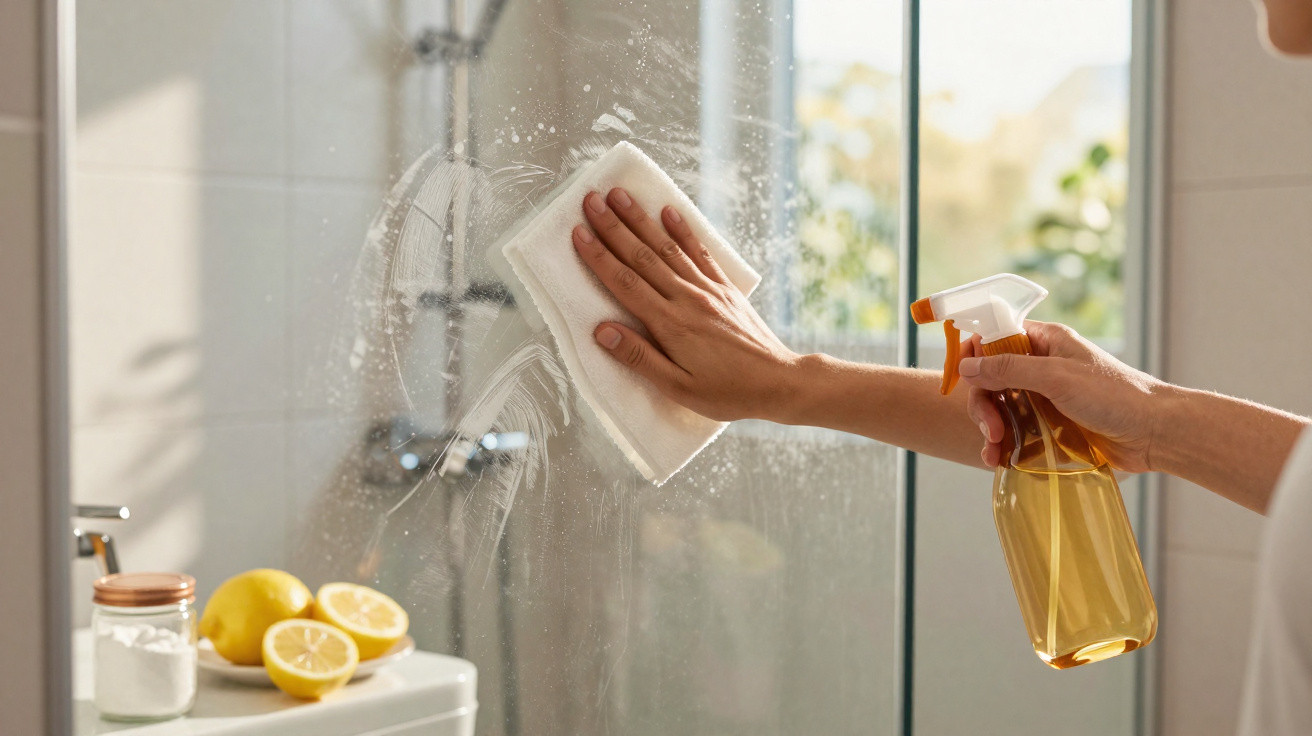
The shower stayed spotless for roughly… three days. Then that familiar white mist returned to the glass, like a film you cannot quite clear from your vision. With the water running, you look at the milky marks and think back through every spray and scrubbing session you have already attempted. The limescale is unmoved. It simply remains there, reflecting the light and leaving the whole bathroom looking slightly uncared for.
You open the window, cough slightly because of yesterday’s “extra-strong” cleaner, and decide that you do not need your lungs to be as clean as the shower. Surely there is a better approach.
The trouble with glass shower doors is that they hold on to the evidence of every single drop of water.
Why limescale sticks so firmly to glass shower doors
Walk into any well-used family bathroom and the shower door practically tells the story of the week. There may be a faint mark where somebody rested a hand, a cloudy curve at shoulder level where the water lands each day, and tiny white specks and dull patches that remain even after you wipe them with a towel. That persistent film is limescale: hard-water residue left behind in layer upon layer.
At first, it is hardly noticeable. Then, one day, you realise the glass has stopped shining. Once you have spotted it, there is no ignoring it.
Imagine a friend is staying over and you have carried out a frantic 20-minute tidy. The cushions are straight, the washing-up is out of sight and the basin has had a quick wipe. You open the shower to put out a fresh towel and, under the brighter light, the glass suddenly resembles frosted privacy glass. The problem is, you bought clear glass.
You find an old bottle of chemical limescale remover, spray until the fumes sting your nose and close the door. Ten minutes later, your eyes are sore and the limescale has only faded slightly. It feels rather disappointing: such a harsh smell for so little progress. This is often when people begin searching for gentler, more straightforward solutions.
Limescale is, in essence, a crust of minerals. As hard water dries on glass, calcium and magnesium are left behind in a fine, almost unseen coating. The next shower adds another layer on top. After weeks of this, the deposits scatter the light, turning clear glass into a dull, cloudy surface.
Chemical sprays can break down this crust quickly, but they can also irritate your nose and skin, and sometimes affect the metal parts of the shower. Natural acids, including vinegar and lemon, work more slowly but dissolve the same minerals without the chemical mix. The key is not brute force; it is allowing enough contact time and using suitably gentle tools.
Gentle ways to remove limescale from glass shower doors
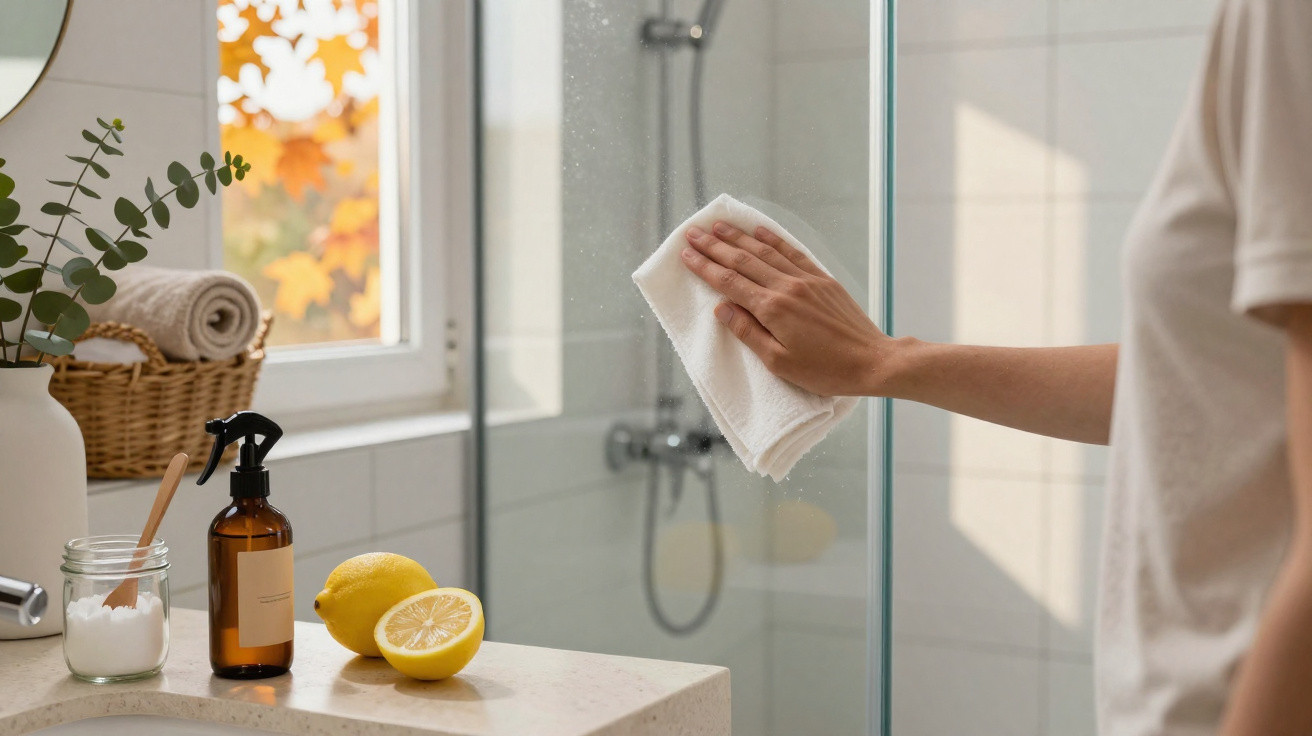
One of the most straightforward options is an old-fashioned one: white vinegar and patience. Gently warm a cup of white vinegar before transferring it to a spray bottle. Apply it generously across the glass, paying particular attention to the lower section where water often gathers. Leave it in place for 10–15 minutes while you get on with something else.
Next, use a soft microfibre cloth or non-scratch sponge and rub in circular movements, beginning with the heaviest deposits. Rinse with warm water, then pull a clean squeegee or dry cloth down the glass from top to bottom. After only one treatment, that hazy coating can often lessen dramatically. If the build-up is thicker, repeat the process and extend the soaking time instead of scrubbing more aggressively.
When vinegar on its own is not enough, add a mild helper: baking soda. Spray the door with vinegar, then sprinkle a small amount of baking soda onto a damp cloth and press it against the most stubborn areas. You will hear a gentle fizz as they react directly on the glass. That reaction helps loosen the mineral deposits without damaging the surface.
Work carefully and slowly, as though you are polishing the glass. Rinse thoroughly to ensure no powdery white residue is left behind, then dry the door. Many people only understand how much limescale had accumulated once they can see their reflection clearly again. And sometimes, the first treatment will not leave the door looking like a showroom display. That is perfectly normal where deposits have been left for months or even years.
There is one simple fact: the secret is consistency, not heroics. Spraying once a year and expecting it to remove five winters’ worth of hard-water residue is simply unrealistic.
“When we stopped using harsh sprays daily and switched to a simple vinegar routine once a week, the bathroom actually smelled nicer, and the glass stayed clearer,” explains Clara, a homeowner who used to wear a mask every time she cleaned her shower. “I realized I didn’t need nuclear products, I just needed a habit.”
- Use warm vinegar instead of cold vinegar for greater dissolving power.
- Pick a soft microfibre cloth rather than abrasive pads that could scratch the glass.
- Allow products to sit on the limescale instead of scrubbing frantically.
- Rinse and dry the glass to stop minerals in the water restarting the cycle.
- Stick to one uncomplicated routine that you will genuinely maintain, rather than an elaborate ritual you eventually give up.
Keeping glass shower doors clear rather than battling them
Once you have reclaimed the glass from its chalky cloudiness, the biggest difference comes from small everyday actions. Give it a quick pass with a squeegee after the final shower of the day. Open the bathroom window slightly or use the extractor fan so humidity does not remain for hours. Take five seconds to inspect the lower edges, where water naturally settles before drying into a crust.
In reality, nobody manages this every day. Life becomes hectic, towels accumulate and someone dashes off to work late. For this reason, a mild weekly refresh using vinegar or lemon is often more achievable than an unrealistic rule to clean perfectly after every shower. The objective is not a bathroom from a magazine; it is glass that does not make you wince whenever you walk past.
| Key point | Detail | Value for the reader |
|---|---|---|
| Gentle acids beat harsh sprays | White vinegar or lemon juice dissolve minerals without heavy chemicals | Cleaner air at home and less irritation for skin and lungs |
| Soaking time matters | Leave solutions for 10–20 minutes before wiping | Less scrubbing, better results and a lower risk of scratching the glass |
| Small habits prevent buildup | Squeegee, ventilation, weekly light clean | Shower doors remain clear for longer with less effort overall |
FAQ:
- Question 1 Can vinegar damage my shower door or metal fittings? Used diluted or for reasonable contact times, white vinegar is safe for glass and most metals. Avoid soaking natural stone or marble with vinegar, and always rinse surfaces afterward.
- Question 2 What if I can’t stand the smell of vinegar? Add a few drops of essential oil (like lemon or lavender) to the spray bottle, or use fresh lemon juice instead. Good ventilation also helps the smell fade quickly.
- Question 3 How often should I clean to keep limescale away? In hard-water areas, a light weekly clean works well for most homes. Quick daily squeegeeing can stretch that to every two weeks, depending on how many people use the shower.
- Question 4 Is baking soda safe for glass? Baking soda is mildly abrasive, so use it gently on a soft cloth, not in hard scrubbing motions. When used this way, it’s generally safe and won’t scratch standard shower glass.
- Question 5 Do commercial “eco” sprays work as well as DIY methods? Some do, some don’t. Many are based on the same acids as vinegar or citric acid, just packaged differently. If you prefer ready-made, look for short ingredient lists and test on a small area first.


Comments
No comments yet. Be the first to comment!
Leave a Comment