

The first thing you register is the smell.
You have just cleaned the kitchen, opened the windows “for air”, and perhaps even burned an expensive candle promising “fresh linen” and “sea breeze”. For a short while, it works. Yet an hour later, the house has returned to that indistinct, shut-in smell that is difficult to describe. It is not dirty or precisely unpleasant, but it never feels genuinely fresh.
You begin wondering whether visitors notice it too. Friends reassure you: “Oh, it’s fine, it smells like a house.” Still, their homes somehow seem to smell nicer.
There is a reason. And you are probably making the same subtle mistake every day without knowing it.
The invisible reason your home smell feels “stuck”
Step into a hotel reception or a friend’s freshly cleaned flat and the difference is immediate: the air seems lighter. At home, by comparison, the atmosphere can feel heavy, as though yesterday’s dinner, last week’s washing and this morning’s shower are all hanging around at once.
Most people react in familiar ways. They use room spray, leave one window slightly open for 20 minutes, or put on another scented wash. It makes a difference briefly, before that mildly stale odour returns like background noise that cannot be switched off.
The strange thing is that you may be cleaning more thoroughly than ever, but the smell still prevails.
Imagine this.
You have spent Saturday morning scrubbing the bathroom, mopping the floors and wiping every surface that will stay put. You are hot and tired, the house looks neat, and you sink into the sofa thinking: “That’s it, spotless.” Then your partner comes in and casually asks, “Did you cook something earlier?”
You did not.
What they can smell is old bathroom moisture, yesterday’s stale bedroom air and a faint trace of last week’s frying in the kitchen. Candles and sprays have merely added fragrance on top. The underlying note never went away. That is the quiet reality in many homes: odours do not leave; they build up.
The major, mundane and decidedly unglamorous error? You address scent rather than air.
You clean the surfaces but overlook the actual volume of your home: the air moving through every room, fabric and corner. Stale air remains there, carrying moisture, cooking particles, skin cells, pet dander and residues from cleaning products. Without a proper route for air to leave, it simply circulates endlessly.
Honestly, hardly anyone does this every day. We open windows “when we think of it”, usually at the wrong moment or for too little time. Then we blame the dog, the bin or the weather. The real issue is inadequate, irregular ventilation, which turns your home into a slow cooker for smells.
How to ventilate like people whose homes always smell fresh
Homes that consistently smell fresh share one straightforward habit: organised airflow. Rather than a casual “I’ll crack a window sometimes”, they follow a brief daily routine that pushes old air out and draws fresh air in. Cross-ventilation is the simplest method.
Open at least two windows, or a window and door, on opposite sides of the home. Open them fully rather than leaving a narrow gap. Allow air to move through for 5 to 15 minutes, including during winter. The aim is not to lightly “freshen” the house; it is to flush it out.
You will notice the effect immediately. Air starts moving, doors might gently bang and papers may flutter. That is the old smell quite literally leaving the building.
The same principle matters most in the usual smell hotspots: the kitchen, bathroom and bedrooms. In the kitchen, use fans and extractor hoods while cooking and immediately afterwards, rather than 15 minutes later. In the bathroom, open the window or switch on the extractor every time someone showers, then leave it running for a while afterwards.
Overnight, the bedroom quietly fills with CO₂, sweat, skin particles and the scent of your bedding. Keeping the door slightly open and opening a window for a few minutes before bed and after waking can alter the room’s baseline smell completely. It may sound almost too easy. But this is where most people go wrong: they clean the basin and overlook the steam.
There is another aspect to this mistake. Many of us restrict airflow without noticing. Think of heavy curtains covering radiators, furniture pushed against vents, clothing piled behind doors and packed wardrobes that are rarely opened. Air needs pathways, just like people do.
“Think of your home as a pair of lungs,” explains an indoor-air specialist I spoke with. “You can’t just spray perfume into the lungs and call it fresh. They have to breathe in and out every day, or everything becomes stale from the inside.”
- Open opposite windows wide for 5–15 minutes each day to create a genuine exchange of air.
- Run kitchen and bathroom fans during use and afterwards, not only “when it smells”.
- Keep vents, radiators and door gaps clear so air can move between rooms.
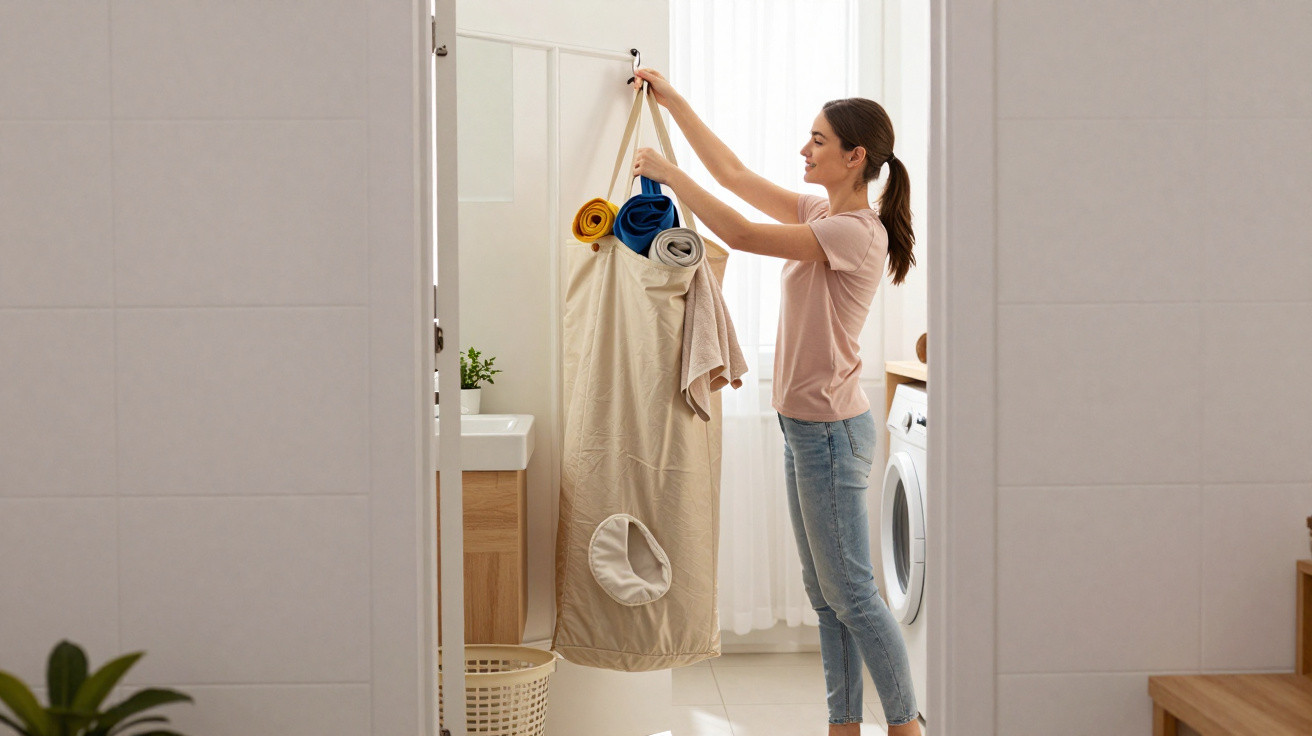
- Air wardrobes, shoe cupboards and laundry baskets regularly.
- Wash or dry soft furnishings in sunlight, including throws, cushions and curtains, as they retain long-term odours.
When your home finally smells like itself again
After a week or two of proper ventilation, a subtle change eventually occurs. You come in from outdoors and, for once, your home does not greet you with a wall of “yesterday”. Instead, it smells simply light and faintly clean-perhaps with a hint of detergent or coffee, but nothing weighty.
That is when you realise how much mental space a slightly stale home had been occupying. Smells are emotional. They connect with embarrassment (“Does my place smell weird?”), comfort, and the pride or ease you feel when somebody walks through your front door. Fresh air changes more than hygrometer readings; it changes how you experience your rooms.
You do not need a costly diffuser, a smart air purifier or another “odor-neutralizing” spray to achieve this. You need consistency and small, practical habits repeated without fuss: airing the house while the kettle boils, opening windows on opposite sides as you make the bed, or running the bathroom fan while brushing your teeth.
We have all had that moment of walking into someone else’s home and quietly thinking, “Why doesn’t my home feel like this?” The reason is not that they are cleaner, wealthier or naturally better at housework. They have simply allowed their four walls to breathe, day after day, until “fresh” became the normal setting rather than a temporary result.
Once you notice the change, other differences stand out. Towels dry more quickly. Steam clears from the mirror sooner. When you light a candle, it finally smells as the label promised, rather than as if it were fighting yesterday’s onions and steam.
You may never mention it to anyone. You simply open the windows with quiet confidence, pull a chair away from a vent, or leave your bedroom window slightly open even when it is cold. They are small, slightly imperfect acts that say this is a lived-in home, not a sealed box. Gradually, and almost effortlessly, the air you return to begins welcoming you rather than confronting you.
| Key point | Detail | Value for the reader |
|---|---|---|
| Daily cross-ventilation | Open windows on opposite sides fully for 5–15 minutes | Clears stale air and lasting odours instead of concealing them |
| Target “smell hotspots” | Use fans and windows while cooking, showering and sleeping, and afterwards | Prevents the kitchen, bathroom and bedroom from filling with humidity and particles |
| Unblock airflow paths | Keep vents and door gaps clear, and deal with odour-trapping textiles | Helps the whole home smell lighter with the same cleaning effort |
FAQ:
- Why does my house still smell even when I clean a lot? Because you are probably cleaning surfaces without replacing the air. Odours attach to moisture and particles that remain trapped indoors when there is no effective airflow.
- How often should I air out my home? For a typical home, opening windows fully once or twice daily for 5–15 minutes is generally sufficient, even in winter.
- Isn’t opening windows in winter wasting energy? Brief, intensive airing cools the walls less than keeping a window slightly open throughout the day. The air is replaced quickly, then you can close the windows and heat the home efficiently.
- Do scented candles and sprays help with bad smells? They can improve the atmosphere temporarily, but mostly cover up odours. Without ventilation, the stale air beneath remains.
- Will an air purifier replace opening windows? Purifiers may lower particle levels, but they do not bring in fresh oxygen or remove moisture as effectively. They complement real ventilation rather than replacing it.

Comments
No comments yet. Be the first to comment!
Leave a Comment