
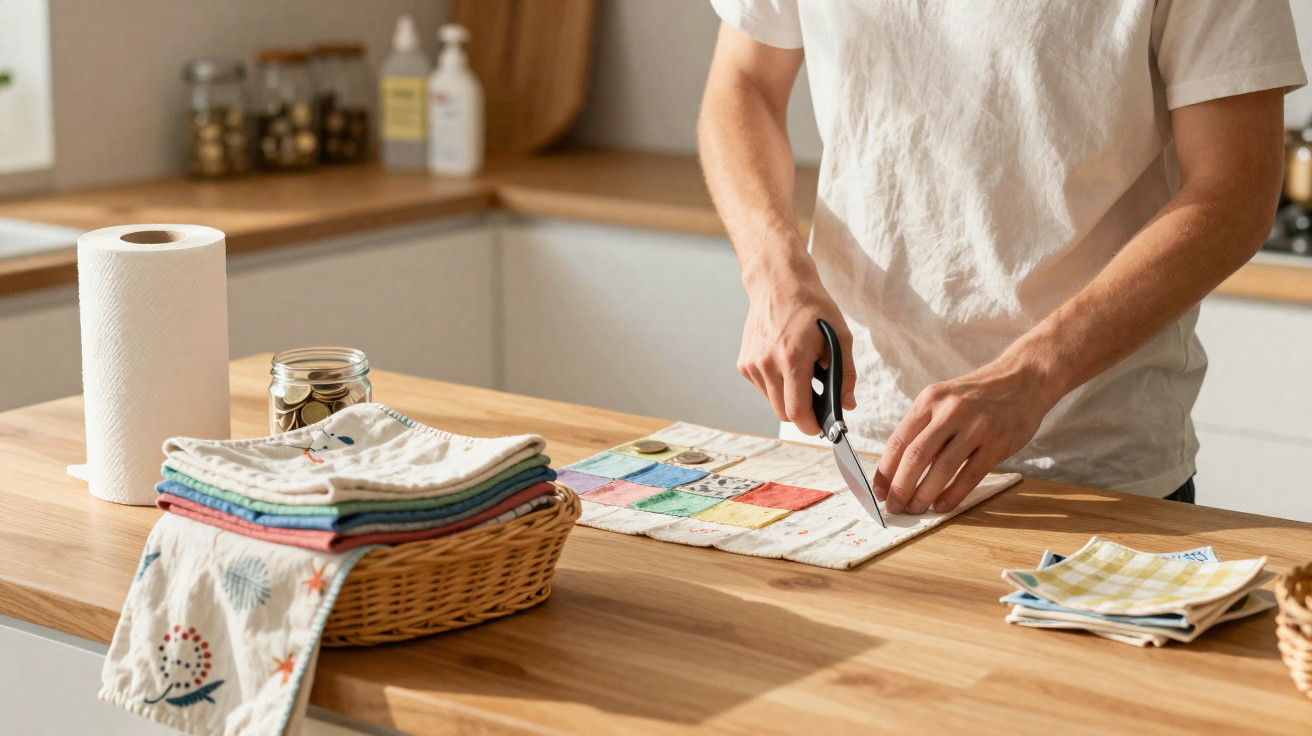
Supermarket prices are rising, yet one quiet drain on the household budget still finds its way into the trolley without question: kitchen roll. At the same time, forgotten bed sheets gather dust in cupboards or go straight into the bin. Ironically, those discarded sheets can make your kitchen less expensive to run and a little more sustainable for the long term.
Why kitchen roll quietly eats into your budget
Once you begin to notice it, it becomes obvious: you reach for kitchen roll all the time. A small coffee spill, a few crumbs, sticky children’s hands - tear off a sheet, wipe it up, throw it away. In many homes, paper towels alone add up to around €100 to €120 a year.
Every sheet you tear off is, in effect, a small banknote going straight into the bin.
Meanwhile, cupboards are often crammed with textiles that hardly anyone uses: bed sheets with tiny tears, faded patterns or slightly rough fabric. They are too good to discard but no longer attractive enough for the bed, so they end up at the very back of the pile. These very sheets can become a free, reusable alternative to kitchen roll.
Old bed sheets as cleaning champions: the fabric’s hidden strength
Cotton bedding in particular has nearly everything you need for everyday wiping. It is absorbent, dries reasonably quickly and withstands plenty of washes. It also feels gentler on surfaces than many conventional cleaning cloths.
The benefits are clear:
- No purchase costs: The material is already in the cupboard.
- Reusable: Cut it once, then use and wash it hundreds of times.
- Less waste: Less paper, fewer cardboard tubes and less plastic packaging.
- A clearer conscience: You keep textiles in use for longer instead of disposing of them early.
This tackles two issues at once: it reduces your reliance on disposable paper and extends the life of your textiles. At a time when resource waste is widely discussed, it is a very down-to-earth solution.
How to turn a bed sheet into sustainable kitchen roll
Getting started is surprisingly straightforward. All you need is a clean, dry bed sheet - preferably cotton - along with sharp scissors, a tape measure and some chalk or a fabric marker.
Step 1: Choose a suitable sheet
A smooth cotton fabric without an overly coarse texture is ideal. Lightweight, flat weaves work well on worktops and glass, while slightly denser materials are better for larger spills or wet surfaces.
- Stains are not a problem, provided the sheet has been freshly washed.
- You can simply avoid small holes when cutting the fabric.
- The larger the sheet, the longer one “cutting day” will keep you supplied.
Step 2: Cut practical everyday sizes
Lay the sheet flat on a table and smooth it out. Then fold it several times until you have a manageable stack. This lets you cut through several layers at once and saves time.
For standard use, sheets roughly the size of kitchen-roll squares are a good choice. In practice, side lengths of around 25 to 30 centimetres work well - similar to a regular kitchen-paper towel.
- Use a tape measure to mark out a grid of squares or rectangles.
- Draw the lines with chalk.
- Cut along the markings using genuinely sharp scissors.
There is no need to stick to a single size. Many households use several formats at once:
- Large rectangles: For baking trays, fridge shelves or large puddles.
- Medium squares: For worktops, the hob and everyday splashes.
- Small cloths: For hands, handles, door frames or pet bowls.
One double-bed sheet will usually produce a substantial stack, enough for several days of intensive kitchen use.
Prevent fraying: keeping the cloths neat for longer
Loose threads and frayed edges put many people off. They can quickly make the cloths look like they came from a box of old cleaning rags. A few simple measures will sort this out easily.
Simple ways to stop fraying
- Pinking shears: Scissors with zigzag blades cut edges in a way that slows fraying. Ideal if you do not want to sew.
- Zigzag stitch: Sew once around each cloth with an ordinary sewing machine. It takes a little time but makes the cloths very durable.
- Overlocker/serger: Anyone with one of these machines can finish the edges professionally in a matter of seconds.
- Fray sealant: Liquid adhesive for fabric edges is suitable if you do not own a machine - simply apply a thin line along the cut edges and allow it to dry.
This creates cloths that still look tidy after many washes and do not leave lint behind every time you wipe.
Smart storage: as convenient as real kitchen roll
Kitchen paper’s greatest advantage is convenience: one reach, one tear, job done. You can recreate exactly that feeling with fabric cloths.
If your new cloths are visible and within easy reach, you will automatically use them in everyday life instead of reaching for the disposable roll.
Storage ideas
- Fabric roll on a holder: Keep the cardboard tube from your last kitchen-roll pack, loosely wrap the fabric cloths around it and place it on the usual holder.
- Basket beside the sink: Stack the cloths, folded or rolled, in a small basket on the worktop.
- Two-basket system: Use one basket for clean cloths and another for used ones. Everything can then go neatly into the next wash.
If you have children at home, colour-code the baskets. This makes younger family members more likely to choose fabric rather than the paper roll.
What the cloths do well - and when paper still makes sense
These fabric pieces are suitable for almost every typical kitchen task:
- Spills of water, coffee or juice
- Wiping worktops and tables
- Drying washed fruit and vegetables
- Cleaning cupboard doors, handles and light switches
- Mopping up small puddles on the floor
For sensitive situations, many households still keep a small supply of paper in the cupboard, for example when dealing with raw meat or vomit. This is where disposable paper has a real advantage, as nothing contaminated with germs needs to be washed.
Wash, dry, reuse: keeping the system practical every day
To make the most of the savings and sustainability benefits, add the fabric cloths to your usual laundry routine without creating extra work.
| Step | Practical tip |
|---|---|
| Collecting | Keep used cloths in an open basket or mesh laundry bag so they do not become musty. |
| Washing | Wash them with towels or bedding at 40–60 °C. |
| Drying | Air-drying is perfectly sufficient; a tumble dryer makes them especially soft, but uses more energy. |
| Restocking | Once folded, put them straight back into the basket or onto the holder - then you will automatically reach for fabric. |
If you like, set aside a few cloths specifically for glass surfaces or windows. That way, they remain free from residual grease and kitchen dirt.
How much you can actually save
The amounts may not look huge at first, but they become noticeable over the years. If a household spends around €100 a year on kitchen paper and cuts that cost substantially, the total can quickly reach four figures over ten years - simply by changing what you reach for in the kitchen cupboard.
There is also an environmental benefit. Disposable paper requires trees and large quantities of water, while its manufacture and transport generate emissions. Every pack of kitchen roll saved means lower resource use - without giving up clean surfaces.
Practical examples and a few extra ideas
Once you start with one sheet, you will often spot other uses. Some families keep part of their cloth supply in the hallway for wiping wet shoes, while others use them in the car to quickly dry the windows in winter. Some deliberately cut particularly attractive sheets into neat, small pieces and use them as improvised fabric napkins.
Colour coding is a useful addition. For instance, you can stitch coloured thread around the edges or paint small dots onto the corners. This makes it easy to distinguish between cloths reserved for the kitchen, bathroom or pets. It reduces the spread of germs and brings a little order to the system.
If you are unsure, start with just one old bed sheet and use the fabric cloths alongside conventional kitchen roll. Experience shows that once the cloths are conveniently close at hand and work well, the paper roll is left untouched more and more often - and the household budget quietly breathes a sigh of relief.

Comments
No comments yet. Be the first to comment!
Leave a Comment