
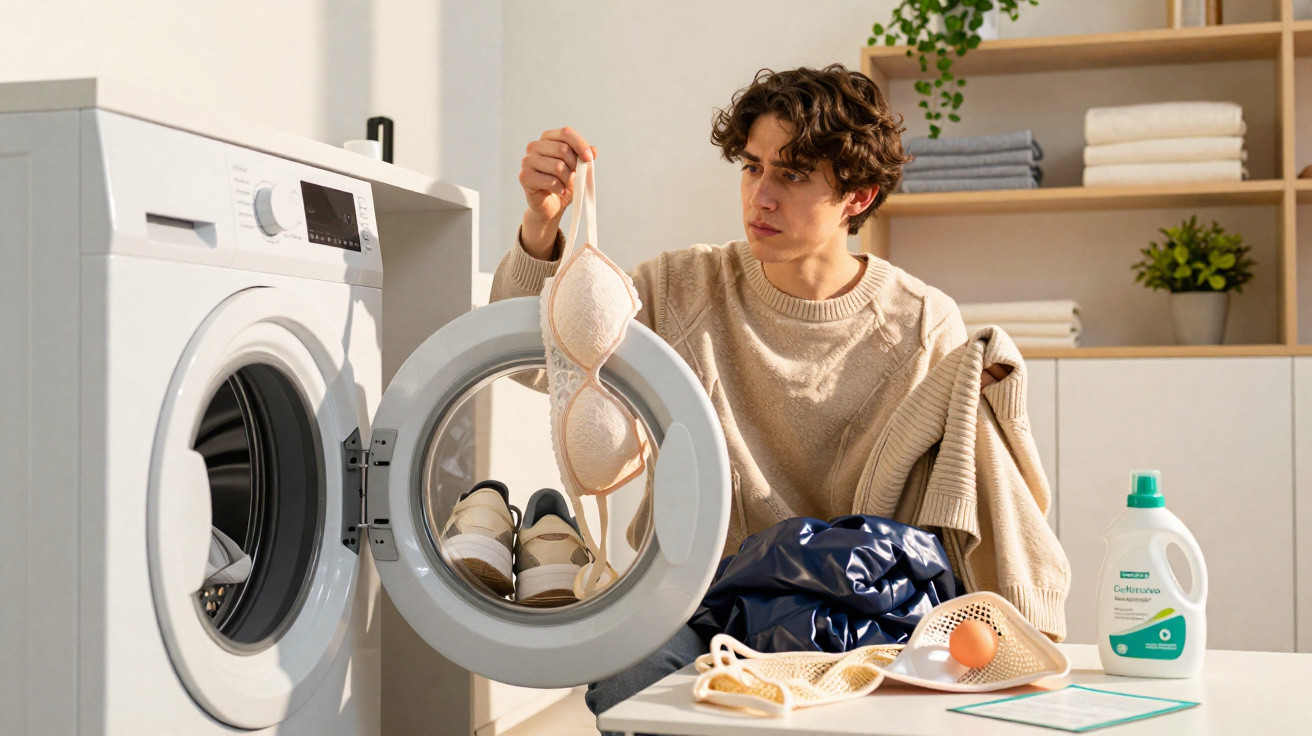
Many people automatically choose the standard cycle, put “anything” into the drum and press start. This can work for weeks or months, until the washing machine vibrates violently, cancels the spin cycle or a favourite jumper emerges two sizes smaller. These mishaps are usually not caused by a fault in the appliance, but by treating certain delicate textiles incorrectly. They simply do not belong in the machine, or may only be washed there under specific conditions.
Why certain textiles put real strain on the drum
The drum may seem sturdy, but it is not a steel vault. With every rotation, the machine accelerates, slows down and starts again. Anything hard, heavy or unevenly balanced acts like a small hammer inside it. Delicate fibres also suffer because they are not designed for this kind of stress.
Problem combination: hard items strike the drum, delicate fibres lose their shape, and water collects in textiles, making them suddenly extremely heavy.
Three warning signs should make you take notice straight away:
- unusually loud banging or rattling during the wash cycle
- the spin cycle starts, stops or feels “rough”
- textiles come out misshapen, stretched or noticeably smaller
Simply starting the next programme will make the issue worse. It is wiser to know which items cannot be treated like everyday T-shirts. The four biggest problem areas are bras, shoes, wool and water-repellent textiles.
Bras in the washing machine: small underwires, major damage
For many people, bras are items that can “probably go in with everything else”. That is exactly where the trouble begins. Hooks can catch on other garments, pull threads or tear lace. Built-in underwires are even more problematic: they can bend, push through the fabric or snap. All of this can happen during the spin cycle, when the drum is turning at high speed.
The metal parts can then scratch the inside of the drum or knock against it. In the worst case, broken underwires can pass through the drum holes into areas that should be protected. This is a classic reason for a machine suddenly making loud scraping or clattering noises.
How to wash bras correctly
The safer approach takes only a few seconds of preparation:
- always place bras in a laundry bag
- fasten every hook so it cannot catch on fabric
- select a delicates or hand-wash programme
- set the spin speed as low as possible
- dry them flat so the bra does not lose its shape under its own weight
Bras should generally stay out of the tumble dryer. Heat and vigorous movement can flatten foam, stretch elastic and cause cups to lose their shape.
Shoes in the drum: convenient, but risky
Putting trainers or sneakers in the machine with ordinary clothes may be tempting. Anyone who has tried it knows the result: the washing machine suddenly sounds like a concrete mixer. Every turn sends the hard soles against the drum, greatly increasing the strain on the bearings and suspension.
The shoes themselves also suffer. Glued components may come apart, cushioning elements can lose their shape, and leather or faux leather may crack more quickly. Although many materials used in modern shoes can cope with moisture, they cannot withstand constant agitation in a water bath.
When shoes can go in the washing machine – and the rules to follow
If they are sturdy fabric sneakers or trainers, careful preparation can prevent much of the damage:
- put the shoes in a strong laundry bag or dedicated shoe bag
- add several towels to cushion the impacts
- choose a low temperature (30°C or cold)
- use a low spin speed
- clean insoles and laces separately
High-quality leather shoes, business shoes and heavy boots should never go in the machine. A brush, lukewarm water and a mild cleaning product are far more suitable. After cleaning, shoes are best left to dry naturally, not on a radiator or in a tumble dryer.
Wool on a standard programme: the quickest route to child size
Wool is more sensitive to heat and movement than almost any other everyday fabric. High temperatures and vigorous rubbing make the fibres felt together. The result is a favourite jumper that is shorter, tighter and feels stiff. Many people have experienced this accidental “transformation” – an ordinary cotton wash cycle is enough to cause it.
Even moderate temperatures can damage wool. Combined with high-speed spinning, the fabric shrinks and becomes denser, while the jumper loses its elasticity. This cannot be reversed.
Washing wool correctly – keeping it soft and shape-retaining
Anyone wishing to protect woollen items should follow three basic rules:
- always use cold water or a dedicated wool programme
- use only wool detergent or detergent for delicates
- select a very short, low-speed spin cycle – or do not spin at all
Wet wool should never be wrung out or twisted. Doing so stretches the stitches and distorts the shoulders, sleeves and hem. Instead, place the garment in a towel, press gently, then dry it flat, for example on a clothes airer.
Water-repellent textiles: hidden weight, serious imbalance
Technical jackets, waterproof trousers and outdoor overalls have one particular feature: water does not pass through them easily. That is ideal when wearing them, but can be problematic in a washing machine. Water collects in folds, hoods or internal sections without draining away quickly.
When water pools in the fabric, a single item can suddenly become very heavy – throwing the entire system out of balance during spinning.
The machine detects the imbalance, tries to redistribute the load, restarts the spin cycle several times or stops it altogether. At the same time, the mechanics are put under strain because the drum drive repeatedly has to work against unevenly distributed weight.
How technical clothing can safely stay in the washing machine
A few simple measures can significantly reduce the strain while protecting the water-repellent coating:
- wash no more than one or two items at a time; do not fill the drum
- choose a gentle or technical-fabric programme with a moderate spin
- avoid fabric conditioner, as it can weaken the water-repellent treatment
- if necessary, reproof the item after washing with a specialist waterproofing product
Many manufacturers recommend an extra rinse cycle to remove detergent residues. This helps membranes remain permeable to water vapour while repelling water from the outside.
How to tell whether a textile is genuinely suitable for machine washing
These four problem groups show that not every garment can tolerate a standard programme. A quick check is enough to prevent most mistakes:
- Check the care label: take the hand-wash symbol, crossed-out drum and low temperature instructions seriously.
- Inspect components: underwires, hooks, hard soles, large buckles and zips are better secured or dealt with separately.
- Consider the material type: wool, silk, viscose and fine lace always need a gentle setting.
- Assess water absorption: items that can retain a lot of water, such as thick jackets and padded garments, are better washed individually.
Keeping these points in mind not only protects the washing machine, but also extends the life of your clothes. It can also save you from expensive replacement purchases, as favourite items will look good for much longer.
Practical additions: when hand washing genuinely makes sense
For bras, very delicate laundry and high-quality wool in particular, it is worth taking a brief trip to the sink. A bowl of lukewarm water, a little detergent for delicates or wool, and five minutes of soaking are usually enough. Press the items gently, rinse thoroughly, place them in a towel – and that is it.
For people short on time, a combination can be sensible: wash particularly delicate pieces by hand and put robust everyday clothing in the machine. Those who understand their machine’s programmes and choose them consciously reduce the risk of costly damage to the appliance and avoid disappointment when emptying the drum.

Comments
No comments yet. Be the first to comment!
Leave a Comment