
You plump up the duvet. Then the daylight falls across the bed and your pillows look… well, far from white. Time and perspiration are the subtle offenders, leaving a soft, sour-looking shadow that no pillowcase can disguise. The answer may be in your baking cupboard rather than the expensive cleaning-products aisle.
One Saturday morning, I pulled a pillow from its case and grimaced. The sun was unforgiving, highlighting yellow half-moons where my head had rested throughout the summer. I had watched viral formulas calling for four detergents and what felt like a touch of magic, but I did not have the energy for any of it. Instead, I went for the simplest possible option: one single generous scoop from the tub I use when baking banana bread. As the washing-machine drum spun like a slow snow globe, foam gathered at the edges and I felt cautiously hopeful. When I took the pillow out, I stared. Was this actually the same pillow? On the drying rack, the contrast was strangely pleasing: one side was brighter, fresher and lighter. Hotels keep certain secrets for good reason.
The quiet cupboard hero: baking soda
The surprise is that this low-cost kitchen essential is baking soda. It is not a bright blue bottle or an expensive laundry pod, but the modest white powder tucked behind the vanilla extract. It works without fuss, altering the water, affecting how your detergent performs and weakening the hold that body oils have on fabric. Baking soda provides a gentle chemical boost that helps washable pillows release that weary yellow tinge.
In a small, chaotic flat-share where I once lived, we managed the laundry rota like air traffic control. Our rather sad yellow pillows had been subjected to everything: bleach, dishwasher tablets and vinegar. Yet when we poured half a cup of baking soda into a hot wash, the transformation was noticeable enough to halt a conversation halfway through a sip of tea. They were not photographic-studio white, but they were hotel white in real life: clean, bright and convincing. Everyone knows the feeling when an inexpensive solution leaves you quietly amazed.
It can seem almost magical, but the explanation is straightforward. Sweat and oils from your scalp cling to cotton and microfibre, creating a fine layer that holds on to grime. Baking soda increases the pH of the wash water, softens hard-water minerals and helps ordinary detergent break through that layer so it can rinse away. Rather than covering stains, it helps detach them. The suds are not doing the important work; the water chemistry is.
The one-scoop method for hotel-white pillows
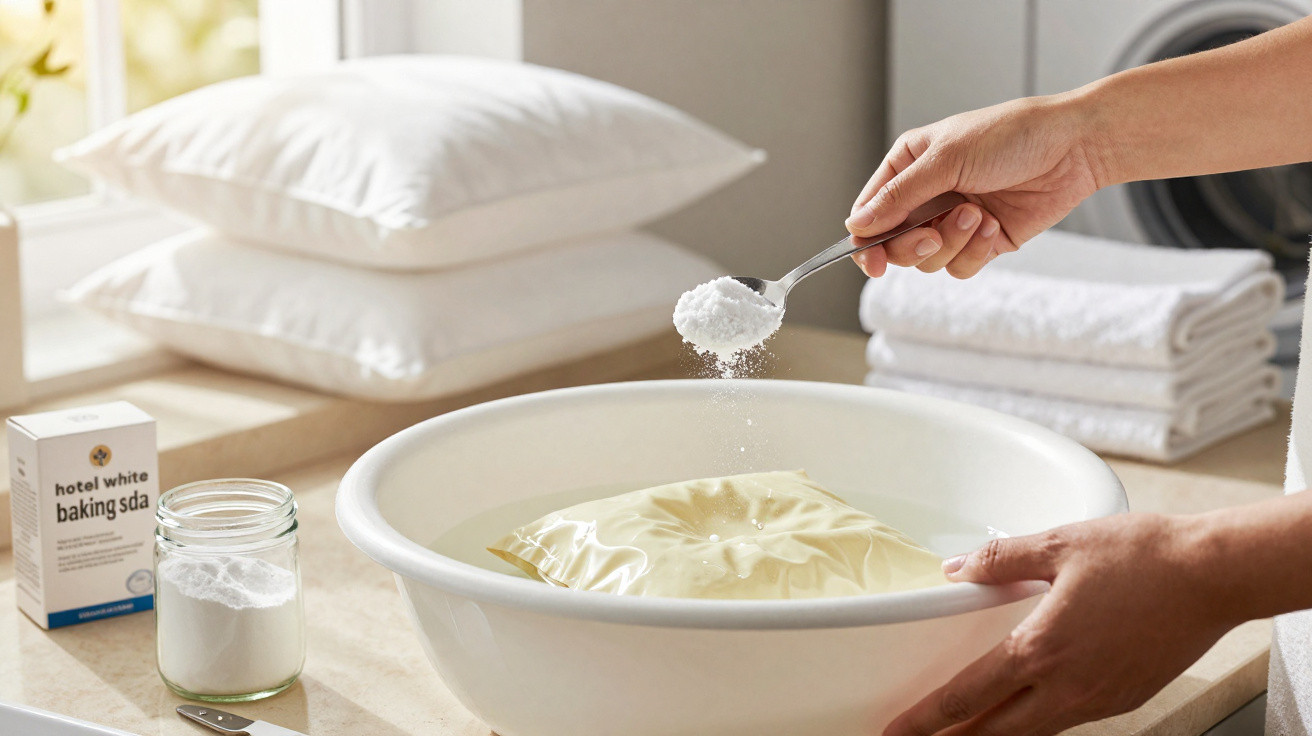
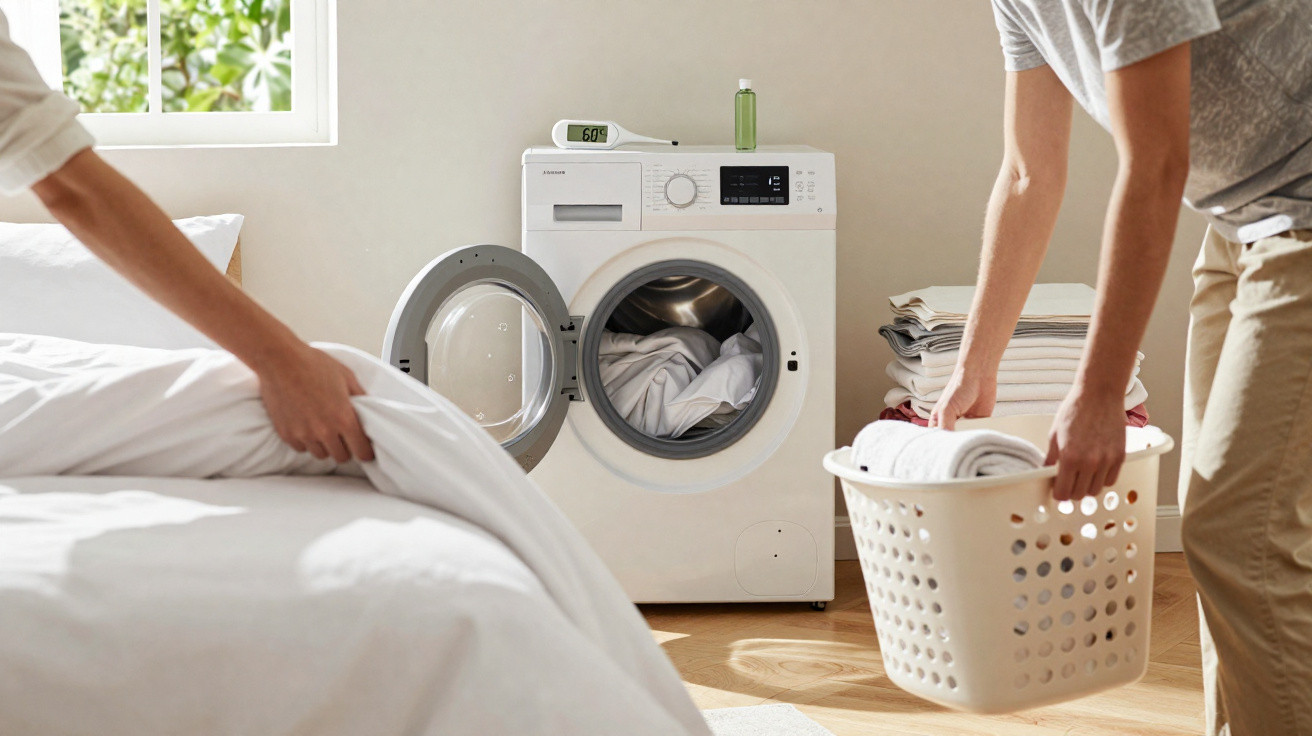
Start with the straightforward approach. Take off pillowcases and protectors, then read the care label. If it states “machine washable”, proceed; if the pillow is memory foam or latex, do not put it in the machine. Wash two pillows together to keep the drum balanced. Add your usual modest amount of liquid detergent, followed by one generous scoop-around 1/2 cup-of baking soda directly into the drum. Choose a warm-to-hot wash that the label permits and select an extra rinse. Dry the pillows completely: use sunshine where possible, or tumble-dry on low heat with clean dryer balls to retain their loft.
The smaller details make a difference. Avoid cramming the machine, as pillows need room to move around so the alkalinity can reach each seam. A second rinse helps remove the oils that have been lifted away. If heat concerns you, select a warm wash and run it for longer instead. For heavily yellowed pillows, repeat the process once rather than adding stronger chemicals. Realistically, no one does this daily. Wash pillows every two to three months and use pillow protectors between washes.
If the effect seems modest, try soaking first. Fill a bath or large bucket with the hottest water that is safe for your pillow, dissolve 1/2 cup of baking soda and leave the pillow submerged for 30–60 minutes before washing it. The water may become slightly cloudy, which is rather satisfying to see.
“People think whitening is about stronger products. Most of the time it’s about contact time and the right pH,” says a veteran housekeeper who ran a 40-room coastal inn. “Give the water a chance to do the work.”
- Use: 1/2 cup baking soda per standard washing-machine load.
- Cycle: warm-to-hot, gentle or normal, with an extra rinse.
- Dry: dry fully in the sun or on low heat; never leave pillows damp.
- Skip: memory-foam and latex pillows-spot-clean only.
- Frequency: every 8–12 weeks, alongside a protector.
Baking soda, yellow pillows and realistic results
Yellowing is not simply dirt; it reflects the chemistry of everyday life. Perspiration contains urea, salts and oils, which settle into fibres and gradually oxidise. Baking soda moves the wash water towards mild alkalinity, slightly swelling cotton fibres and helping to release that oxidised coating. It also reduces odour molecules. This is not bleaching; it is loosening the bonds holding the residue in place. That is why one scoop can appear almost magical on pillows with light to moderate yellowing.
There are restrictions to bear in mind. Memory foam and latex should never go through a washing machine, as they can deteriorate or hold on to water. Instead, spot-clean them with a baking soda paste, wipe them down, then scatter dry baking soda over them overnight and vacuum it off. The one-scoop method is particularly effective on machine-washable down, feather, microfibre and cotton pillows. If a pillow has years of ingrained yellowing or make-up marks, it may require a second wash or some time outdoors on a breezy washing line. Sunlight is a mild natural whitener, gently completing the job started in the wash.
A brief note on shortcuts: viral laundry tips often combine detergents and dishwasher tablets like a chemistry experiment. They may produce results, but they can also be tough on seams and fabric finishes, and they are seldom needed. Baking soda is mild, inexpensive and already in most kitchens, so use it first. If you like the outcome, you have an easy routine that can be repeated without much thought. For extra brightness, combine the next wash with a longer pre-soak or several hours of sunshine, then watch the white become a shade brighter.
There is something reassuring about watching an ordinary little solution refresh the feel of an entire room. A whiter pillow makes a bed look purposeful, as though someone has taken the time to bring the space into focus. Hotel housekeepers do not depend on miracles; they use routines that work at scale. A tub of baking soda is precisely that kind of habit: subtle, repeatable and unexpectedly satisfying. When the daylight next catches a yellow crescent, you will know exactly what to do. You may even smile at how a weeknight fix outperforms a full weekend project.
| Key point | Detail | Benefit for the reader |
|---|---|---|
| Use one scoop | Around 1/2 cup of baking soda per wash load | A simple, memorable and inexpensive step |
| Choose the right cycle | Warm-to-hot, extra rinse, dry completely | Maximum whitening with minimal risk of damage |
| Know your pillow | Washable fillings only; foam/latex = spot-clean | Prevents damage to pillows that cannot be washed |
FAQ
- Does baking soda really whiten yellow pillows? Yes, for machine-washable pillows with light to moderate yellowing. It enhances detergent, lifts oils and brightens without bleach.
- How much should I use? Use one generous scoop-roughly 1/2 cup-per standard washing-machine load alongside your usual detergent.
- Can I use this on memory foam? No. Foam and latex should not be machine-washed. Spot-clean them, then deodorise with dry baking soda before vacuuming.
- What temperature works best? Use the hottest temperature allowed by the pillow’s care label. A warm-to-hot wash with an extra rinse usually provides the best result.
- Is bleach better than baking soda? Bleach can whiten, but it is harsher on fabric and stitching and is unsuitable for every filling. Baking soda is gentler and is often sufficient for everyday yellowing.

Comments
No comments yet. Be the first to comment!
Leave a Comment