
In brief
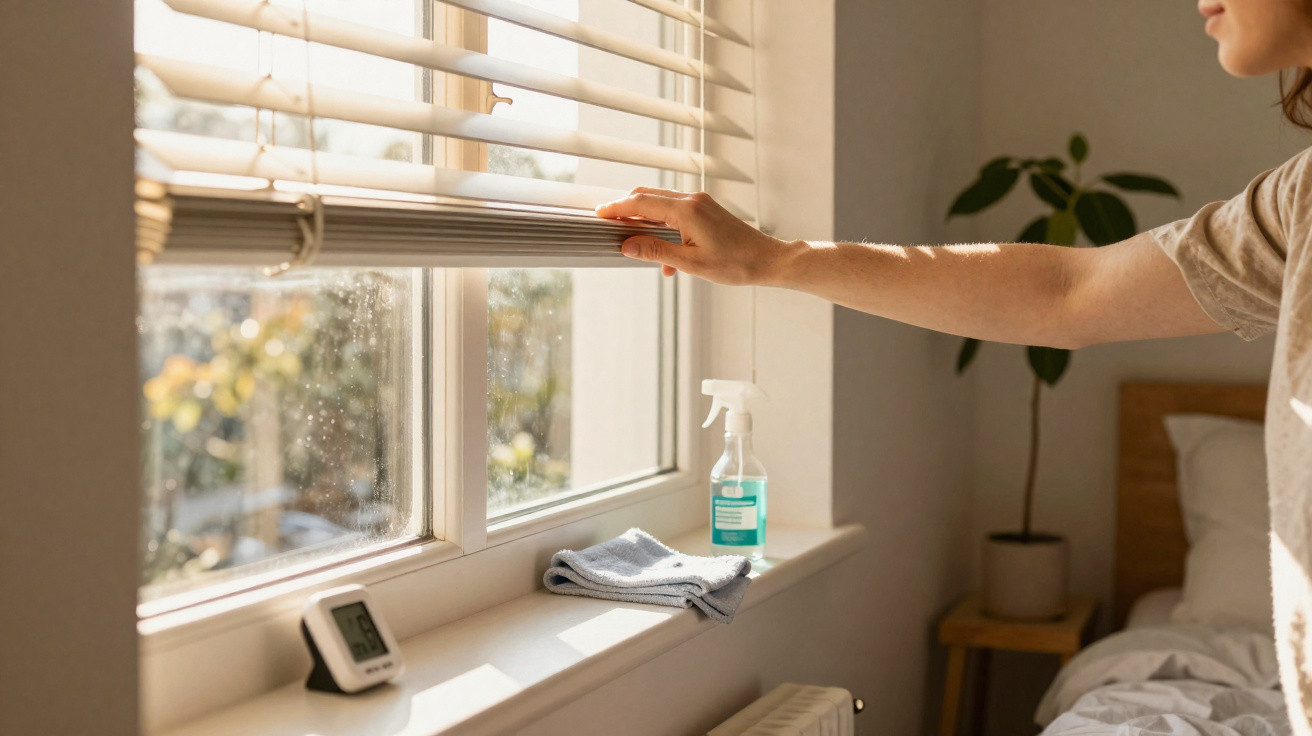
- 🌞 Fully raising blinds each morning lets direct light reach the glass, warming the panes, accelerating evaporation and upsetting the cool, dark conditions in which mould thrives.
- 🧪 The science: lifting blinds lowers humidity in the boundary layer, encourages air movement, raises glass temperature above the dew point, and provides mild UV/visible exposure that slows spore growth.
- 🛠️ Five-minute routine: put blinds up, open trickle vents or briefly purge-ventilate, wipe sills and frames, turn slats fully open, and use extract fans after moisture-producing activities.
- ⚖️ Pros vs. cons: quicker drying and lower RH must be balanced against privacy and fading concerns; reduce these with sheer voiles, UV films and promptly uncovering windows after using blackout blinds.
- 🇬🇧 UK context: one case study found less staining on the cill; this supports advice on managing moisture, airflow and warm surfaces, while recognising that structural damp needs repair work.
On damp mornings in Britain, mildew around glazing beads and cills is often blamed on draughty frames or costly winter heating. However, one straightforward and free protective measure is to raise the blinds completely and allow sunlight inside. Direct light warms the window surface, helps water evaporate sooner and removes the shaded environment fungal spores favour. Every time you lift the blinds in the morning, you take away mould’s preferred combination of coolness, darkness and stagnant air directly beside the glass. With cost-of-living pressures continuing, this simple practice works alongside ventilation and consistent heating as a low-energy way to keep windows clearer and rooms healthier.
The Science: How Direct Light Restricts Window Mould
During the night, falling temperatures push surfaces towards the dew point, causing moisture in the air to condense on cold glazing. When blinds remain closed, stagnant, humid air is held between the fabric and the pane, allowing droplets to remain and nourish mould. Fully lifting the blinds changes two things. First, solar gain and infrared heat increase the glass temperature, reducing local relative humidity. Secondly, convection carries away the trapped air, reducing the boundary layer in which condensation builds up. Frames, seals and cills therefore dry more rapidly-precisely the locations where biofilms commonly establish themselves and spread.
Light also acts as a biological barrier to colonisation. Although sunshine in Britain is limited, even diffused daylight supplies UV-A and visible-spectrum energy, which can stress spores and break down pigments on exposed hyphae. Across several weeks, this can result in fewer places for mould to take hold, slower return growth and fewer spores released into the room. Direct light will not sterilise a window, but it consistently shifts the balance against mould by removing moisture, shade and stillness during the crucial morning period.
Morning Routine: A Five-Minute Habit That Delivers Results
Approach mould prevention as a series of small advantages. Begin as early as your household schedule permits: raise blinds to the top and draw curtains fully back, allowing uninterrupted sunlight to reach the glass and frame. Open a window slightly or use trickle vents to clear humid overnight air. If conditions are very cold, keep this to a short, sharp airing while nobody is using the room. Wipe away visible water from the cill and lower frame; this is more than housekeeping, as it removes the moisture that allows biofilms to grow.
Follow the light exposure with purposeful ventilation. Use bathroom and kitchen extractor fans after showering and cooking, and keep doors closed in steam-filled rooms so colder areas are protected. During daylight hours, position slatted blinds fully open to prevent another humid pocket from forming. Consistency is king: spending the same five minutes each morning achieves more than a weekend blitz once mould has already spread.
- Blinds up early: uncover the pane, frame and cill.
- Purge moisture: ventilate for 5–10 minutes where it is safe to do so.
- Targeted wipe: clear droplets of water, particularly from bottom rails.
- Dry fabrics: keep curtains away from damp cills and do not dry clothes indoors without extraction.
- Repeat daily: regular, small actions are more effective than occasional intensive cleaning.
Pros vs. Cons: Blinds Up Compared with Blinds Down
The advantages of morning daylight are straightforward: quicker drying, lower local humidity and less shade for spores. Bedrooms fitted with blackout blinds frequently develop the heaviest cill staining because darkness and trapped air can continue well into the morning. Why blackout isn’t always better: they are excellent for sleep, but the lasting cave-like effect benefits mould. If complete darkness at night is important to you, make the trade-off clear by uncovering the glass soon after waking.
There are also compromises to consider. Privacy may feel reduced, UV exposure can fade fabrics, and leaving blinds wide open may increase heat loss where windows are particularly draughty. Practical measures include fitting sheer voiles, which let daylight through while screening the interior, using UV-filter films on south-facing panes, and only partly closing blinds during the coldest spells before lifting them fully once rooms are occupied. This is not a rigid rule but an adjustable control-balance light, airflow and privacy to keep the pane dry and bright.
| Practice | Light Exposure | Typical Moisture Outcome | Notes |
|---|---|---|---|
| Blinds Up (Morning) | High | Faster drying | Best for mould deterrence |
| Blinds Down (Morning) | Low | Condensation lingers | Higher mould risk on cills/seals |
| Sheer Voiles | Medium–High | Moderate drying | Balances privacy with light flow |
| Frosted Film | Medium | Moderate drying | Good for street-facing windows |
| North-Facing + Overhang | Low | Slow drying | Compensate with ventilation/heat |
Case Study and UK Context: What Households Report
At a Hackney flat with single-glazed sash windows from the 1930s, Leila and Tom replaced a heavy blackout roller blind with a pale slatted blind and created a phone reminder: at 07:30, blinds up fully, vents open for eight minutes, followed by a quick cill wipe. After six weeks, they saw fewer tiny black marks along the lower beading and no musty smell behind stored books. Importantly, heating in occupied rooms was kept moderate but consistent. The routine did not eliminate every patch, but it reduced the time surfaces stayed wet and slowed visible regrowth-small improvements that built up each day.
More broadly, the English Housing Survey indicates that a notable minority of English homes continue to have damp or mould issues annually, with higher prevalence in older, colder and overcrowded housing. UKHSA guidance issued after high-profile cases restates the core principles: control moisture, improve airflow and keep surfaces warm. Raising blinds supports all three by making use of free daylight. It cannot resolve structural damp or leaks, which require repairs and, when appropriate, professional assessment. Yet as a no-cost daily practice used alongside ventilation and cleaning, morning light is a quietly effective measure in the everyday battle against window mould.
- When light isn’t enough: where leaks persist, walls are saturated or seals have failed.
- Escalate: notify landlords, arrange surveys and keep records of worsening damp.
- Combine: use controlled heating, humidity extraction and routine cleaning.
Raising blinds every morning may not make headlines, but it can win the fight at the glass, where mould often first becomes established. Sunlight adds warmth, moving air clears moisture, and dampness recedes-three effects that cost nothing yet accumulate over time. Combine this with sensible ventilation and steady heating, and windows become a less welcoming place for spores. Small, regular changes often outperform costly gadgets left gathering dust. How could you adapt a light-first routine-using privacy screens, lifting blinds earlier or wiping targeted areas-to change your own windows from damp traps into sunlit surfaces that dry themselves?




Comments
No comments yet. Be the first to comment!
Leave a Comment