
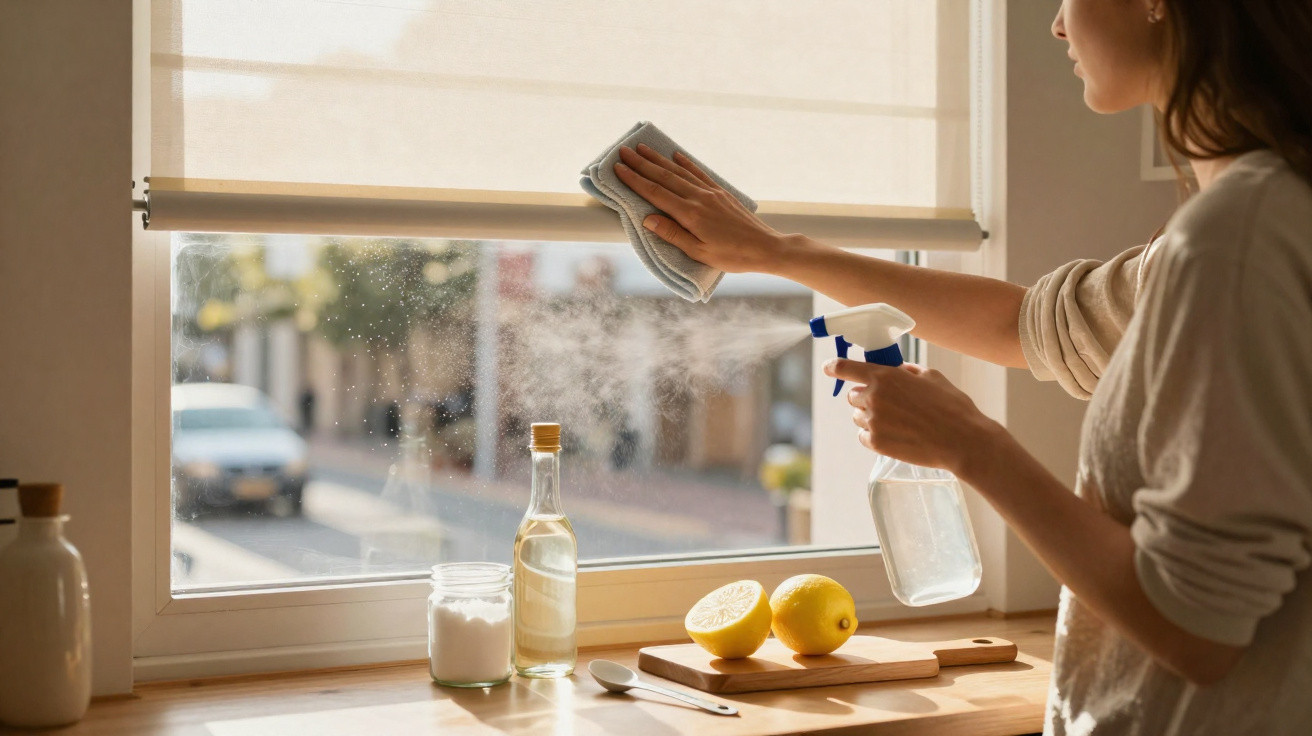
Cleaning PVC or aluminium roller shutters often feels like a losing battle: you spend hours scrubbing, soak your sleeves, and after just a few rainy days the slats look dirty again. The weather is not the only reason; the cleaning method also plays a part. A straightforward blend of three common household products can cut the work considerably and help dirt adhere less readily for months.
Why roller shutters look dirty again so quickly
Roller shutters sit exposed on the outside of a property. Every type of weather leaves its mark: rain droplets containing limescale, fine dust, traffic soot, pollen and greasy vapours from the kitchen. Together, these form a dark film on the slats.
These deposits are especially noticeable on light-coloured PVC or aluminium roller shutters. Layer upon layer builds up, leaving the surface looking dull. A quick wipe with water is no longer enough, as the dirt and limescale can effectively stick fast.
There is also a mistake many people make when cleaning: reaching for harsh cleaning agents or scrubbing with abrasive sponges. Although this may appear effective initially, it causes damage over time.
Strong cleaners and scouring sponges roughen the surface – and it is precisely these micro-scratches that attract fresh dirt like a magnet.
These tiny scratches make the material more porous. Fine particles, dark road dust and rainwater settle more deeply into it. This creates the impression that, however often the roller shutters are cleaned, they become dirty increasingly quickly.
The gentle three-ingredient method that genuinely saves work
Rather than buying expensive specialist cleaners, all that is needed is a simple solution of water, liquid black soap and clear household vinegar. All three ingredients are available in supermarkets and household-goods shops, and many people already keep them in their cleaning cupboard.
The basic recipe for the cleaning solution
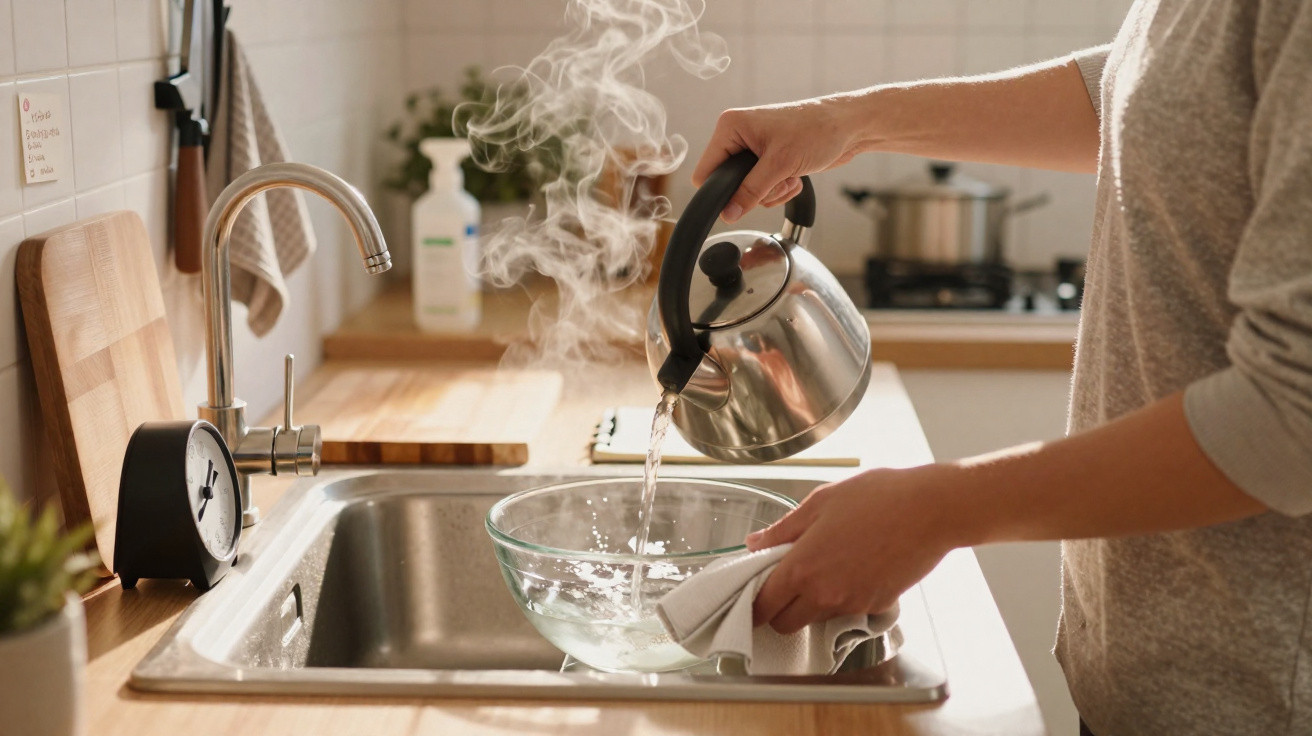
- 5 litres of lukewarm water
- 2 tablespoons of liquid black soap
- 1 glass of clear household vinegar (white vinegar)
Liquid black soap removes grease, the dirt film and grey residue without attacking PVC or aluminium. The vinegar deals with limescale marks, water streaks and pale edges left by rain. Lukewarm water helps spread the solution evenly and loosens deposits that have dried on slightly.
How to use the mixture correctly
The process is straightforward, but a few steps make the difference between shutters that are simply clean and ones that stay clean for longer.
- Lower the roller shutter fully so every slat can be reached.
- Remove loose, dry dust using a soft cloth or feather duster.
- Mix the cleaning solution in a bucket.
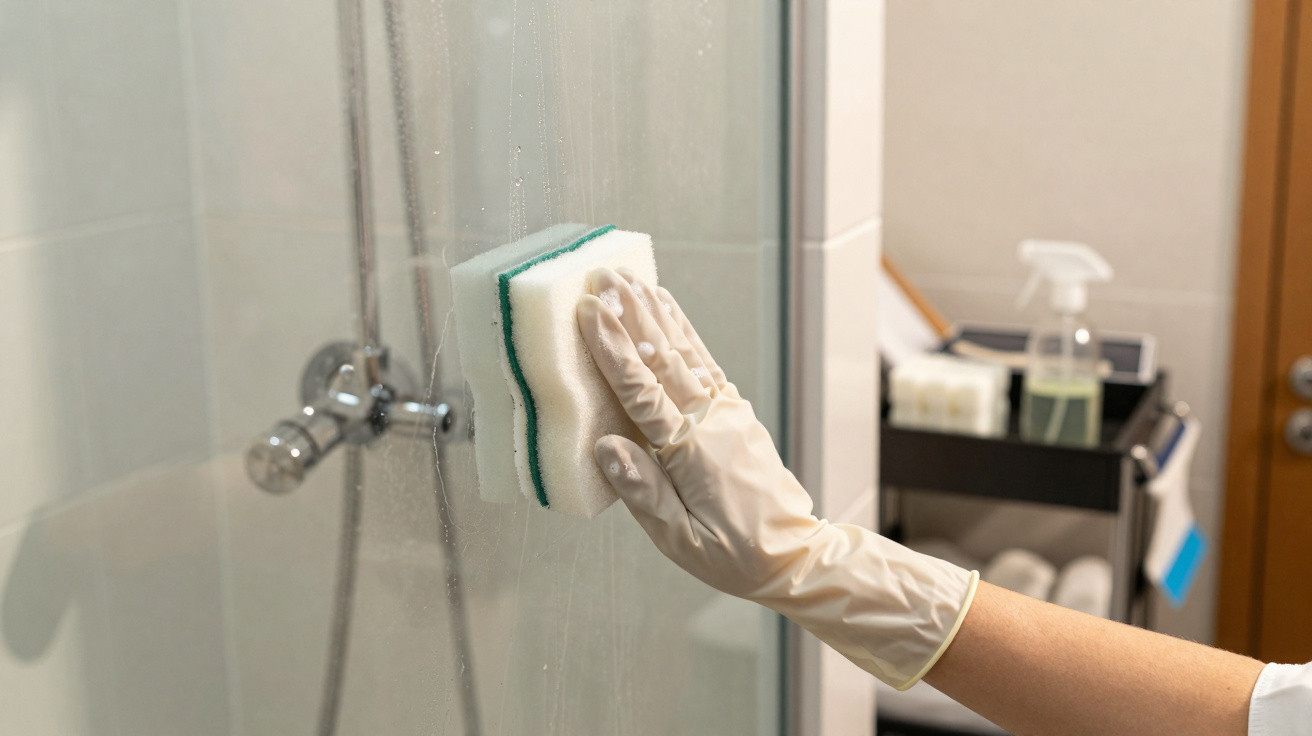
- Dip a soft sponge or microfibre cloth into the mixture and wring it out lightly.
- Wipe the surface from top to bottom without pressing hard.
- Leave the solution to work for a few minutes; do not rinse it off immediately.
- Rinse with clean water, for example using a gentle stream from a garden hose or a damp cloth.
- Allow the shutter to air-dry before raising it again.
The real trick is not the mixture itself – but allowing it to work undisturbed so that the soap and vinegar can do their job.
If desired, clean the inside of the slats at the same time, for instance with the shutters half closed. This is particularly worthwhile on kitchen windows, where grease and cooking vapours often settle.
Invisible protective film: how long the effect lasts
Once dry, the black soap leaves an extremely thin, almost invisible film on the slats. This makes the surface smoother and slightly more water-repellent.
As a result, fresh dust particles do not stick as firmly, while raindrops run off more easily and carry away some of the dirt with them. The difference is not necessarily apparent on day one, but over the following weeks: roller shutters retain a fresher appearance for longer, and dark streaks develop more slowly.
In practice, many homeowners report that this method means they need to clean only around half as often as before. Those who previously cleaned their roller shutters every two months can often manage with two thorough cleans a year.
Two cleans a year – in spring and autumn – are usually enough to keep roller shutters visibly well maintained and working properly.
What to avoid with PVC and aluminium roller shutters
To preserve the protective film and prevent damage to the surface, it is worth noting these care no-gos:
- no chlorine-based products or cleaners with a high ammonia content
- no scouring sponges or stiff brushes
- no metal scrapers or blades
- no pressure washer aimed directly at the slats
Excessive water pressure can force water into the roller shutter box or guide rails. In the worst case, metal parts may rust, the strap can suffer damage or the mechanism may become stiff. A gentle flow of water or wiping afterwards with a damp cloth is the better option.
Practical advice for different living situations
City flat on a busy road
Anyone living on a main road or close to the city centre is generally exposed to more soot and fine particulate matter. In this situation, it is worth using the three-ingredient method three times rather than twice a year. Many people begin in March, then clean again in July and October to tackle winter grime, summer dust and residue from autumn rain.
Home in the countryside or on the edge of town
In rural areas, pollen, soil and insect remains are more likely to soil roller shutters. Here, cleaning in spring and late summer is usually sufficient. If there is a lot of farming nearby, check the façade briefly after dusty harvest days.
Hard-to-reach roller shutters on an upper floor
Roller shutters upstairs are often neglected because they are difficult to reach. A telescopic pole fitted with a microfibre cloth is a major help here. The three-ingredient mixture works equally well when applied by hand or with a pole; the important points are to use minimal pressure and observe the contact time.
Why gentle roller shutter care also makes financial sense
Regular, careful cleaning can significantly extend the service life of roller shutters. Dirt entering the mechanism increases wear, while straps and bearings deteriorate more quickly. Keeping the slats clean and moving smoothly therefore protects not only their appearance but also the mechanism.
Expensive specialist cleaners, which often contain strong surfactants or solvents, can frequently be avoided with the three-ingredient method. Five litres of cleaning solution cost only a few pence and, for standard-sized windows, will usually clean several roller shutters at once.
What the three household products do
Liquid black soap is generally made from vegetable oils. It is considered gentle on materials and has been used in households for generations on delicate surfaces. Its key advantage is that it degreases without leaving behind a hard, glossy coating.
Clear vinegar essence, or household vinegar, is mildly acidic. This enables it to dissolve limescale and rain marks, which are particularly common in areas with hard tap water. Vinegar also has a slight disinfecting effect, which is beneficial in dusty or damp corners.
Lukewarm water supports both ingredients in doing their job. Very hot water is not recommended for PVC, as it can make the material brittle over time. Lukewarm water offers the ideal balance: effective yet gentle.
Anyone who tries the mixture once often uses it for more than roller shutters, including plastic window frames, PVC balcony railings and painted exterior doors. The method remains the same; the only important precaution is to test it on an inconspicuous area before treating larger surfaces.

Comments
No comments yet. Be the first to comment!
Leave a Comment