
In brief
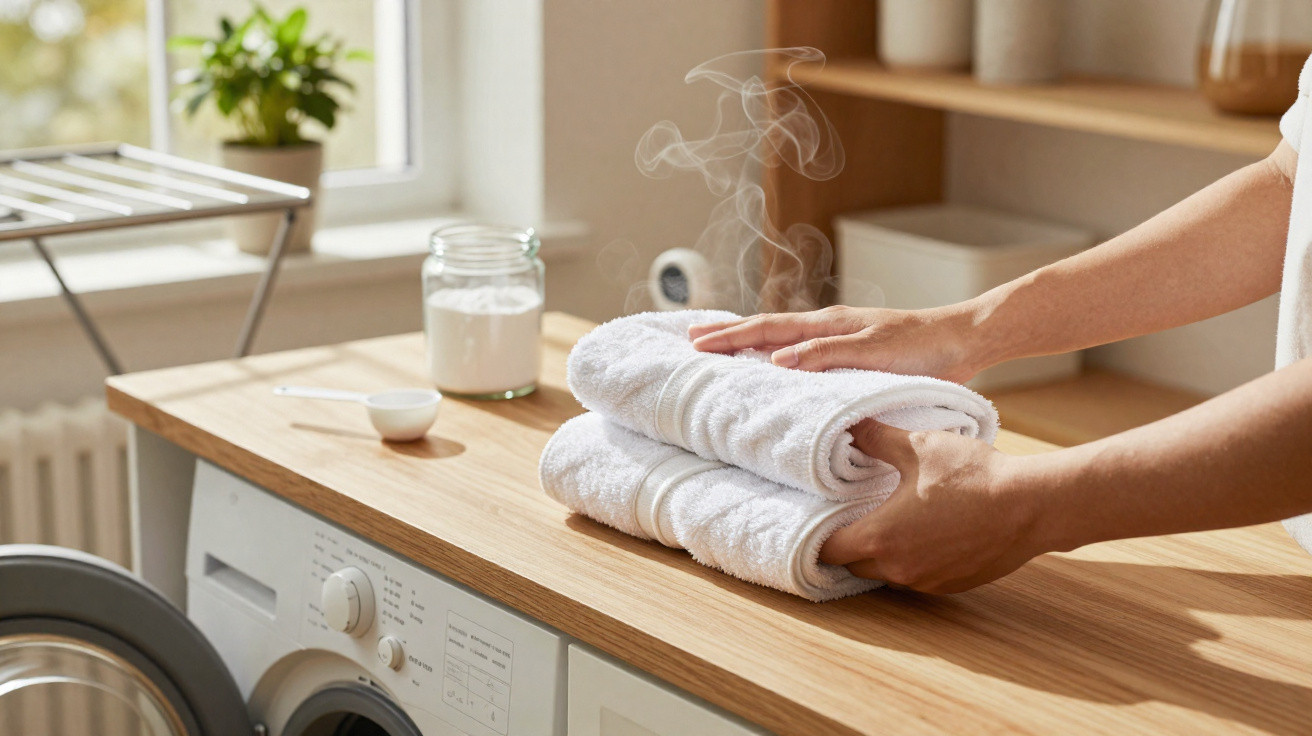
- 🔥 Heat retention is the key: enclose towels while they remain warm for 10–20 minutes, recreating a mild steam finish that loosens cellulose bonds and helps the loops stand upright for a plush feel.
- 🧾 Use the method properly: wash at 40–60°C with a restrained amount of powder, avoid fabric softener, tumble-dry on medium with dryer balls until warm-not-hot, then stack and wrap; shake before folding to maintain the loft.
- ⚖️ Pros vs. Cons: tumble-drying is quick but uses considerable energy, while line-drying costs nothing but may leave towels stiff; a Hybrid finish (line-dry 80–90% + 10-minute tumble + wrap) offers a middle ground for softness, energy consumption and fibre protection.
- 💧 Control the variables: Hard water and excess detergent can compress fibres; consider vinegar or washing soda, choose appropriate GSM and yarn types, and keep in mind that “less is more” with both heat and laundry products.
- 🧪 Field-tested: an A/B/C trial in a London flat showed that the warm window is most important-hybrid + wrap or a medium tumble + wrap produced the softest, most hotel-plush towels.
Britain’s towels face a low-key problem: they turn rigid after drying on the line, become flattened by excessive tumble-drying, and can lose absorbency after supposedly “softener” washes. The towel wrap trick offers a small but time-critical solution, using heat retention and gentle steam to your advantage. Capturing warmth as soon as towels leave the dryer allows cotton microfibres to relax and “set” in a full, open shape instead of sinking as they cool. When used correctly, this wrapping method can give even mid-priced bath sheets the airy feel of a boutique hotel. This guide explains the science, sets out the method clearly, compares energy and fabric-care compromises, and includes observations from a London flat, helping your towels emerge soft, bouncy and genuinely absorbent.
How the Towel Wrap Trick Works: Heat, Steam, and Fibre Physics
The crucial factor is the heat-retention window. Cotton, made principally from cellulose, keeps a layer of bound water following a wash. Dryer heat makes the fibres more pliable by loosening their hydrogen bonds; once the material cools, those bonds reconnect and effectively “lock in” its form. When towels are left to cool in open air, their pile usually settles and sets in a flattened position. Retaining the warmth and a small amount of moisture instead lets the pile rise again into a soft, ventilated structure that feels fuller and absorbs water more quickly.
It is best understood as a simple steam finish. The aim is not to wet the towels further, but to allow leftover warmth and micro-steam to move through the loops. This temporary flexibility stops the fabric becoming compressed at a decisive stage. Hotel laundries commonly remove terry towels when they are still warm and stack them straight away for this reason. The wrap trick follows the same principle: pile up warm towels and cocoon them in a larger bath sheet, or put them in a basket with a lid, for 10–20 minutes. Brief, managed heat retention produces softer, fuller towels without chemical softeners.
Step-by-Step: The Post-Dryer Wrap for Pillow-Soft Pile
Exact measurements are less significant than acting promptly. Use the following process for dependable, fluffy towels that retain their absorbency:
- Wash at 40–60°C using a modest amount of powder, and leave out fabric softener because it coats the fibres and reduces loft.
- Select an 800–1,000 rpm spin, which removes sufficient water without excessively creasing the pile.
- Tumble-dry at medium heat with dryer balls until the towels feel dry but remain warm and supple; do not dry them until they become crisp.
- Stack the towels immediately, then wrap them in a clean, dry bath sheet or put them into a basket with a breathable lid for 10–20 minutes.
- Remove the wrap, give every towel a shake to lift the loops, and fold them. If available, keep them in a warm airing cupboard.
For a quick guide, follow these settings:
| Stage | Recommended Setting | Why It Helps |
|---|---|---|
| Wash | 40–60°C, modest powder | Removes oils while avoiding roughened fibres |
| Spin | 800–1,000 rpm | Retains enough moisture to support a steam finish |
| Dry | Medium heat + dryer balls | Lifts the pile and avoids scorching or flattening |
| Wrap | 10–20 minutes while warm | Locks in loft via heat retention |
Pros vs. Cons: Tumble-Drying, Line-Drying, and Hybrid Finishes
There is no universal drying approach, so weigh up the following before pressing “Start”:
- Tumble-Drying (Pros): It is fast, refreshes the pile, removes lint and gives reliably soft results when followed by the wrap finish.
- Tumble-Drying (Cons): It has an energy cost of around 28–30p/kWh according to Ofgem-era averages, can damage towels through over-drying, and may fade colours over time.
- Line-Drying (Pros): It uses no energy, sunlight sanitises, and the fabric experiences less wear.
- Line-Drying (Cons): Minerals can leave fibres stiff in hard-water regions, while wind pressure may press the pile flat.
- Hybrid (Best-of-Both): Dry on the line to 80–90%, then tumble for 10 minutes and apply the wrap. Softness like full tumble, energy like line-dry.
Extra heat does not mean better results: scorching strips away moisture too rapidly and can leave fibres brittle. Equally, cool air is not invariably preferable, as allowing unwrapped towels to cool lets the pile collapse. The wrap trick provides the balance: mild heat for a limited period, followed by a controlled rest. For households mindful of cost and carbon, the hybrid option shortens dryer use, safeguards fibres and, most importantly, preserves the warm window needed for the final finish.
The Science of Softness: Hard Water, Detergents, and GSM Choices
Across much of the UK, hard water deposits minerals on cotton loops and leaves them feeling rough. Address this with a water softener, some washing soda, or an occasional rinse with white vinegar placed in the rinse drawer rather than mixed with detergent. Reduced deposits leave fibres freer and improve loft. Careful detergent use is equally useful: too much creates a coating, while too little leaves oils behind, and both work against softness. Match the dose to the size of the load and the hardness of your water.
The fabric itself also makes a difference. A higher GSM of 600–800 offers a more luxurious feel, although it needs careful drying; zero-twist and low-twist yarns expand more fully but can flatten when over-dried. Egyptian and Turkish cotton retain their loft effectively, but the wrap can substantially improve budget terry too. A short reminder of why “more” is not necessarily better:
- More Detergent ≠ cleaner towels; residue eliminates fluff.
- More Heat ≠ softer pile; it can cause flattening and crispness.
- More Softener ≠ more softness; it cuts absorbency.
A useful professional touch is to shake towels firmly when they come out of the washing machine, and again after drying but before wrapping. That physical movement opens the loops, allowing the heat-retention rest to “set” them skyward. Small habits multiply softness.
Field Notes From a London Flat: A Mini Test You Can Replicate
To test the idea under ordinary conditions, I carried out an informal A/B/C comparison over two weeks using six mid-weight towels at 550 GSM, hard water in south London, standard powder and a condenser dryer. I kept conditions broadly consistent, then assessed hand-feel and post-shower drying performance:
- A: Tumble-dried fully until bone-dry, without wrapping. Result: a flat feel, strong initial absorbency, but increased scratchiness after two washes.
- B: Line-dried until nearly dry, followed by a 10-minute tumble and a 15-minute wrap. Result: the best balance-a springy feel, rapid wicking and continued softness after several washes.
- C: Medium tumble-dried until warm-dry, then wrapped for 20 minutes. Result: the nearest to “hotel” plushness; it used slightly more energy than B but felt noticeably more cushioned.
This was not a laboratory test, but the trend was clear: capturing the warm window matters more than maxing tumble time. Wrapping enhanced the loft produced by the dryer while limiting the need for intense heat. If you make one adjustment this week, stop the dryer while towels are warm-not-hot and wrap them at once. The improvement is both noticeable to the touch and durable.
Soft, full towels come down to timing, chemistry and one deliberate minute rather than chance. The towel wrap trick uses retained warmth to let fibres settle in their most open and comfortable form, without softeners or lengthy drying cycles. Combine it with sensible washing, attention to water hardness, and either hybrid drying or a gentle tumble to improve even standard terry. Once you experience that lofty, cloudlike pile, you won’t go back. What does your current routine look like, and which single adjustment are you most keen to try first to transform your towels this week?

Comments
No comments yet. Be the first to comment!
Leave a Comment