
You open the fridge to grab a slice of cheese - and the first thing that hits you isn’t the cheese. Not even close. It’s the smell: a hazy mix of last week’s leftovers, half an onion, and something you’d rather not name. In that moment, the door tends to slam shut, as if closing it quickly could shove the odour back into the darkness and act like it never happened.
You wipe a shelf, shuffle a jar, and blame the forgotten Tupperware lurking at the back. Yet the cold air still carries that faint cloud of “ugh”.
Then someone says, almost offhand, “Just put baking soda in there.” It sounds so easy it could be a wind-up. And it’s so easy it might genuinely fix the problem.
Why your fridge smells even when it looks clean
If you’ve scrubbed your fridge and still noticed something a bit off, you’re not imagining it. A refrigerator is basically a small sealed room, and smells don’t have anywhere to go. Every curry, every sliced clove of garlic, every forgotten tomato sauce releases tiny molecules into the air, quietly and constantly.
Those molecules settle into plastic tubs, rubber door seals and even cardboard packaging. You can bin the obvious “culprit”, but the odour hangs around like a memory that won’t shift. That’s when people start wondering whether the fridge is faulty - when the reality is that it’s simply… saturated.
Take Julie, for instance. She was convinced her new fridge “came defective” because it started to smell after only three months. She tried everything: wiping the shelves with lemon, misting white vinegar, and even leaving the door open for a while “to air it out.”
Nothing made a lasting difference. Each time she shut the door and the chilled air began circulating again, the smell returned. Then her grandmother came round, opened the fridge, took one sniff, and calmly set a small bowl of baking soda on the middle shelf.
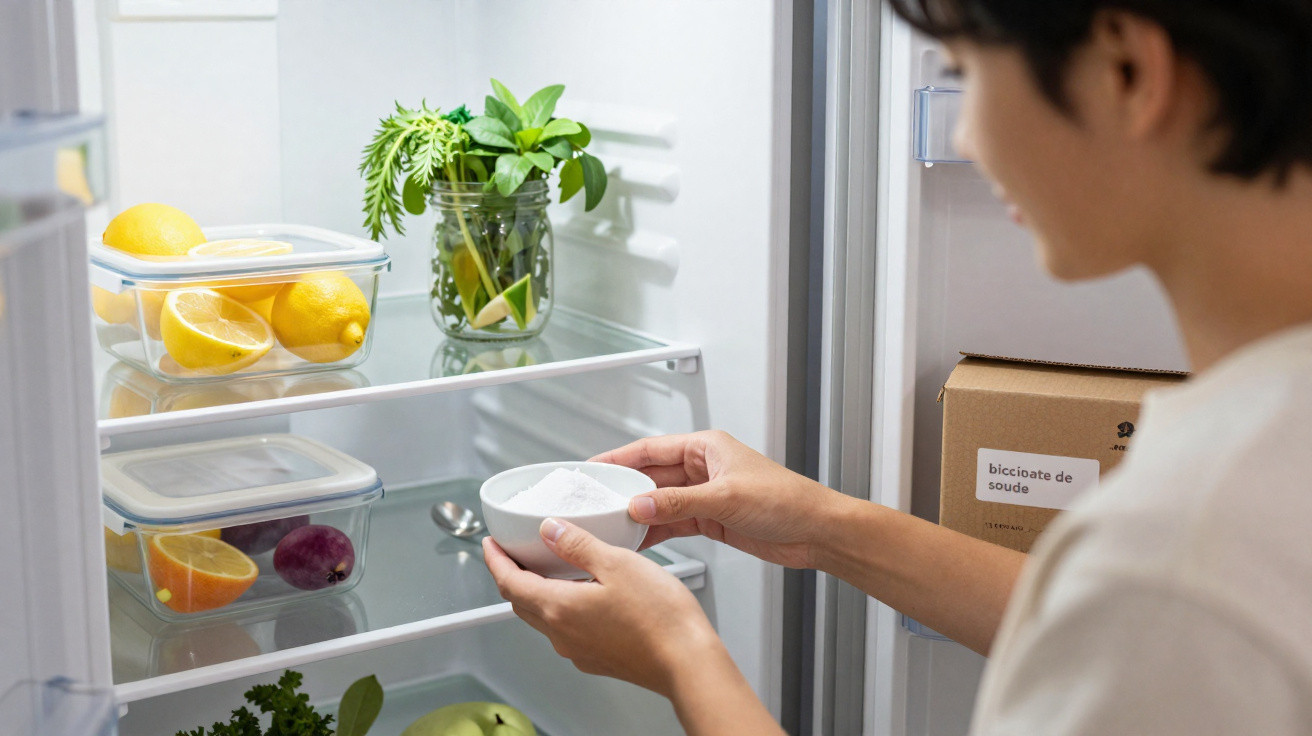
Two days later, Julie rang, stunned. “The smell’s gone. Completely.” No deep clean. No expensive deodoriser. Just that white powder, sitting there and working quietly.
There’s a straightforward reason this works - and it isn’t magic. Baking soda (sodium bicarbonate) reacts with both acidic and basic odour molecules. Rather than masking the smell with another fragrance, it neutralises the molecules themselves, so they stop circulating whenever the fan runs or you open the door.
Your fridge doesn’t end up smelling “of baking soda”; it simply smells less of everything. That’s what separates it from scented fridge fresheners, which tend to blend with the existing odours into a sort of chilled perfume soup. Baking soda doesn’t compete - it cancels the noise.
The simple baking soda trick that actually works
This method is almost ridiculously straightforward. Find a small, clean container - a ramekin, a cup, the base of a glass jar. Add 2–3 tablespoons of baking soda, enough to form a good, generous layer across the bottom. Set it on a central shelf, ideally uncovered, so air can move around it.
That’s it - no water, no mixing, no odd “hack”. Just baking soda, air, and time.
If you’re dealing with a strong existing smell, leave it for 24–72 hours. For ongoing prevention, keep an open container inside and replace the powder roughly once a month. It’s a low-effort habit that pays you back every time you open the door.
This is where many people go wrong: they place a closed box of baking soda in the fridge and expect miracles. If the box is sealed - or only barely opened - the surface area exposed to air is tiny. The powder can’t “catch” many odour molecules. You may as well put a stone in there.
Others tuck the container behind jars, or wedge it onto the door shelf among the condiments. When it’s hidden like that, it’s less effective because the cold air doesn’t properly pass over it.
Let’s be realistic: hardly anyone does perfect fridge maintenance every day. Most of us clean it when something leaks, when we move house, or when a smell finally forces the issue. This trick is built for real life - you put a bowl of powder in there and carry on.
“I used to think baking soda was just for cakes,” laughs Karim, a 39‑year‑old dad who cooks big Sunday meals and routinely forgets small containers in the back of the fridge.
“Now I buy it in big bags. It’s cheaper than all the ‘fridge deodorizer’ gadgets I tried, and it simply works.”
- Use it open, not sealed
A wide, open surface of baking soda absorbs far more odours than a tiny opening in a box. - Change it regularly
After 4–6 weeks, the powder becomes saturated and loses efficiency. At that point, you can still use it for cleaning sinks or drains. - Combine with quick decluttering
Throw out obviously spoiled food first. Baking soda handles odours, not mould or rot. - Keep one box just for the fridge
Avoid using powder that’s been stored next to detergents or strongly scented products. - Don’t overthink it
One container is usually enough for a standard home fridge. Two if you cook strongly aromatic food often.
From small white bowl to new kitchen habit
Some household tips feel like another chore. This one tends to become a background routine, like swapping out a sponge or topping up the salt cellar. You tip a little baking soda into a bowl, slide it onto a shelf, then forget about it until next month. The fridge stays “neutral”, and that neutrality somehow makes everything inside look fresher.
There’s a quiet psychological benefit as well. Opening a fridge that smells of nothing is like walking into a clean room - you immediately feel calmer. Food seems safer and more appetising. You’re less likely to throw things away “just in case” because nothing gives off that suspicious whiff.
With time, that tiny action can even shift how you use your kitchen. You’re more inclined to store leftovers without doubt, prep meals ahead, and actually use that half onion instead of chucking it.
All from a spoonful of powder that costs less than your morning coffee. You don’t need a smart fridge or a fancy deodorising filter. Sometimes the quiet, old-school solutions are the only ones that truly fit our messy, busy lives.
| Key point | Detail | Value for the reader |
|---|---|---|
| Open container of baking soda | 2–3 tablespoons in a ramekin or cup, placed centrally | Simple, low-cost way to neutralise existing fridge odours |
| Regular replacement | Change the baking soda every 4–6 weeks | Maintains long-term freshness without constant deep cleaning |
| Supportive habits | Quickly toss spoiled food, wipe spills, avoid sealed boxes | Boosts efficiency and keeps the fridge feeling clean and under control |
FAQ:
- Question 1
Can I use baking powder instead of baking soda in the fridge?
Baking powder isn’t as effective for deodorising, because it contains other ingredients like starch. For real odour absorption, go with pure baking soda.- Question 2
How long does it take for baking soda to remove a bad smell?
Light odours can fade within 24 hours. Stronger smells, like fish or curry, may need 48–72 hours with a fresh, open container of baking soda.- Question 3
Is it safe to leave baking soda in the fridge near food?
Yes. Baking soda is food-grade and non-toxic. Just keep it in a stable container so it doesn’t spill onto open dishes.- Question 4
Can I reuse the baking soda for cooking after it’s been in the fridge?
No. Once it has absorbed odours, it shouldn’t be used for cooking. You can still recycle it for cleaning sinks, drains, or the bin.- Question 5
Do I still need to clean the fridge if I use baking soda?
Yes, baking soda traps odours but doesn’t remove bacteria or stains. A quick wipe with warm soapy water every few weeks, plus the baking soda bowl, keeps everything fresh and healthy.




Comments
No comments yet. Be the first to comment!
Leave a Comment