

Grease has a habit of travelling: it creeps under cupboard edges, spreads across the cooker hood, and settles on those upper tiles you rarely get to. What starts as a faint haze quickly becomes a tacky layer, then a hard, honey-coloured crust that seems to mock your sponge. If your kitchen looks like it’s been through an incident after tea, you’re in good company - and you don’t need to lose two hours to make it feel clean again.
One evening, three children had bargained their way into late-night toast; the room carried a trace of garlic butter, and the splashback was wearing it proudly. A mum in London sent a voice note with a blunt instruction: “Don’t scrub-wrap.” She meant it exactly as it sounded. You spray, you warm, then you cover the area so the moisture stays put and the grease lifts on its own. A quarter of an hour later, the hob looked as if you’d worked hard. You hadn’t. No scrubbing marathon required.
The quiet law of grease: it yields to time and heat
What busy mums have worked out through group chats and school-gate chats is straightforward: when grease gets warmth, a surfactant, and a bit of waiting time, it starts to let go. It’s not dramatic - more like peeling off a sticker on the second try. We all know the feeling of rubbing at a mark for ages, then suddenly the cloth glides and you can finally relax. The goal is to get that glide in minutes rather than an hour, without wrists that feel like they’ve done a workout. That’s exactly why the “warm-and-wrap” method caught on: it does the hard work while you’re dealing with homework.
After a Saturday pizza night, one mum in Bristol gave it a go. She boiled the kettle, tipped a splash of hot water into a spray bottle with white vinegar and a squeeze of washing-up liquid, misted the splashback, then pressed cling film over the wet, glossy surface. She set a 12-minute timer, read a chapter to her youngest, and returned to wipe. The stubborn ring around the hob came away under the cloth like butter on toast. She posted a photo in the group - and four more kitchens went unusually quiet that evening, for the nicest possible reason.
The reason it works is everyday chemistry in practical form. Heat softens the oils, detergent grabs onto them, and the wrap slows evaporation so the mixture keeps doing its job. Grease does not cope well with heat and time together. Give it both and it stops being a crusty opponent and turns into a slippery layer you can lift with barely any effort. Realistically, nobody manages that kind of reset daily - but wins like this make weeknights easier, the sort where the surfaces shine and you still have enough energy to sit down with a cuppa.
The warm-and-wrap method (and where to use it)
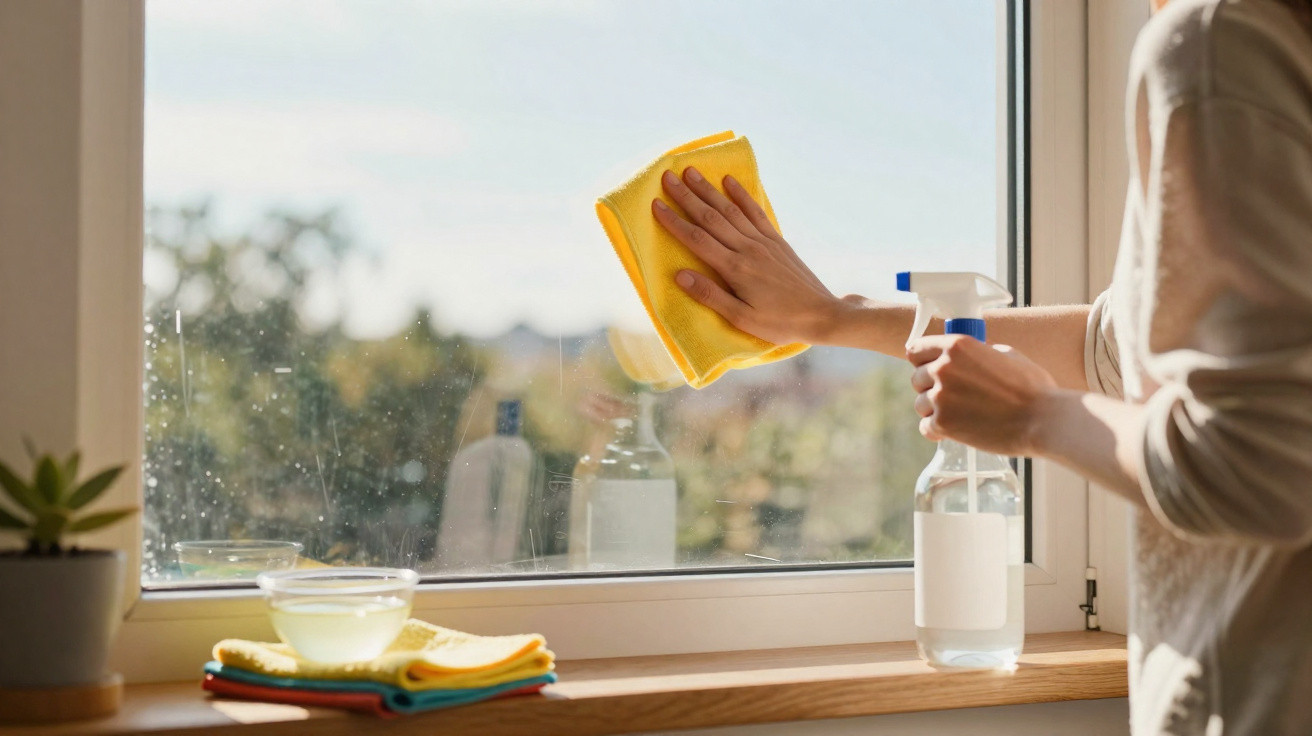
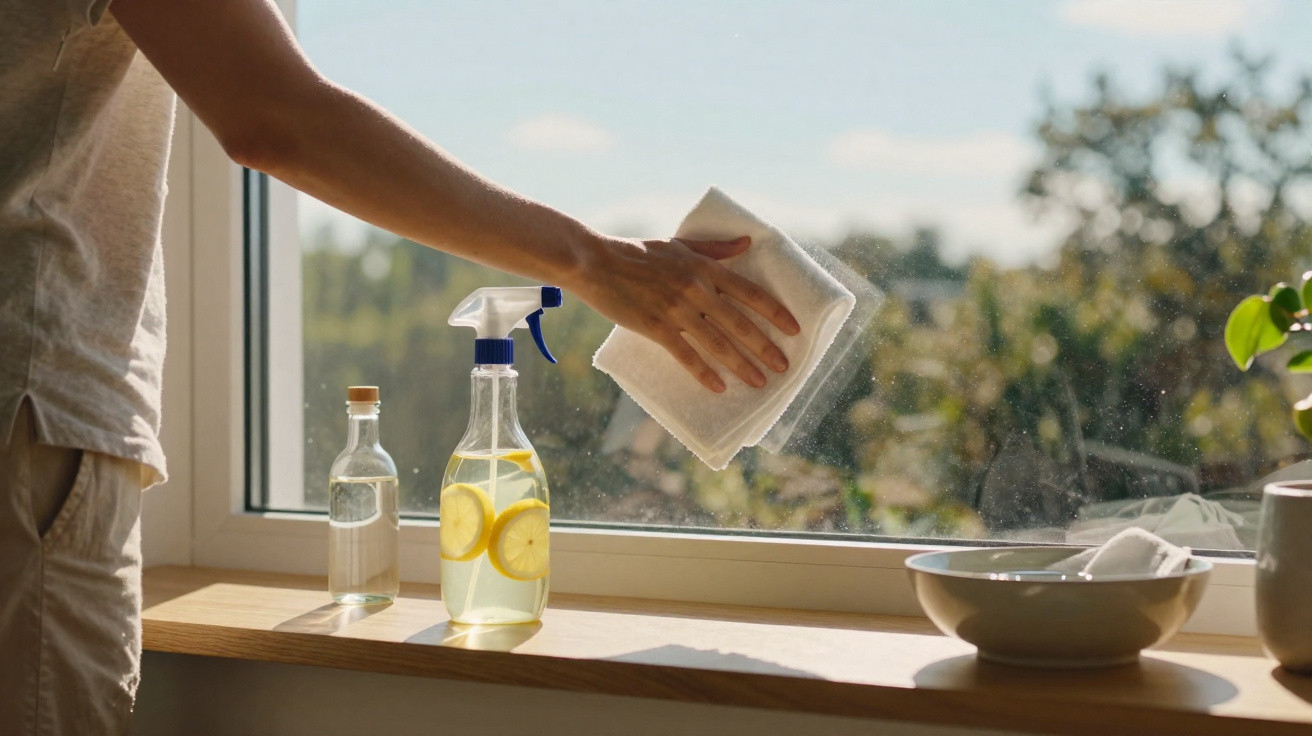
Here’s the routine. In a spray bottle, mix 1 cup warm white vinegar, 1 cup hot water, and 1 teaspoon washing-up liquid. If you’re dealing with painted cupboards or natural stone, replace the vinegar with warm water to keep things gentle. Put the kettle on, and while it’s steaming, warm the greasy patch using a hot microfibre cloth that’s been wrung out well, holding it in place for 30 seconds. Spray the area generously. Cover the wet surface with cling film and smooth it down with your hand so it seals in the moisture. Leave it alone for 10–20 minutes. Peel the film away, then wipe using long, light strokes. On stainless steel or glass, finish with a quick buff using a dry cloth for a clear shine. Smells fresh, not fake.
When it doesn’t work, it isn’t because you did something “wrong” - it’s usually just physics. Don’t rush the warming step, because cold grease grips tight. If the build-up is heavy, leave it for 20 minutes instead of five. On wood or lacquered finishes, try a small hidden area before you tackle the lot. Avoid vinegar on marble or granite; go with hot soapy water instead. If you can’t stand cling film, use a reusable silicone sheet or a compostable wrap. For the final stubborn bits, a plastic scraper or an old loyalty card helps without leaving scratches. This is the part nobody tells you. The wipe-down should feel almost effortless. If it doesn’t, add more warmth or more time, then try again.
Treat it like soaking a casserole dish, only upright. This approach works on cooker hoods, splashbacks, stained grout between tiles, and the tops of cupboard doors that collect cooking mist. The same principle is useful for deep-cleaning filters too: soak them in the sink in the hottest tap water you can, with two tablespoons of washing-up liquid and a quarter-cup of bicarbonate of soda for 15 minutes, then rinse. As one mum told me while juggling a buggy and an iced coffee,
“I stopped scrubbing when I realised waiting was a cleaning step. Now the kitchen wipes itself while I’m reading bedtime stories.”
- Keep it warm: start with a hot cloth, then spray.
- Trap the moisture: use cling film, a silicone sheet, or damp kitchen roll.
- Give it time: 10–20 minutes beats 40 minutes of elbow grease.
- Wipe light: use long strokes with a microfibre cloth, not furious circles.
- Finish clean: buff dry, or use a splash of rubbing alcohol on glass.
Tips, tweaks, and the mistakes to skip
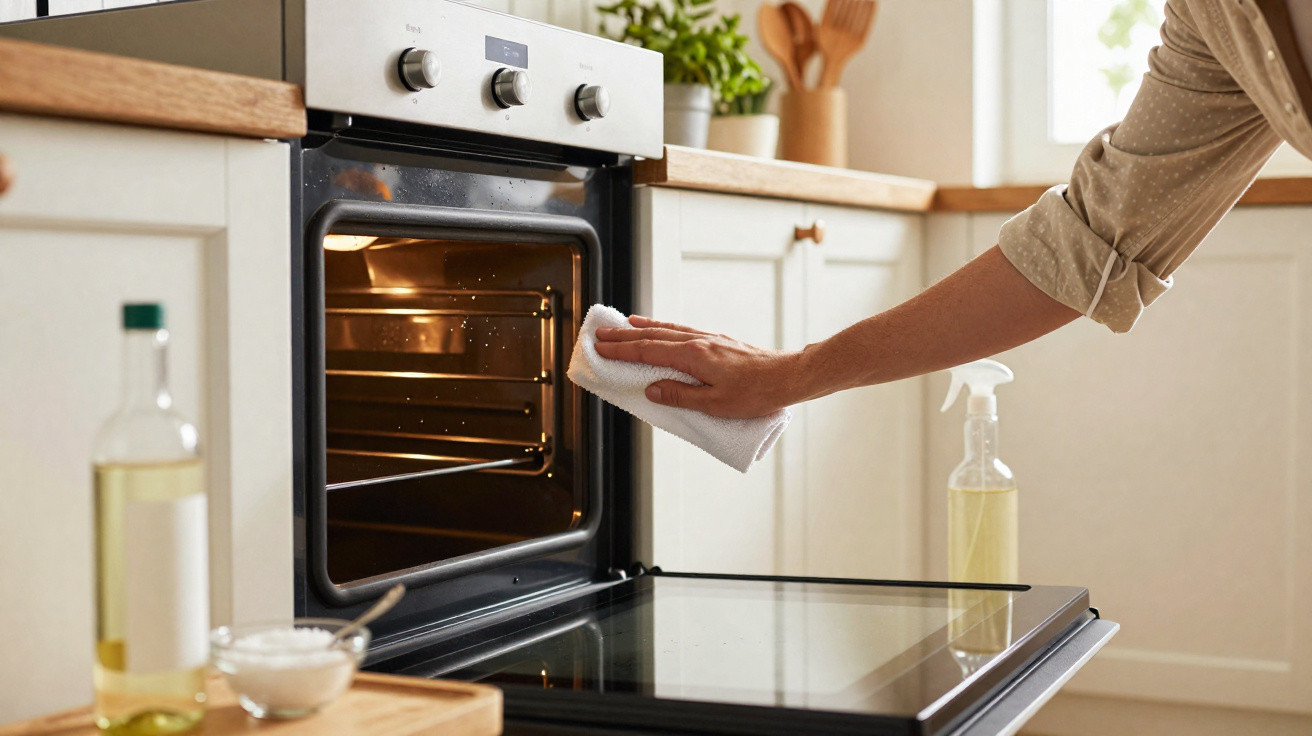
For stone surfaces, avoid acids and keep things mild. On wood or painted doors, make a cloudy mix of warm water and a teaspoon of washing-up liquid, clean in sections, and dry straight away. For stainless steel, wipe in the direction of the grain and, if you like a display-kitchen shine, finish with a tiny drop of oil on a cloth. Microwaves respond brilliantly to steam: heat a bowl of water with lemon slices for three minutes, leave the door shut for another two, then wipe - it’s the simplest five-minute refresh. Ovens? Spread on a paste of bicarbonate of soda with a little washing-up liquid, cover it with wrap overnight, then wipe it off in the morning. Under £5, under 5 minutes.
One serious warning: never combine bleach with vinegar or ammonia. That’s not a clever hack - it’s dangerous. If you’re using anything with a lingering fragrance, make sure there’s ventilation. On stretched days, keep it basic: one bottle, one cloth, one timer. If the grime feels like it’s refusing to budge, it’s usually down to one of three issues - the surface is cold, the solution has dried out, or you haven’t waited long enough. Adjust one factor and see what changes. And don’t beat yourself up if the top of the fridge is basically an archive. A kitchen is a family space with a sink, not a laboratory.
There’s a quieter kind of relief inside this method: it respects your time. You’re not “skipping corners”; you’re letting chemistry do its share. The wrap acts like your stand-in - a silent helper that never moans. You can be doing something else - reading, resting, rinsing bottles - while your splashback loosens its hold on last night’s curry. The sparkle at the end is pleasant, of course, but the real benefit is that your effort matches what the task actually needs, not what tradition insists on. And that’s a small household revolution in 15 minutes.
A kitchen that resets itself while life happens
The warm-and-wrap method isn’t wizardry. It’s permission. Permission to approach a job most of us were taught to do the hard way, with scouring pads and a heavy sigh. It makes the point that the kitchen can reset on your timetable, not the other way round. Pass it on to a friend who still scrubs, or to the partner who thinks elbow grease is the only solution. Set the timer, walk off, and use the minutes for something human - reply to your sister, drink some water, sit down. The trick will keep working quietly behind the cling film. And when you peel it away, you’ll get that small rush: less effort, lifted mess, evening restored.
| Key point | Detail | Why it matters to you |
|---|---|---|
| Heat + dwell time | Warm the surface, keep it wet for 10–20 minutes | Turns stuck-on grease into an easy wipe |
| Occlusion layer | Cling film or reusable silicone traps moisture | Stops evaporation so the cleaner keeps working |
| Surface-safe swaps | Use soapy water on stone and wood; skip vinegar | Protects finishes while still getting a deep clean |
FAQ:
- Can I use the vinegar mix on marble or granite? Use warm soapy water instead. Acid can etch natural stone, so keep it gentle and dry the surface after wiping.
- How long should I leave the wrap on? 10–15 minutes handles light grease; 20–30 minutes for heavy build-up. If wiping isn’t easy, give it more warmth or time.
- Will my kitchen smell like vinegar? The scent fades as it dries. Add a few drops of lemon or eucalyptus if you like, or finish with a quick water wipe.
- Is this safe around kids and pets? Yes when you use mild ingredients and ventilate. Keep bottles out of reach, and never mix vinegar with bleach-based products.
- Can I swap cling film for something reusable? Yes. Try a silicone baking mat, a reusable food wrap, or even damp paper towels pressed on top to slow evaporation.
Comments
No comments yet. Be the first to comment!
Leave a Comment