
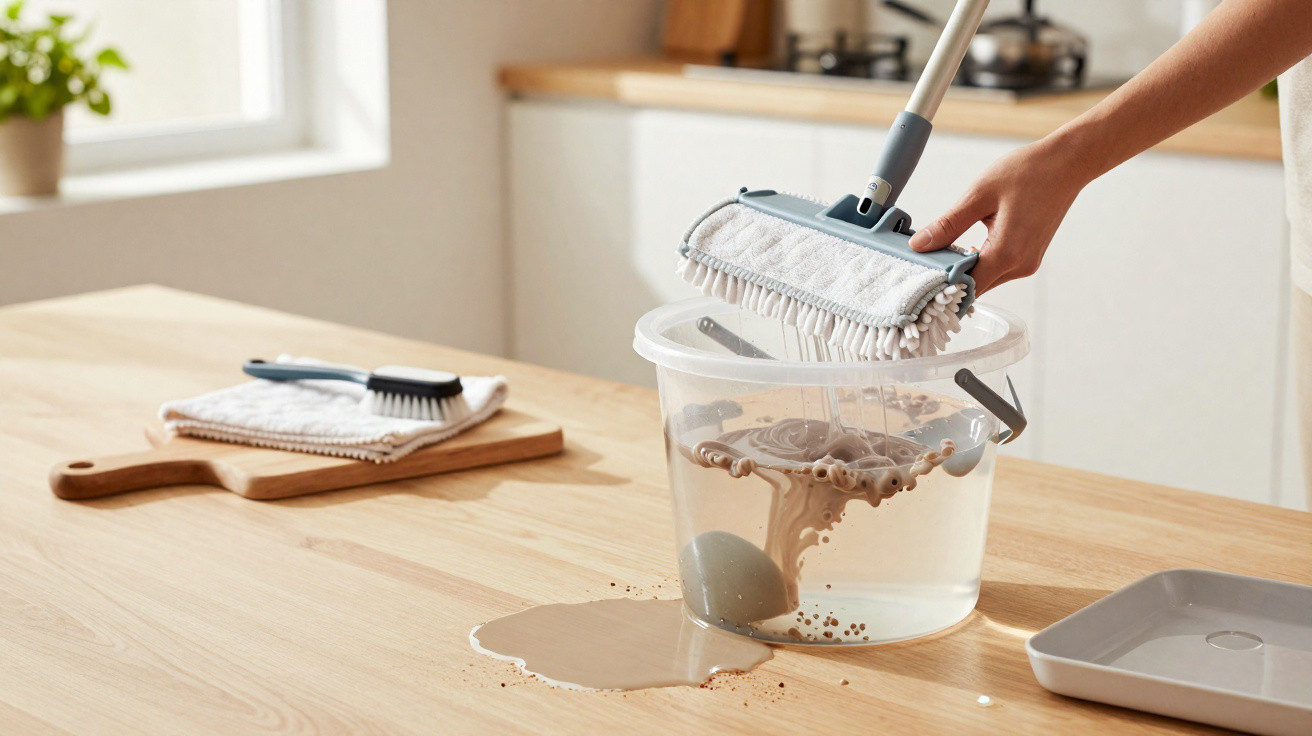
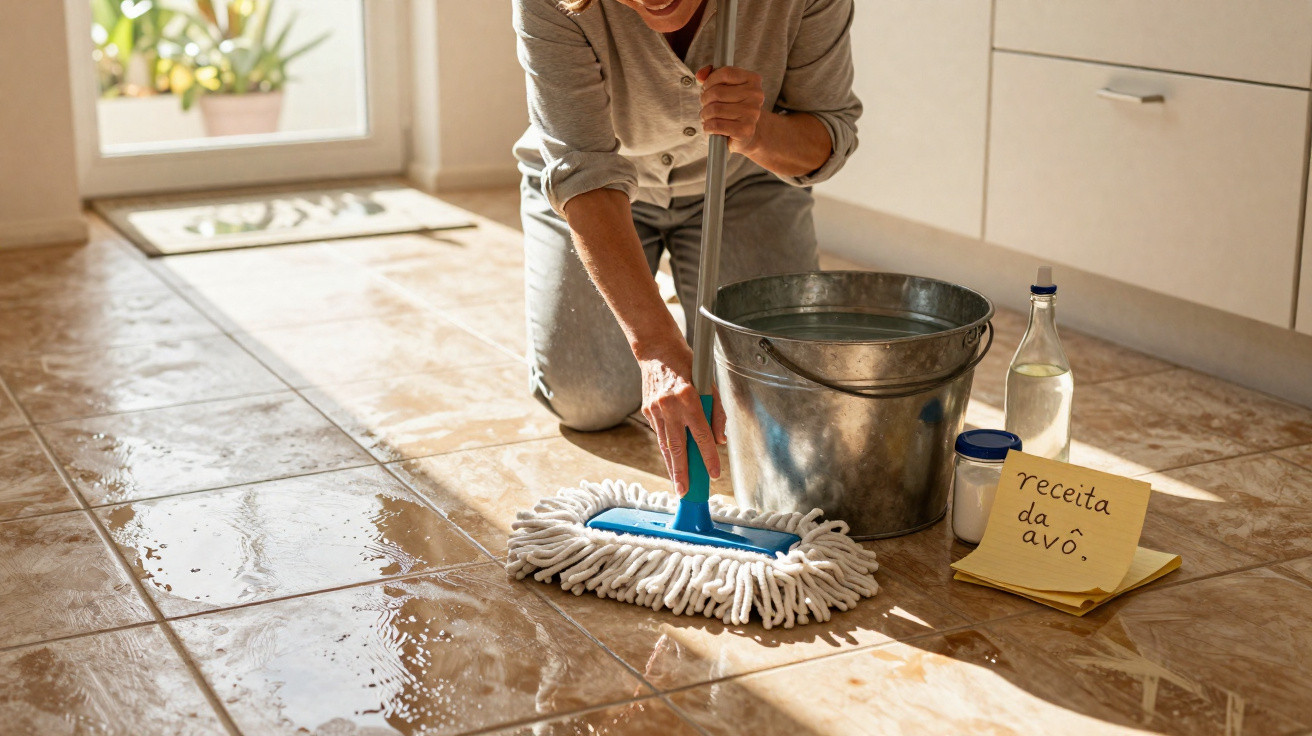
The mop smacks against the tiles with a damp thud, trailing that familiar ribbon of grey water behind it.
After only two rooms, the bucket has already turned cloudy, yet the motion feels steady, soothing, almost on autopilot. Swipe, rinse, swipe again - sure that each pass is lifting away the day’s dirt, dust and footprints. A faint lemon-cleaner scent starts to fill the room, like evidence you’ve done everything “properly”.
Then the water darkens to near-black and a slightly uncomfortable thought clicks into place: a lot of that muck is ending up right back on the floor. The more you mop, the dirtier the bucket becomes. The dirtier the bucket becomes, the more you’re effectively “painting” the floor with watered-down grime. From a distance, it looks clean. Up close, it tells a different story.
That’s when the real issue begins.
Why your usual mopping routine quietly backfires
Step into almost any home on a Saturday morning and the setup is familiar: one bucket, one mop, one big, valiant clean. The bucket is filled once, then maybe topped up with a splash of hot water “to get it finished”. The mop goes in and out, gets roughly wrung out, and is then pulled across every corner of the house.
All the mess ends up in the same murky mix - the hallway grit tracked in on shoes, kitchen grease that settles as you cook, and bathroom bacteria quietly multiplying. The illusion holds because the surface can look glossy for a while. Beneath that sheen, microscopic dirt is being circulated from room to room.
Picture a quiet Tuesday in a suburban kitchen: a mum finishes mopping and, moments later, watches her toddler drop a cracker, pick it up and eat it without hesitation. The floor looks spotless, so she doesn’t stop them. Yet two minutes earlier, that exact spot was wiped with a mop head that had just been across the bathroom floor. One study from a hygiene institute found that reused mops can spread bacteria across rooms up to six times faster than walking alone.
Professional cleaners tend to understand this without needing to be told. They’ll describe homes where grout stays stubbornly grey, not because the tiles are worn out, but because years of “cleaning” forced dirty water into the tiny pores. Most of us have experienced the moment you wipe a supposedly clean floor with a white cloth - and it comes away brown. That isn’t mysterious. It’s build-up.
At a microscopic level, the logic is unforgiving. Each time a dirty mop is plunged back into the same water, the concentration of grime rises. The fibres stop collecting fresh dirt and start redistributing what they’re already holding. Greasy films behave like glue, binding dust and hair into a thin layer you can’t easily see. Meanwhile, bacteria flourish in the warm, damp base of the mop strands and then travel with you from room to room.
Your brain registers shine and a fresh fragrance and decides the job is done. In reality, it’s closer to this: you’ve shifted the dirt around, thinned it out, and pushed plenty of it into corners, grout lines and fine scratches in the surface. It’s like washing your face all week with the same used flannel and calling it skincare. The effort is genuine. The outcome isn’t what it appears.
The floor-cleaning method that actually removes dirt
The most important change isn’t buying a flashy gadget. It’s moving away from “one bucket for the whole house” and towards a routine that keeps clean and dirty separate. Cleaning teams often rely on a two-bucket method: one bucket holds clean solution, and the other is only for rinsing. Dip into the clean bucket, wring lightly, mop a small section, then rinse in the second bucket before returning to the clean one.
That small adjustment keeps your cleaning solution largely clean. The rinse bucket absorbs the mess - not your floor. Microfibre flat mops help even more, because they’re built to trap particles rather than simply shunt them along. Use several removable pads in one go. Once a pad looks grey, it’s finished. Replace it and put the used one into a separate laundry basket to wash hot later.
Let’s be honest: nobody truly does this every single day. But you don’t need to. What suits real life is a layered approach. Start dry: vacuum or sweep thoroughly, paying special attention to skirting boards and the edges beneath furniture. Then do a damp clean with a slightly moist microfibre pad - not a dripping mop. Work in small sections you can cover in two or three large steps, and always move from the cleanest room towards the dirtiest.
If you can, ditch the bucket entirely. A spray bottle with diluted floor cleaner plus a flat microfibre mop is often plenty. Mist lightly in front of the mop, glide once or twice over the same line, then keep moving. Less water means less residue, and less chance of turning a bucket into a bacteria spa. The aim isn’t a floor left soaking and slow to dry; it’s a thin, even layer that lifts dirt and evaporates quickly.
The mistake people make most often is assuming “more product = more clean”. Strongly scented detergents feel reassuring, but they frequently leave a tacky film that attracts dust like a magnet. Another common slip is using the same dirty mop head for weeks or months. If you wouldn’t wear the same socks for that long, your floors probably won’t thank you either. People also rush the dry stage, then walk on slightly damp floors in socks - picking up loosened dirt and dropping it elsewhere.
On the days you’re exhausted and want to do the bare minimum, target the traffic lanes: the route from the front door, the area around the dining table, the strip in front of the kitchen worktop. These zones collect the evidence of daily habits. A quick, focused pass here with a clean, lightly damp pad achieves more than a whole-house marathon using a swampy bucket. Small, consistent effort beats the heroic clean that quietly spreads grime.
“A clean floor isn’t the one that looks shiniest right after mopping,” says one veteran cleaner. “It’s the one that still looks and feels clean three days later, when the smell of product is gone and the light hits every streak.”
Treat your routine like a simple cleaning strategy, not a penance. Rotate tools so everything can dry fully between uses. Wash mop pads in hot water with an extra rinse, and avoid fabric softener, which can coat fibres and reduce their grip. And yes - it’s fine if your system isn’t perfect, as long as you’re broadly heading in the right direction. In a busy week, a quick vacuum followed by spot-mopping spills is far better than doing nothing.
- Keep at least 3–5 microfibre mop pads in rotation for an average home.
- Replace water or pads the moment they look grey, rather than “finishing the room”.
- Always dry-clean first before any liquid touches the floor.
- Work from the cleanest room to the dirtiest - not the other way round.
- Plan a deeper floor wash once or twice a month, instead of only “when it looks bad”.
Rethinking what “clean floor” really means
Dragging a single mop and a single bucket from room to room is a deeply ingrained habit. Many of us grew up watching parents or grandparents do exactly that and calling it a decent, honest clean. Questioning it can even feel disrespectful - as though a family ritual shouldn’t be examined too closely. But our homes, our flooring and our daily routines have changed a great deal since then.
Today’s floors are often paler, smoother, and less tolerant of residue. Pets wander from garden to sofa. Children crawl, snack and even nap on the floor. We work from home, exercise in the living room, and spill more coffee than we’d like to admit. A “looks fine from the doorway” benchmark doesn’t really fit how we use our floors now. At the simplest level, this is where health, comfort and habit meet.
Most people have had the same little moment: you sit on the floor with a friend, a baby or a pet, and suddenly feel a faint sticky patch under your hand. That brief flash of “ugh” says plenty. This isn’t about chasing perfection or turning into someone who mops like a robot. It’s about making the effort you already put in deliver results that actually suit your life. Sometimes the change is as simple as swapping a filthy bucket for a fresh pad and a spray bottle.
Once you notice how quickly dirty water becomes a delivery system for grime, you can’t really unnotice it. You start clocking the ring inside the bucket, the lingering tackiness, the way your socks look grey underneath after “cleaning day”. Telling someone else about that realisation can feel strangely freeing - not to criticise their routine, but to say: there’s a smarter option, and it doesn’t necessarily take more work.
Changing the way we clean floors won’t change the world. But it might change how your home smells on a rainy afternoon, how comfortable you feel when your child eats a cracker off the tiles, or how much more relaxed you feel walking barefoot from the bedroom to the kitchen. And perhaps that’s enough to do it differently next weekend.
| Key point | Detail | Why it matters to you |
|---|---|---|
| One-bucket mopping spreads dirt | Reusing the same dirty water and mop head moves grime and bacteria from room to room. | Helps you understand why floors feel dirty again so quickly after “cleaning”. |
| Two-bucket or spray-and-microfibre method | Separating clean water from rinse water, or using clean pads with a spray bottle, actually removes dirt. | Gives you a simple, realistic system that upgrades your routine without extra effort. |
| Short, targeted sessions beat rare deep cleans | Focusing on traffic lanes with clean tools keeps floors genuinely cleaner over time. | Makes floor care more manageable in a busy life while improving hygiene and comfort. |
FAQ:
- How often should I really mop my floors? For high-traffic areas like kitchens and entryways, aim for a light mop once or twice a week, and a more thorough clean every two weeks. Low-traffic rooms can usually cope with a monthly damp clean if you vacuum regularly.
- Is a steam mop better than a traditional mop? Steam mops can sanitise and lift dirt well on sealed hard floors, but they’re not ideal for unsealed wood or delicate surfaces. They work best as a follow-up to good vacuuming, not as a shortcut for heavy grime or sticky mess.
- Do I really need microfibre, or is any mop fine? Microfibre is far more effective at grabbing fine dust, hair and bacteria thanks to its split fibres. Traditional string mops mostly push water and dirt around unless used with very frequent rinsing and clean water changes.
- What should I put in the water to clean safely? Use a mild floor cleaner designed for your specific surface, diluted according to the label. Too much product leaves residue, and mixing chemicals like bleach and ammonia can be dangerous, even in a bucket.
- How many mop pads do I need for an average flat? For a typical two-bedroom flat, plan on at least three to five washable microfibre pads. Use one for the cleanest areas, one for the kitchen, and one reserved for bathroom zones so you’re not cross-contaminating.

Comments
No comments yet. Be the first to comment!
Leave a Comment