
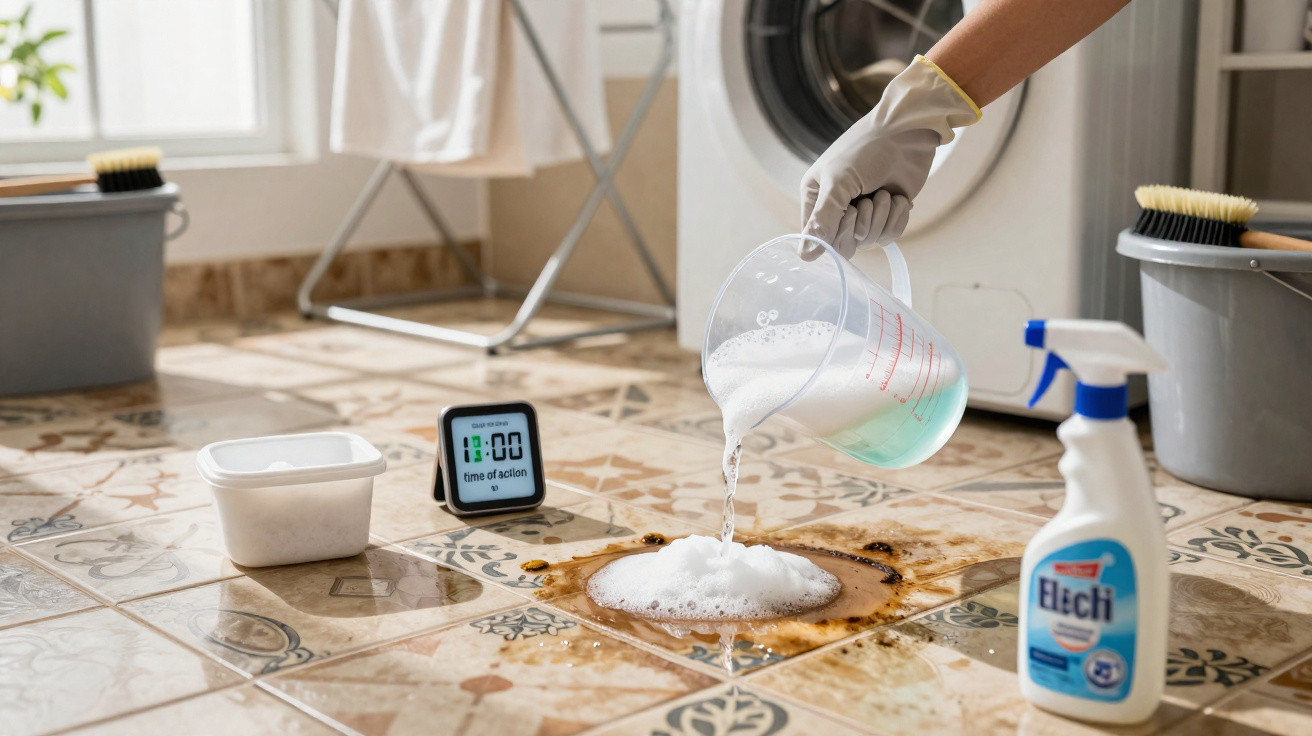
The utility area floor takes a constant hit from splashes around the sink, steam from the washing machine and poor airflow. That combination encourages dark staining and slimy build-up in corners - and the real trick to cleaning it is giving the product enough dwell time to work.
Why does the utility area floor build up mould and slime?
Mould (also called mildew) is made up of filament-like fungi that thrive in damp, low-light conditions. In a utility area, standing water, soap residue and slow drying create ideal conditions for fungi and slime.
It usually shows up first in the grout lines, behind the washing machine, around the sink and in corners where the floor squeegee or mop does not reach properly. In these spots, soap residue and dust cling to the surface and create a dark, slippery film.
Common signs that help you spot the build-up include:
- Soap: built-up residue feeds staining and leaves the floor looking dull.
- Damp: trapped water makes slime return in corners.
- Grout: the porous surface holds on to dirt and darkens quickly.
- Ventilation: limited air circulation slows down drying.
- Time: letting the product sit reduces how much scrubbing you need.
Why is letting the product work better than scrubbing?
Aggressive scrubbing can shift some dirt, but it may also wear down grout and spread residue across the floor. When the cleaner stays in contact for longer, it softens the dark layer so it lifts away with less effort.
Sodium percarbonate is a strong option for deep cleans, while diluted household bleach can be used carefully on compatible floors. The key point is to choose just one method, ensure good ventilation and avoid dangerous mixes.
How do you apply sodium percarbonate or bleach to the floor?
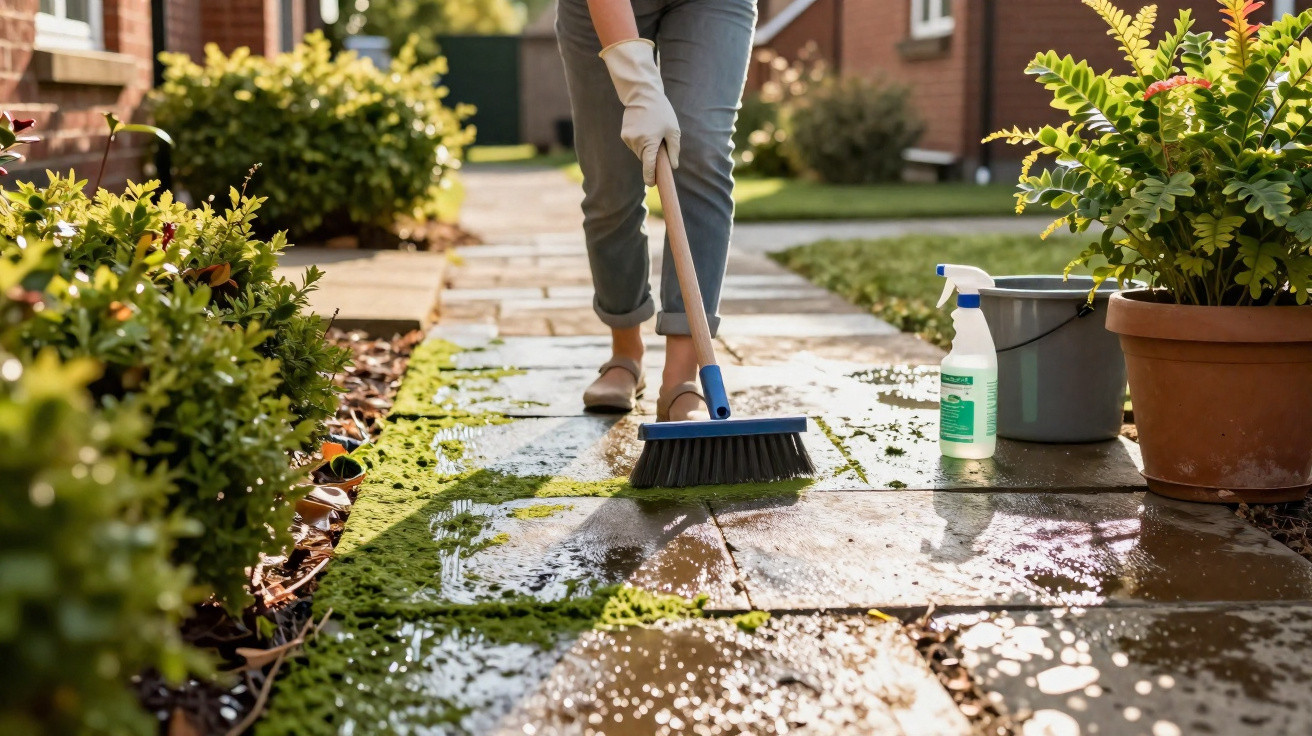
Start by sweeping and clearing the area, because loose dust interferes with how well the product works. Then apply your chosen solution to grout lines and stained corners, keeping the surface damp throughout the full resting period.
Cleaning with a pause
The cleaning happens while you wait
Keeping the product in contact for longer helps loosen slime without demanding heavy pressure from the brush. After the wait, lightly scrub only the darkest patches and rinse with clean water.
If the dirt is old, repeat the application rather than pressing harder with the brush. Stained grout brightens more effectively when it gets proper dwell time, thorough rinsing and complete drying - without constant abrasion to the floor material.
A practical order to follow is:
- Sweep the floor and remove buckets, mats and products.
- Apply dissolved sodium percarbonate or diluted bleach.
- Leave it to work for an extended period, keeping the area well ventilated.
- Lightly scrub only the darkest corners.
- Rinse thoroughly and dry the floor at the end.
What precautions prevent stains and damage during cleaning?
Before using any product, test it on a small hidden patch - especially with coloured flooring, non-slip surfaces or sensitive stone - before you tackle the whole area. This helps prevent loss of shine, fading and permanent marks caused by an incompatible product.
It also matters to wear gloves, keep windows open and never combine bleach with vinegar, ammonia or other cleaners. Chemical mixtures can release irritating fumes, whereas using one diluted product at a time keeps the clean more controlled and safe.
To reduce risks while cleaning:
- Use one product at a time and do not mix formulas.
- Keep children and pets away from the wet area.
- Use a soft brush so you do not wear away the grout.
- Rinse until all product residue is removed.
How can you keep the utility area clean for longer?
After a deep clean, prevention makes the difference. Drying corners, keeping items off the floor and repeating a light grout maintenance routine helps stop stains returning quickly - in the same way grout cleaning with sodium percarbonate works best with routine and consistency.
The aim is not to turn cleaning into hard labour, but to let the chemistry do the work before the brush. With ventilation, the right product, sufficient dwell time and proper drying, the floor loses slime and staining without requiring excessive force.

Comments
No comments yet. Be the first to comment!
Leave a Comment