
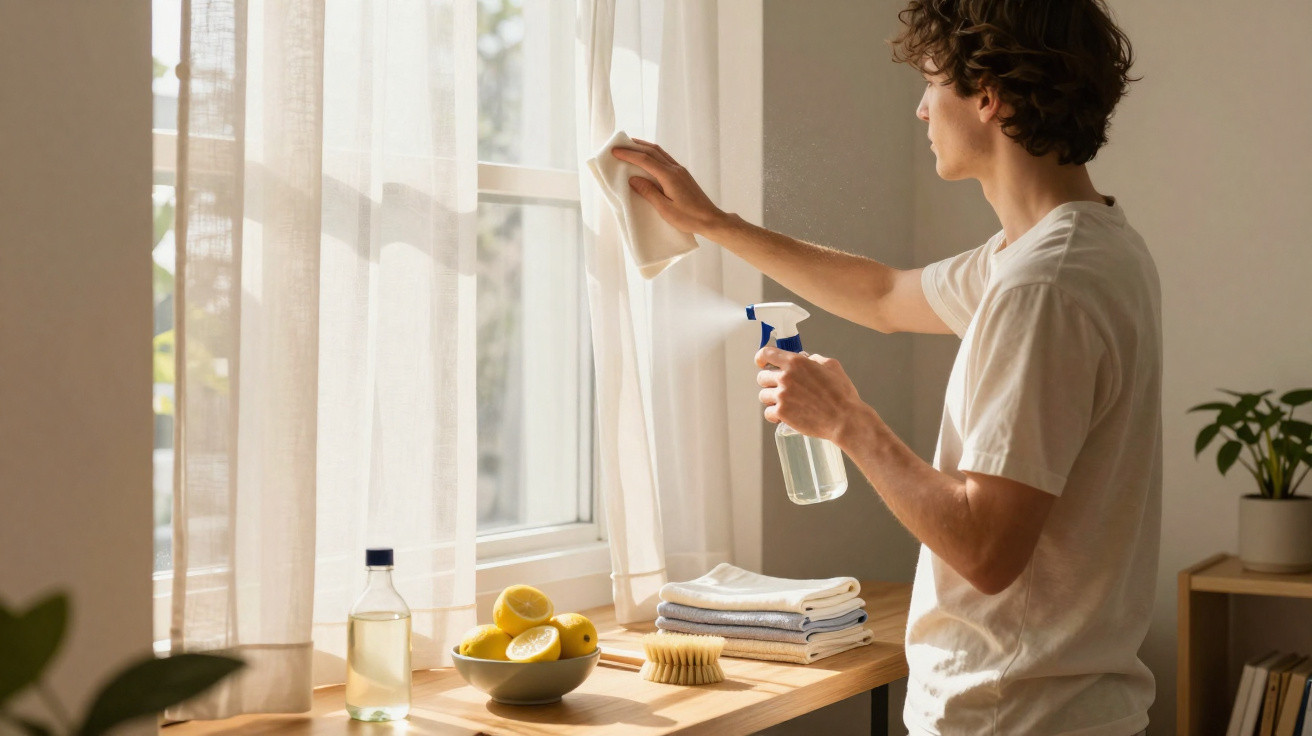
Cleaning curtains and blinds without taking them down is becoming increasingly common in many households. With a few straightforward precautions and affordable products, you can cut down on dust, light marks and lingering smells, keeping the home healthier while helping fabrics and fittings last longer.
How does the natural method for cleaning curtains and blinds work?
The natural approach relies on low-impact basics such as water, white vinegar, bicarbonate of soda and small amounts of mild washing-up liquid. The most widely used mix is water with well-diluted vinegar, applied using a microfibre cloth or a spray bottle, which helps lift light grease and dust while also neutralising odours.
For small, localised stains, you can make a gentle paste from bicarbonate of soda and water, apply it only to the affected spot, then remove it promptly with a clean, damp cloth. For PVC or aluminium blinds, warm water with mild washing-up liquid is often enough; for wood, it is best to use an almost-dry cloth and, if needed, a cleaner designed specifically for timber.
How can you clean curtains and blinds without removing them?
It helps to work from the driest stage to the dampest, using light, controlled movements to avoid warping, shrinkage or damage to slats. Before using any liquid, dust removal is essential so dirt does not turn into grime once it meets moisture.
After this first step, the order below keeps the routine practical and effective, without dismantling rails or fittings:
Initial dust removal
- Close windows to prevent more dust blowing in during cleaning.
- Use a vacuum cleaner with a brush attachment or a microfibre duster, working from top to bottom.
- Go over the entire surface, including the edges of the blinds.
Mixing the natural solution
- In a bucket or spray bottle, combine: 1 part white vinegar to 4 parts water.
- For more stubborn dirt, add a few drops of mild washing-up liquid.
- Mix thoroughly before use.
Applying to fabric curtains
- Lightly dampen a microfibre cloth with the solution, wringing it out well.
- Wipe gently, moving in vertical or horizontal passes.
- Always test on an inconspicuous area before treating visible marks.
Applying to blinds
- Close the slats in one direction and wipe each row with a cloth lightly dampened with the solution.
- Rotate the slats the other way and repeat.
- For wooden blinds, use an almost-dry cloth or a dedicated wood-care product.
Drying and airing
- Where possible, leave windows slightly open to improve air circulation.
- Avoid strong direct sunlight immediately after cleaning, as it may fade fabric.
- Check that no areas have been left overly wet near the rail or bottom edge.
What precautions should you take for each fabric and material?
Different materials respond differently to moisture and cleaning products, so extra care is needed. Very delicate fabrics, such as voile, can lose shape if they get too wet, while blackout curtains often have a rubberised backing that may crack if scrubbed hard or exposed to harsh products.
With aluminium or PVC blinds, the main risk is bending the slats, so the motion should be steady but gentle. With wooden blinds, prolonged contact with water can cause staining and rippling; for that reason, dry cleaning or minimal moisture followed by quick drying is the safest option.
How often should you use natural cleaning for curtains and blinds?
The best schedule depends on the room and how dusty it is. In busy areas or homes close to main roads, it is advisable to remove dust weekly and use the liquid solution every one or two months, shortening the gap if anyone in the household has respiratory allergies.
In bedrooms and more sheltered interior spaces, vacuuming fortnightly is usually enough, leaving damp cleaning for intervals of two to three months. Even so, it remains important to take curtains down for a full wash-following the manufacturer’s guidance-at least one or two times each year.


Comments
No comments yet. Be the first to comment!
Leave a Comment