
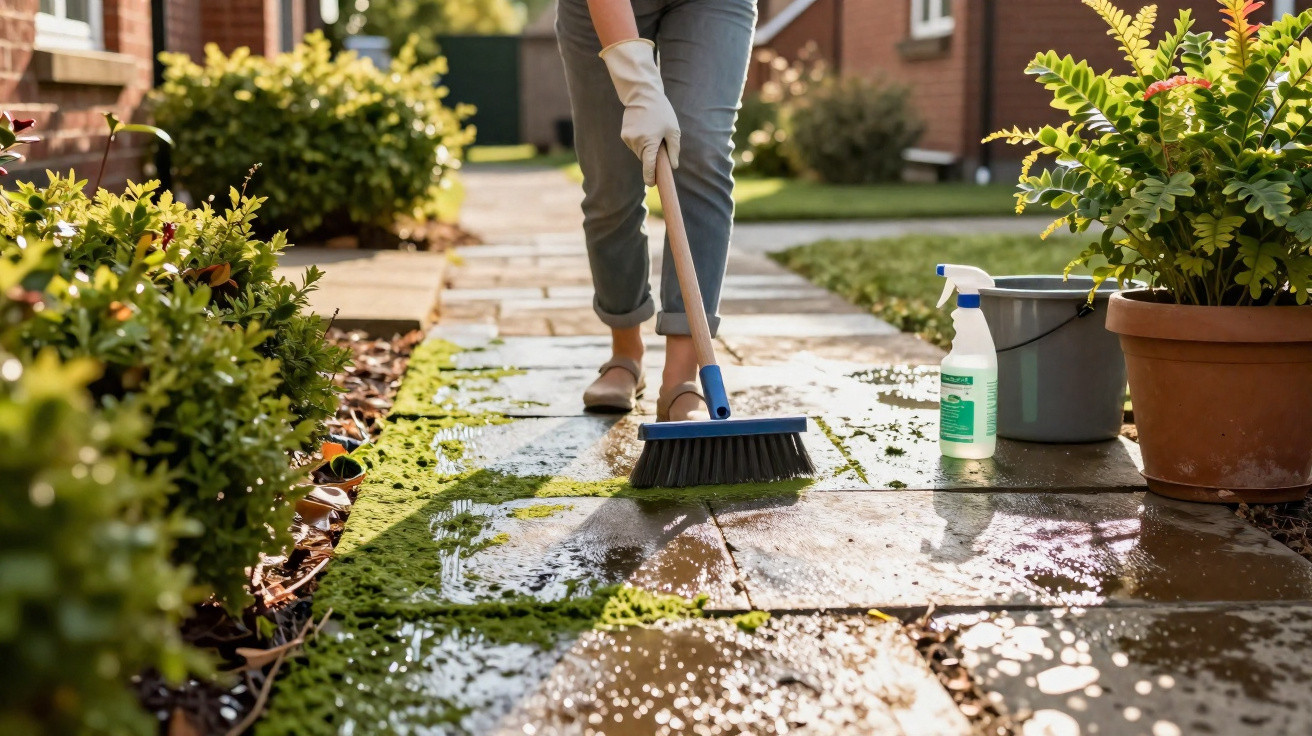
Green slime on the pavement is usually a biofilm made up of algae, cyanobacteria, moisture and organic residues that build up on concrete, stone and other porous paving. As well as spoiling the look of the area, this film can make the surface slippery, increasing the chance of falls in busy walkways.
Why does green slime appear on the pavement?
This issue tends to develop mainly in spots where water lingers for a long time after rainfall or cleaning. Shade, leaks, piled-up leaves, damaged joints and insufficient fall in the paving slow down drying and create the right conditions for these organisms to grow.
- Standing water left behind after rain;
- Leaks from taps, gutters or pipework;
- Shaded areas that take longer to dry;
- Build-up of soil, leaves and organic matter;
- Porous paving or poor drainage;
- Frequent washing without allowing it to dry fully.
How can you remove slime from the pavement safely?
Start by clearing away leaves, soil and any other loose debris. Lightly wet the surface, then apply water with a mild, neutral detergent and scrub using a stiff-bristled broom. Working while the area is damp helps reduce the spread of particles and makes it easier to lift the green layer.
After scrubbing, gather up the loosened residue and rinse using only as much water as necessary. Avoid washing dirt and products into flower beds, drains or waterways. If stains remain, choose a registered cleaning product that the label specifically recommends for that surface, without improvising home-made mixtures. Anvisa warns that mixing cleaning products can trigger toxic reactions.
Which products and mistakes should be avoided?
Muriatic acid is not a suitable choice for routine domestic cleaning of slime. It is hydrochloric acid, a corrosive substance that can cause injuries through contact and release dangerous fumes. It should also never come into contact with household bleach, as the combination can release toxic gas.
- Do not mix bleach with acids, ammonia or other cleaners;
- Do not apply products without reading the manufacturer’s instructions;
- Do not use muriatic acid to deal with a surface-level stain;
- Do not direct chemical residues towards plants or drains;
- Do not use a high-pressure washer too close to weak or fragile joints;
- Do not leave the area wet and open to foot traffic.
How do you stop slime returning after cleaning?
Prevention mainly comes down to helping the pavement dry faster. Fix dripping taps, clear gutters, unblock drains and check that rainwater is running to the correct outlet. Where there are dips in the surface, you may need to repair the base layer or the finish to remove places where water collects.
It also helps to sweep away leaves and soil regularly, prune only the vegetation that keeps the area constantly damp, and move plant pots that restrict airflow. Algae growth can come back as long as the surface continues to receive moisture and organic matter, even after careful cleaning.
When does the pavement need repair or professional cleaning?
Seek help if the slime returns within a few days, spreads across a very large area, or is linked to damp ingress, cracks or uneven levels. A professional can check whether there is an underground leak, a drainage fault or deterioration of the surface, so that repeated washing does not simply mask the underlying issue.
As with other household problems where the cause must be dealt with, removing the visible layer is only the first step. To prevent the return of slime in outdoor areas, the most effective approach is to keep the pavement clean, well drained and able to dry quickly.

Comments
No comments yet. Be the first to comment!
Leave a Comment