
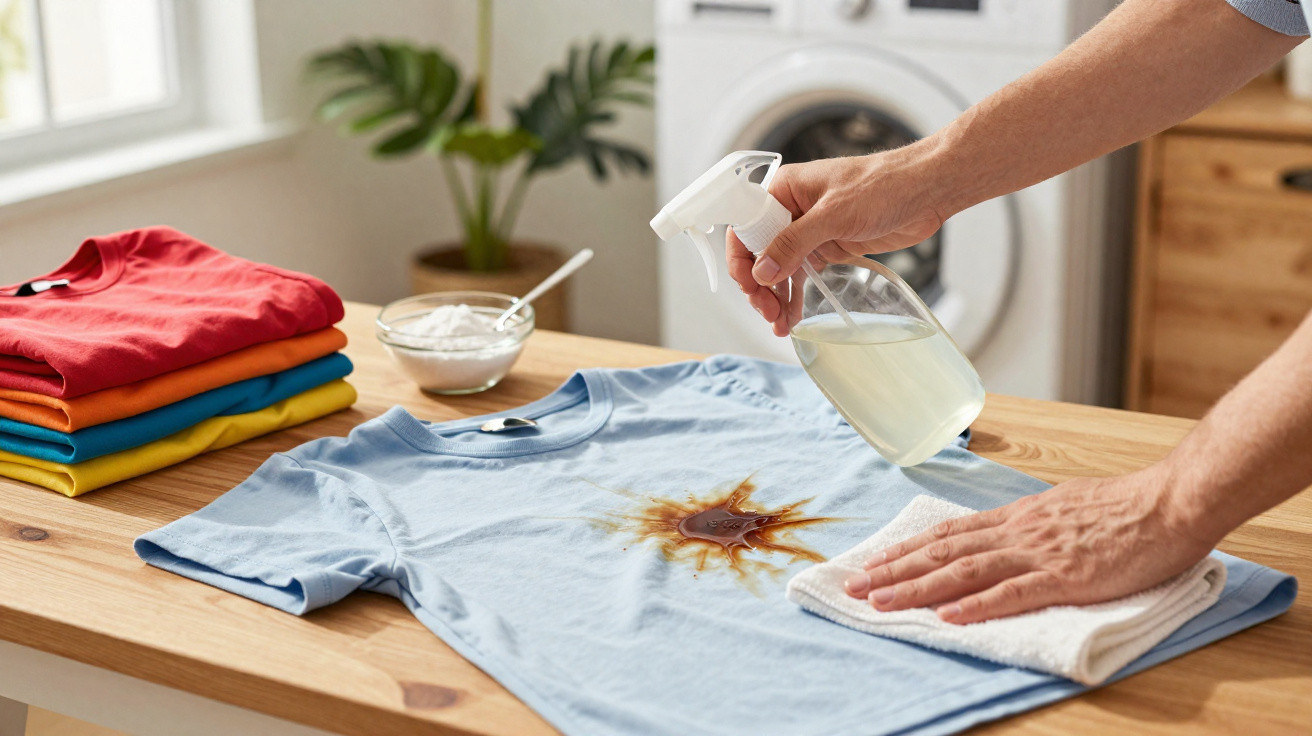
Grease stains on coloured clothing often cause anxiety, largely because trying to remove them can lead to colour fading. Among the most common at-home options, one straightforward home remedy has become popular because it targets oil directly without being as harsh on dyes: a mix of neutral, colourless washing-up liquid with bicarbonate of soda and lukewarm water-provided it’s used with care for the fabric type.
How does this home remedy work on grease stains in coloured clothes?
This method relies on neutral, colourless washing-up liquid, which works as a degreaser, paired with a small amount of bicarbonate of soda, which helps lift and loosen the oily residue. It usually performs best when used as soon as the stain appears, but it can also help with dried-in marks-just with a slightly longer contact time.
A widely used homemade mix follows the approximate ratio below. Adjust according to the size of the stain, and avoid overdoing it to reduce the chance of affecting the dye:
- 1 tablespoon of neutral, colourless washing-up liquid;
- 1 teaspoon of bicarbonate of soda;
- 2 to 3 tablespoons of lukewarm water (not hot);
- A clean white cloth or a soft-bristled brush.
How do you apply the grease remover without fading the garment?
To use this home remedy on grease stains in coloured clothes, start by removing any excess oil from the surface with kitchen roll or an absorbent cloth, pressing lightly rather than rubbing. Next, combine the ingredients so they form a runny paste that spreads easily and stays on the greasy area without dripping too much.
- Colour test: apply a small amount of the mixture to a hidden area and wait a few minutes; if there’s no change, continue.
- Apply the paste: spread it only over the stain, fully covering the affected area.
- Leave it to work: keep it on for 10 to 20 minutes, starting with 10 minutes on delicate fabrics or very bright colours.
- Gentle agitation: rub very lightly, ideally working from the reverse side towards the right side, to help shift the grease.
- Rinse and wash: rinse in room-temperature water and wash as normal using detergent intended for coloured laundry.
Why might this mixture be better than ordinary soap?
Neutral, colourless washing-up liquid is designed to break down grease molecules into smaller particles, making them easier to rinse away and, in general, less likely to strip colour than some bar soaps or powder detergents that contain whitening agents. Bicarbonate of soda, used sparingly, acts as a mild abrasive and helps emulsify grease-without the strength of bleaching products.
Because you apply this combination directly onto the stain, the contact between the product and the grease is more concentrated. That can reduce the need for vigorous scrubbing, very hot water, or long wash cycles. In turn, this helps protect the dye and the fabric fibres, keeping the original look of the coloured garment and reducing the risk of pale, chalky-looking patches in specific areas.
Which fabrics respond best to this cleaning technique?
This approach is typically most effective on cotton, cotton–polyester blends, and everyday fabrics such as T-shirts, casual trousers, and coloured tea towels. It can also work on materials like viscose, modal, and finer jersey fabrics, as long as you shorten the contact time and keep friction extremely gentle.
For delicate items-such as silk, wool, very fine linen, or fabrics with special finishes-this remedy needs extra caution, and professional cleaning is often the safer option. In all cases, follow the care label, avoid very hot water, avoid prolonged direct sunlight after cleaning, and steer clear of stiff brushes, so the grease is removed without compromising the colour or texture of the garment.



Comments
No comments yet. Be the first to comment!
Leave a Comment