
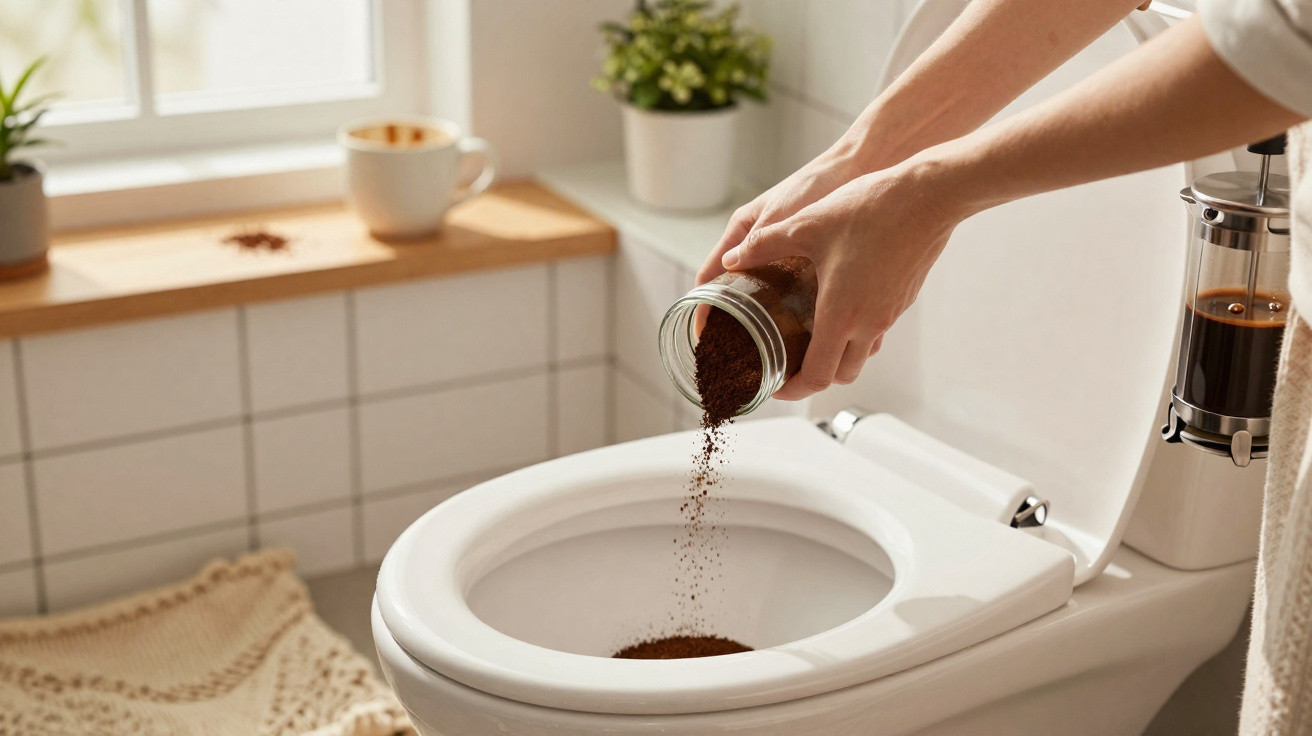
Breakfast is over and the used coffee grounds usually go straight into the bin. Yet this leftover that looks worthless has a benefit most people never think about: it is one of the most effective natural deodorisers you can use in the bathroom. Putting coffee grounds in the toilet before bed or just before you leave the house is a simple, no-cost trick with no chemicals involved. It helps neutralise smells, reduces the chance of build-up, and keeps the room feeling fresher.
Why do coffee grounds work as a natural bathroom deodoriser?
Coffee grounds have a porous internal structure, which means they can act like a natural odour filter. They take in gases that rise up from the soil pipe, especially when the toilet isn’t used for hours at a time. That’s why this is particularly handy before a trip away or a weekend out of the house: when the bathroom stays shut and there’s no flushing to disperse trapped gases, smells can intensify.
Unlike many commercial toilet blocks that mostly cover odours with artificial fragrance, coffee grounds work on the compounds that cause the smell by absorbing them into that porous structure. And unlike chemical cleaners, coffee grounds are completely biodegradable. They are gentle on pipework, don’t pollute the water, and don’t pose the same concerns for homes with children, older people, or pets.
- Genuinely neutralises odours: targets the gases coming up through the pipework, absorbing the smelly compounds rather than disguising them with artificial scent
- Helps prevent build-up: the mildly gritty texture can shift small residues from the inside surface of the bowl while it sits in contact with it
- 100% biodegradable and safe: won’t damage pipes, won’t contaminate water, and is a safer option than industrial chemical products in homes with children and pets
- No cost: makes use of something you’d normally throw away, replacing toilet blocks and cleaners you’d otherwise keep buying
- Ideal before travelling: leaving grounds in the bowl before you’re away for several days helps avoid the stale, built-up smell that can appear after prolonged non-use
How to use coffee grounds in the toilet the right way
It’s straightforward, but the contact time is what matters. Once you’ve made coffee as usual, set the grounds aside instead of binning them. Let them cool, then drain off excess liquid so you’re not adding unnecessary water to the bowl. Tip the grounds directly into the toilet and spread them around the sides of the bowl as best you can. The key step is not to flush straight away: leave them to work for a few hours or, ideally, overnight.
For each use, about one to two tablespoons is enough. Using more than that isn’t necessary to get the effect. If you apply large amounts frequently, and your home has older pipework with low flush pressure, there can be a greater chance of residue collecting over time. With the right amount and a decent flush, the grounds should move through the system without issue.
Does coffee damage the plumbing or block the pipe?
This is the question most people ask when they first hear the idea. Used properly and in moderation, coffee grounds don’t pose a realistic risk to typical household plumbing. They’re an organic material with fine particles that disperse readily with a normal flush. In practice, they’re far lighter and more water-friendly than items such as kitchen roll, which some people put down the toilet without giving it a second thought.
Other household uses for coffee grounds worth knowing
Coffee grounds are one of the most versatile household leftovers going. In the fridge, a cup of dried grounds can soak up strong food smells-such as cheese, fish, and leftovers-at a level comparable to bicarbonate of soda. On your hands, rubbing grounds between your palms can remove stubborn odours from garlic, onions, and fish more effectively than ordinary soap. In bins and shoe cupboards, a small sachet of dried grounds can neutralise lingering smells without using a spray deodoriser.
In the garden, mixing grounds into the soil for acid-loving plants-such as hydrangeas, roses, and blueberries-acts as a natural nitrogen-rich feed. In the kitchen, their abrasive texture can help scrub pans and frying pans where grease has built up and is difficult to shift. In short: before you throw them away, consider which of these jobs they could do first.
Anyone who drinks coffee daily has access to this handy resource without buying anything extra. The difference is simply choosing a better use for something most homes produce automatically-and usually discard without a second thought.
When the trick works best-and when it won’t help
Coffee grounds are excellent for dealing with sewer-type odours coming up through the pipework and for keeping the bathroom fresher during periods of low use. They can also help reduce the early stages of residue build-up on the bowl’s surface. What they won’t fix is a deep clean when the toilet already has established dark staining, hardened limescale, or older encrustations. In those situations, acidic options like concentrated white vinegar or dedicated limescale removers are more suitable.
Think of coffee grounds as preventative maintenance and odour control, not a complete replacement for a normal clean with a brush and an appropriate product. As part of a regular bathroom routine, they complement conventional cleaners and can help you rely on them less often.
How long do the coffee grounds need to stay in the toilet to work?
A minimum of two to three hours is recommended, but the most noticeable result comes when the grounds stay against the bowl overnight. That’s why applying them before bed works so well: they sit and do their job over the next six to eight hours with no effort from you, and in the morning you simply flush as normal. One application per week, done consistently, is usually enough to notice the bathroom feels fresher compared with periods when you don’t use the trick.
This is the kind of tip that seems small, yet can permanently change a daily habit. Pass it on to anyone who drinks coffee every day and still isn’t sure what to do with the leftover grounds.
Comments
No comments yet. Be the first to comment!
Leave a Comment