
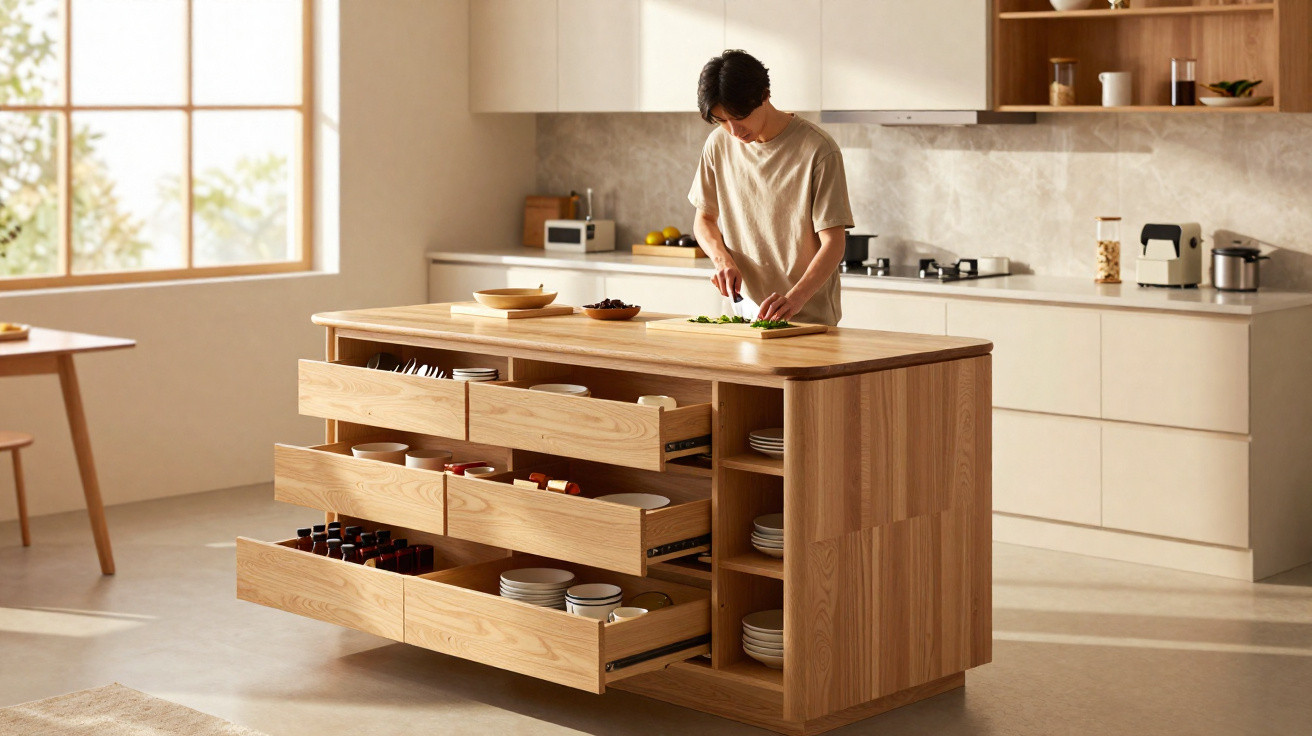
Modern kitchens have stopped rewarding visual clutter and now favour clear worktops, easy movement and smart storage. In compact flats, the so-called capsule kitchen replaces dominant cabinets with a functional island and strong internal organisation.
What is a capsule kitchen in modern homes?
A capsule kitchen is a way of planning the space so that very little is left on display, with each area given a clear purpose. Rather than filling every wall with tall units, it concentrates prep, support space and storage into cleaner, more practical solutions.
The concept aligns with the minimalist kitchen: it cuts visual noise and focuses on what will genuinely be used. The aim is not to leave the room empty, but to make drawers, niches and closed doors work for your routine and improve circulation.
The most common signs of this trend are:
- Clear worktops: only a few items stay out during the day.
- Central island: brings together support space, prep and small meals.
- Internal organisation: drawers and doors hide everyday objects.
- Clean lines: smooth fronts reduce visual information.
- Function: every item must earn its space and presence.
Why have tall wall cabinets fallen out of favour?
In interior design, planning and organising spaces means combining elements in ways that make sense both aesthetically and practically. In the kitchen, that often points towards lighter-looking furniture, more evenly distributed lighting, and choices shaped by how you use the room, your taste and your budget.
Floor-to-ceiling cabinets can still be useful, but they are not always the best answer in smaller flats. When they take over entire walls, they can feel visually heavy, make access harder, and encourage you to store an excess of rarely used items in day-to-day life.
How does a functional island change daily life?
The functional island is gaining ground because it gathers tasks together without turning the main worktop into a dumping ground. It can be used for food preparation, quick meals, storing utensils and managing small appliances, keeping the kitchen’s centre more fluid and versatile.
Less excess, more real use
The island becomes the kitchen’s practical hub
It can combine support space, prep, storage and quick meals in one spot.
With fewer objects on show, cleaning is faster and movement through the room is easier.
When planned well, an island also helps separate prep, cooking and washing-up zones. That cuts unnecessary back-and-forth and means only a few items stay visible, while pans, containers and accessories remain in drawers and compartments.
In practice, an island can bring together functions such as:
- A surface for chopping, seasoning and assembling recipes.
- Internal drawers for utensils used every day.
- Space for quick meals in open-plan kitchens.
- A clear surface to bring out appliances only when needed.
What benefits show up in compact flats?
In compact flats, every clear surface matters. By reducing what sits out, the kitchen feels larger, collects less dirt, and allows the worktop to be used properly rather than competing with containers, stands and appliances.
Minimalism does not mean giving up comfort. It simply manages the quantity of objects better, removes duplicates and keeps within reach only what belongs in your routine-balancing practicality, beauty and comfort in the home environment.
The most noticeable day-to-day gains include:
- Faster cleaning, because there are fewer items on the worktop.
- A greater sense of space in small or open-plan kitchens.
- Fewer duplicate purchases, because everything is organised by function.
- A calmer look, with furniture and accessories kept in balance.
How can you adopt the trend without losing functionality?
The principle is similar to choosing a finish that transforms a bathroom: a domestic look only works when it improves everyday living. In the kitchen, start by removing excess and deciding what truly deserves to stay visible and accessible.
Before replacing furniture, review your habits, measurements and budget. A modern kitchen needs efficient internal storage, easy-clean materials and proper lighting so that minimalist styling does not turn into a lack of space, but into order that supports real use.



Comments
No comments yet. Be the first to comment!
Leave a Comment