
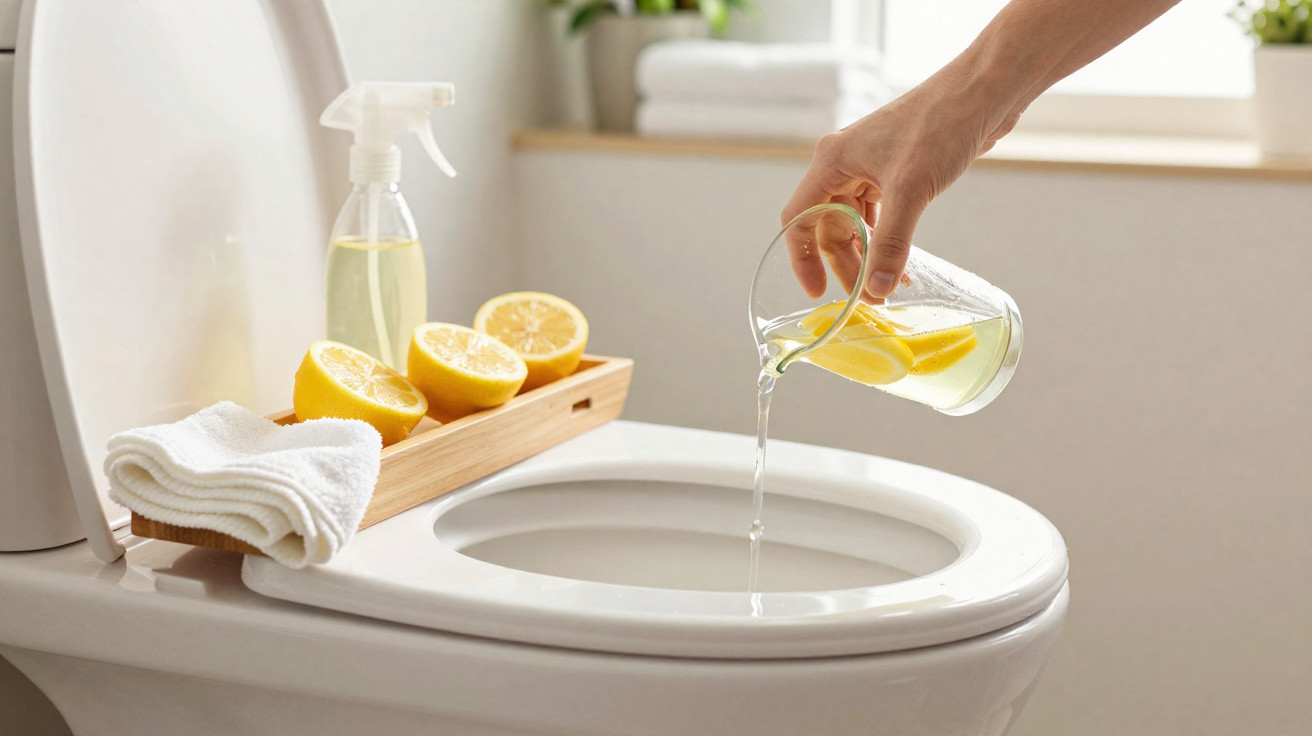
Pouring lemon juice into the toilet can be a handy part of your weekly clean when you’re dealing with light staining, unpleasant smells and mineral marks. Its citric acid works gently on small patches of limescale, surface-level rust and built-up residue.
Why does lemon help when cleaning a toilet?
Lemon juice is naturally acidic, which can help loosen mineral staining that clings to the inside of the bowl. In bathrooms with harder water, these deposits often show up as marks that look yellowish, dull or whitish.
Citric acid is a mild organic acid found in citrus fruit such as lemons and oranges. That’s why it’s often used for light household cleaning, particularly when you want to dissolve residue without reaching for abrasives.
People use this trick mainly because:
- Acidity: helps lift light mineral deposits.
- Light cleaning: works best as weekly maintenance.
- Hard water: limescale marks may reduce with regular use.
- Scent: leaves a temporary citrus smell in the bathroom.
- Caution: it must not be mixed with chlorine or bleach.
How do you apply lemon juice to the toilet?
Ideally, squeeze enough lemons to spread the juice over the stained areas, especially around the waterline and along the inner sides of the bowl. Then leave it to sit before scrubbing with a toilet brush, giving the acidity time to work on the dirt.
For light stains, the contact time can be between 15 and 30 minutes. For older marks, it’s better to repeat on another day, as scrubbing too hard can wear the surface and create splashes around the bathroom.
What is the safe step-by-step method?
Before you start, flush the toilet and leave the inside surface damp, but without excess product from earlier cleaning. Lemon should be used on its own-no improvised mixes-especially if the toilet has recently had disinfectant, chlorine or a strong cleaner applied.
Weekly citrus clean
Contact time matters
Leave the lemon juice for a few minutes before scrubbing the inside walls.
Use a toilet brush, then flush at the end to clear away loosened residue.
After the waiting time, scrub the sides, the base and the area near the outlet. Finish by flushing and airing the bathroom out, and avoid leaving acidic residue sitting for too long on metals or finishes.
Follow this order:
- Squeeze the lemon and apply the juice to the stained areas.
- Leave it for 15 to 30 minutes, without mixing any products.
- Scrub with a toilet brush, focusing on mineral marks.
- Flush and repeat weekly if needed.
Why is lemon gentler than abrasive products?
Abrasive products remove dirt through friction, but they can scratch, dull the shine and make the surface more porous over time. Lemon works more gently, helping to dissolve light deposits without needing such aggressive scrubbing.
That doesn’t mean it replaces heavy-duty cleaning or disinfection when those are required. This approach is most effective as weekly maintenance: it helps reduce fresh stains, manage odours and prevent build-up before grime becomes thick and stubborn.
This option is most suitable when you have:
- Light limescale marks around the inner waterline.
- An unpleasant smell without obvious heavy soiling.
- Yellowish residue that is still superficial.
- A need for a less harsh weekly maintenance routine.
How often should you use lemon in the toilet?
Like the trick of adding white vinegar to the toilet, lemon should be used sensibly. One weekly application is usually enough for maintenance-without overdoing the acidity or replacing proper hygiene.
If there’s deep rust, long-standing crusting, persistent odours or a leak, you may need a specific product or a plumbing check. Lemon supports the routine, but the best results come from regular cleaning, good ventilation and preventing build-up.


Comments
No comments yet. Be the first to comment!
Leave a Comment