
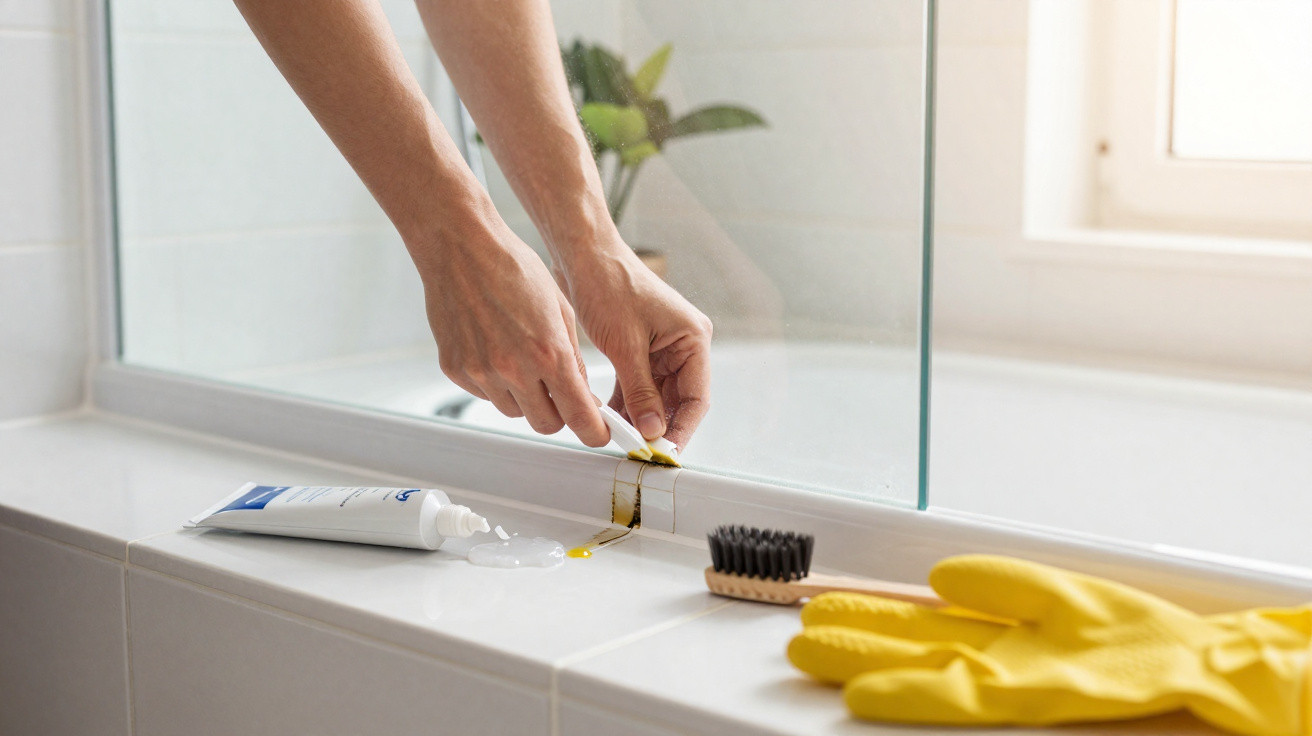
That narrow black streak tracing the bath where the silicone joins the tiles, creeping into the corners like a teenager slipping home after curfew. I attacked it with worn toothbrushes and bargain sprays smelling of chlorine and citrus, yet it always returned. Visitors would say, “Lovely place,” while all I could hear was, “So you live with mould then.” Anyone who has crouched on chilly tiles, grumbling at a stubborn dark mark, will recognise that simmering frustration. My bathroom became a small stage for defeat, with the door quickly closed whenever friends came over. I was not chasing perfection. I simply wanted that line to disappear - and remain gone. The solution was not another brush or some magical household tip, but a straightforward change in the product I chose and how I used it afterwards. Interested?
The day I stopped calling the black line “just shadow”
It was after a wet Tuesday, one of those days when washing never fully dries and the mirror mists up despite nobody using the shower. I noticed mould edging into a neat corner that I had re-sealed the previous year, and felt a sharp flicker of embarrassment. We have all looked at something grimy in our homes and thought, “That’s who I am now.” Mould on sealant feels oddly personal, like a visible little failure lodged at ankle level. I had tried vinegar, scattered bicarb and, in an optimistic moment, rubbed on toothpaste. None of it lasted.
A plumber - the kind of person who repairs things with a shrug and one uncomplicated sentence - looked at the caulk and said, “Wrong product. You need it to stay put.” He did not mean it metaphorically. He meant gravity. Sprays run straight off. Thin bleach trickles into the bath while the mould sits there, completely unaffected. When the active ingredient cannot remain on the stain long enough to work through it, you are only perfuming the issue. So I chose to try a product that would cling.
Mould remover gel that finally stays in place
I am not loyal to brands; I am impressed by physics. The difference was not a fresher fragrance or a “triple-action!” claim, but the consistency: a gel. The sort of mould remover that grips vertical silicone like a cat clinging to a curtain. You can buy these in most UK supermarkets and online; search for “mould remover gel” or a foam labelled as clinging to surfaces. They are generally chlorine-bleach based, from the same family as thick toilet bleach, but made substantial enough to stay on sealant.
The key product is a gel-based mould remover containing sodium hypochlorite. This oxidiser makes black marks vanish, bleaching and breaking down the staining lodged within the silicone. Foam products may also be effective, particularly in corners, because their bubbles help them remain in place. A quick spray does not. You need a formula you can apply like cake icing, confident that it will not slide away while you sleep.
Why gel makes the difference
Mould takes hold in sealant because silicone is mildly porous, allowing dark strands to burrow in like roots. A fast wipe may brighten its surface, but it leaves the colony beneath ready to lift its little black flags as soon as steam returns. Gel gives you the necessary time. It holds the active ingredient against the area, allowing it to move further into the tiny pores and oxidise the mould you cannot see.
That may sound rather harsh and chemical - and, to some extent, it is. Yet it also feels fair. You are no longer expecting a five-second spray to complete a six-hour task. Instead, you let the cleaner sit, breathe and do its work without watching the clock. Then, with no fuss at all, the caulk releases its grey history.
The understated science behind the miracle
It is worth looking behind the curtain. Chlorine-based cleaning products do not merely “scrub” mould away; they break it apart at a molecular level. Imagine a black felt-tip line on kitchen roll. Water might spread it further, but a proper oxidiser can dismantle the ink until there is nothing visible left. Mould is a living stain, making it more troublesome, but the basic idea is the same. It needs both time and contact.
People often believe mould always returns because most of us - in a pattern that reflects life generally - are always rushing. Spray quickly, wipe once, sigh, finished. Then the bathroom fills with steam, moisture settles and the surviving mould thanks you for the bath. But when mould is killed all the way through the silicone, there is nothing at that particular point for it to grow back from. That is about as “permanent” as cleaning can be, provided you do not keep offering it a swamp to celebrate in.
The plumber's method I had never been told
There is a technique that takes gel from “pretty good” to “where have you been all my life.” It begins with a dry surface. Open the window, switch on the extractor fan and towel the sealant until it squeaks. Next, leave the bathroom door open for 30 minutes. Overly particular? Perhaps. However, gel must meet the sealant itself, rather than a watery film slipping between them like a bad date.
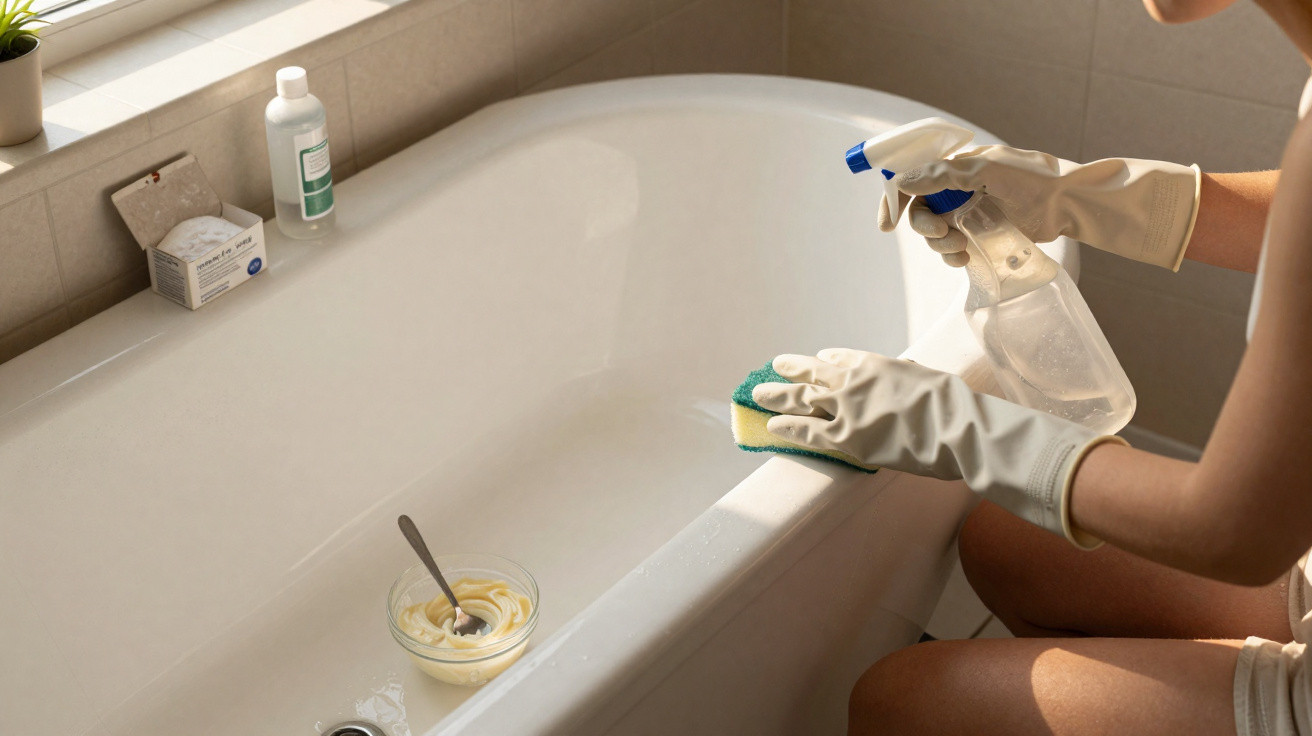
Dry the caulk first; water dilutes the chemistry and wastes your effort. Once the area is dry, use a little tape to mask the tiles and bath if you want a tidy finish. Apply a generous line of gel along the mouldy seam. You are not painting it; you are covering it with a blanket. As it settles, you will catch that slight swimming-pool smell, reminiscent of school changing rooms and holiday pools with too much chlorine, and know it is getting to work.
The cling-film trick
This is the part that feels like useful cheating. Lay strips of ordinary cling film over the gel and press them down. The purpose is not to exclude air, but to stop the product drying out and ensure every millimetre remains in close contact with the silicone. It also prevents the gel gradually slumping away, as gravity will eventually make it do - gravity never loses interest. For corners, strips of cotton wool soaked in product work exceptionally well when left to nestle against the bead.
Then leave it alone: at least six hours, or overnight where possible. I learned this through experience: the real change occurs while it appears that nothing is happening. One morning I walked in early, my feet hit the cold tiles, the plastic peeled away with a soft whisper - and the line was white. Where a patch remained hazy grey, I repeated the process for another night, as though applying a second coat of paint. This time, every remaining speck gave in.
The following morning: white again and unexpectedly moving
There is a distinctly British pleasure in solving a small, persistent annoyance: the kettle that no longer screams, or the window that finally closes without being slammed. This felt exactly like that. I rinsed off the gel, wiped the sealant with a damp cloth and stood there for longer than intended, watching condensation run down a genuinely clean edge. The room carried a faint disinfectant scent, the fan gave its reassuring hum and I considered all the sprays I had wasted.
I actually laughed when the white line revealed itself again, as though the tiles had been concealing a secret. Dramatic? Maybe. But anyone who has lived with that dark seam will understand. It does more than appear unclean; it makes every shower feel slightly less fresh, as if the dirt has an opinion. Now the sealant made the bath look newer and left me feeling a little more in control of my own home.
Keeping mould away without becoming a bathroom monk
Here is the honest part: Let’s be honest, no one really does this every day. We do not squeegee the tiles after each shower or stand by with a towel like a lifeguard. Real life is not a hotel. Still, there are simple ways to help white sealant remain white. Use an extractor fan that genuinely removes steam, leave a window slightly open after showering and run a cloth along the bead when you have two minutes. These are small habits, not an entirely new personality.
If your bathroom is compact and badly ventilated, approach it as you would watering a houseplant: give it the right amount rather than depriving it completely. Too much moisture and mould starts a party. Sufficient air and it struggles to get going in the first place. Out of curiosity, I used a cheap hygrometer for a week and discovered that my bathroom remained damp for hours. That was when I put the fan on a short timer and - surprisingly - mould did not return to that area. The gel had dealt with the problem deep down. Stopping fresh growth was the straightforward part.
When mould remover gel cannot save the caulk
At times, silicone simply loses the battle. It becomes hard with age, soap scum works its way in and mould burrows beyond the reach of cleaning chemicals. If the bead is pitted or rough, cleaning alone may never restore a pristine appearance. That is not a personal failure; it is simply what materials do after years of hot baths and cold mornings. In that situation, removing and re-sealing it is the better option, and it is less daunting than it sounds.
If it still won’t turn white after 12 hours, the silicone is done - replace it. Remove it with a plastic scraper or a carefully handled utility blade, clean the channel using white spirit, allow it to dry and apply a fresh bead. Yes, it is a Sunday job. But new silicone is like repainting a skirting board: it makes the whole room feel unexpectedly renewed. Afterwards, use the gel technique at the first sign of trouble, and the cycle need never begin again.
What “permanent” means in a damp country
We live alongside the weather here. Damp finds its way in even when the forecast promises sunny intervals. With mould, “permanent” is not a magic spell but a two-part agreement: destroy it deeply once, then keep the conditions unfriendly afterwards. Gel makes the first part easy. The second means not allowing the bathroom to remain in a humid fog for hours. Do that and the white will generally stay white until the silicone naturally ages and you decide to replace it.
A note, too, for renters and people sharing a home. You are dealing with other people's habits as well as your own. You cannot manage everybody’s shower routine, but you can leave the fan running a little longer, open the window slightly without seeking approval and keep a bottle of gel for your own reassurance. When your deposit is at stake, those additional two minutes count.
The small checklist I now remember
I do not put it on a fridge magnet, but it runs through my mind whenever I see the first faint grey bloom. Dry it first. Apply gel generously. Cover with plastic. Leave it for a long time. Rinse. That is all. The process is not a ritual; it simply acknowledges time and texture. During a busy week, I set everything up at night, then remove the film in the morning while the kettle chatters. There is something satisfying about realising you have been “cleaning” while asleep.
If you have considered non-bleach alternatives, they can be kinder to grout and painted surfaces, but silicone is a different challenge. Vinegar may leave the room smelling sour while achieving very little. Hydrogen peroxide gels are available and can work, although they are less widely found here and easier on the nose if bleach odour bothers you. The aim remains unchanged: cling and contact. That is the entire trick in a single sentence.
A small confession from a cleaning convert
I once assumed that people who “knew tricks” belonged to another species: organised, early risers who probably iron their pillowcases. The gel showed me that it was not a flaw in my character, only a missing tool. I still have weeks when everything unravels and the laundry glares at me from a chair. Yet the bathroom no longer taunts me with a black line. It is astonishing how much lighter a shower feels when your gaze no longer keeps landing on a stain.
Each morning, there is now a tiny moment when the light catches the white edge beside the taps and I feel mildly, absurdly proud. The fix was inexpensive and uncomplicated. It was simply about understanding what mould needed and giving it the opposite. My only regret is all the years spent scrubbing without considering the approach. If your bathroom has been quietly suggesting that you have lost the plot, try the gel, cling film and overnight wait. You may wake up to a small, perfect victory.
Comments
No comments yet. Be the first to comment!
Leave a Comment