
It is always on the day of the big clean that we regret our decorating choices.
You take off the sofa cover, start fluffing the cushions and notice the problem: they feel heavy, slightly greasy and faded. The cover can be removed easily enough, but the inner pad… that soft filling which was once bright white… looks like something from a laboratory experiment. Should you wash it or not? By machine or by hand? Then there is the very real fear of opening the washing machine to find a misshapen lump, all the filling gathered in one corner with no hope of recovery. In a rush, many people shut their eyes, put everything on a quick cycle and hope for the best. But cushions do not forgive mistakes: the damage becomes clear that same evening when you sit down on the sofa. The foam sinks. The filling shifts to the sides. The cushion loses its appeal. And that is when the question nobody says aloud arises.
Why your cushions are becoming misshapen in the wash
Anyone who has opened the washing machine to find a cushion looking like a squashed loaf knows the shock. We put time, money and a little affection into our homes, yet treat cushions as though they were floor cloths. The issue starts before the water: many cushions contain loose filling with no internal compartments, which makes chaos during spinning much more likely. The foam or fibre rotates, rotates and sticks to one side. The cover shrinks slightly. The filling tries to follow. The result is a crooked cushion, with a hard lump in the middle and flat corners. It looks unattractive, feels uncomfortable and gives the impression of a poorly cared-for home.
Interestingly, manufacturers of bedding, table linen and towels report that some complaints about supposedly “faulty” pillows and cushions are actually caused by incorrect washing. The same situation happens time after time. One reader told me she put four cushions into the washing machine together, without laundry bags, on the heavy bedding cycle. It became a textile disaster. The polyester fibre formed internal clumps, several seams gave way and one cushion tore at the back, precisely where nobody looks. She was convinced the product was poor quality. When she checked the label after the disaster, it clearly said: hand wash, do not wring, dry flat. Nobody reads the label at the point of purchase; they only do so once something has gone wrong.
There is a reason behind so many mishaps. Filling is designed to retain volume, not to withstand harsh rotations. Spinning it as if it were heavy denim redistributes the fibre unevenly. Hot water “breaks down” certain foams, making the material brittle and less springy. Too much detergent seeps into the centre and takes a long time to rinse out, causing unpleasant smells and internal dampness for days. When the cushion only dries on the outside, its centre remains wet and heavy, dragging everything downwards. That is how you end up with a permanently lopsided cushion, one you try to reshape with pats and punches but which never returns to its former state. This is no exaggeration: the secret is not washing vigorously, but washing correctly.
How to wash cushions without ruining the filling
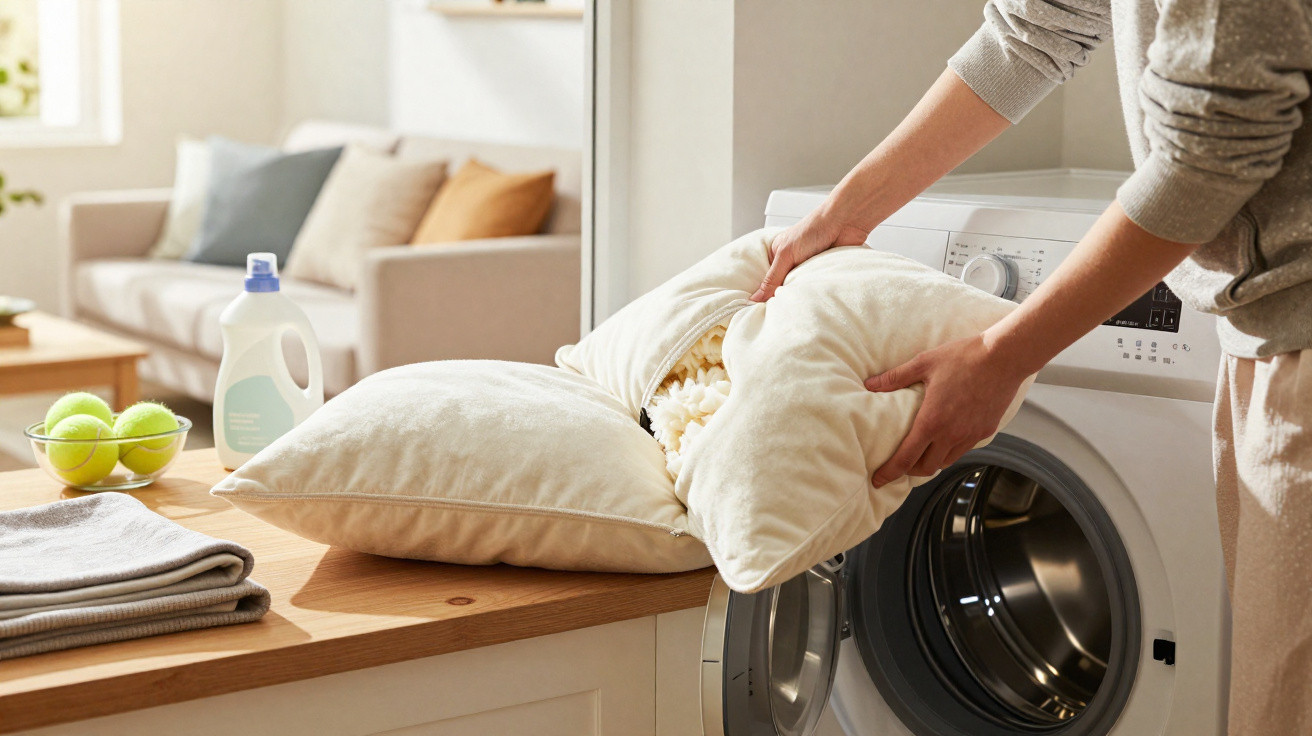
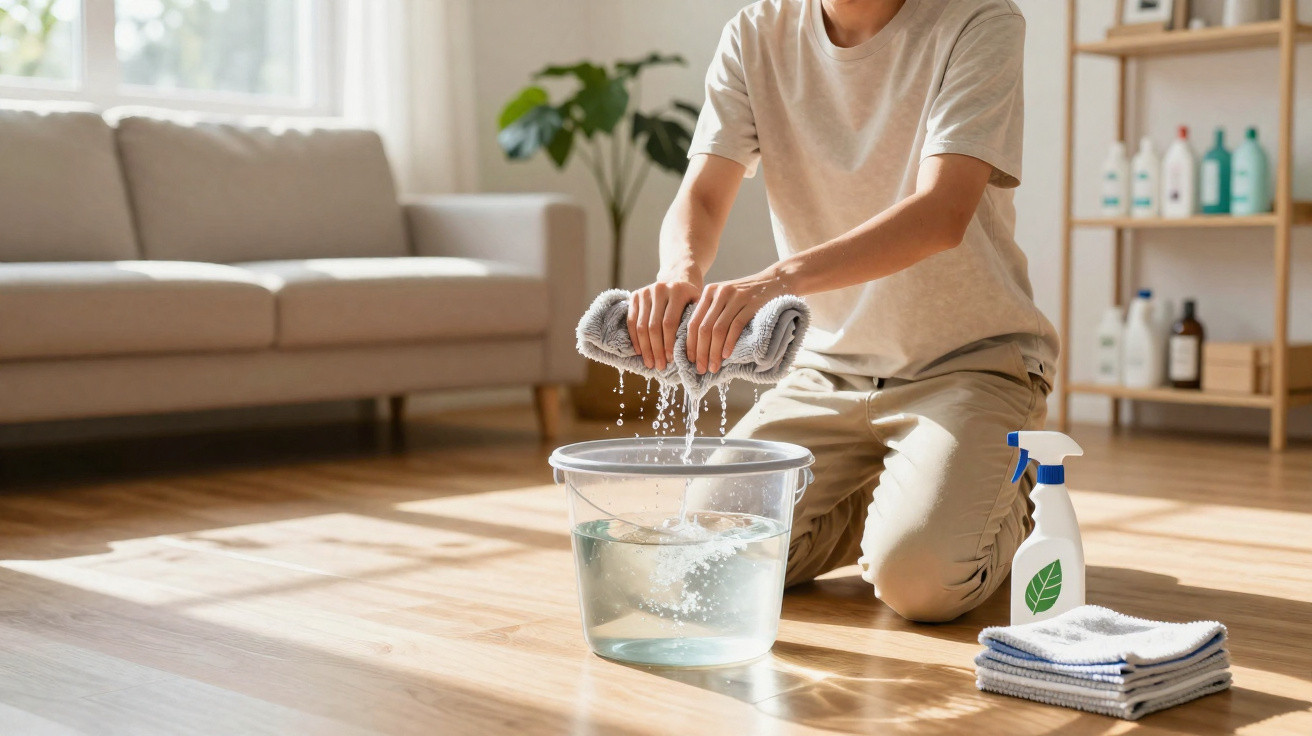
The first sensible step comes before the washing machine: separate the cover from the filling. If the cover is removable, take it off properly, even if it feels like a chore. Wash the cover as you would an ordinary fabric, according to its material. The focus here is the inner pad. Read the filling label. If it says it cannot go in the washing machine, follow that instruction. For hand washing, fill a large bucket or utility sink with cold or slightly warm water, add a small amount of mild liquid detergent and immerse the cushion, squeezing it gently without wringing. The aim is to let the water pass through the filling, not to compress it as much as possible.
Those living in small flats often turn to the washing machine because they lack space. It can be used, but within limits. Choose a delicate cycle, cold water and either turn off the spin or set it to the lowest speed. Wash no more than two similarly sized cushions at a time, ideally inside a delicate-wash bag or even a large tied pillowcase. This limits direct friction against the drum. Let us be honest: nobody does this every day. Washing cushions is seasonal care, not a routine task. That is exactly why it is worth doing properly when the time comes.
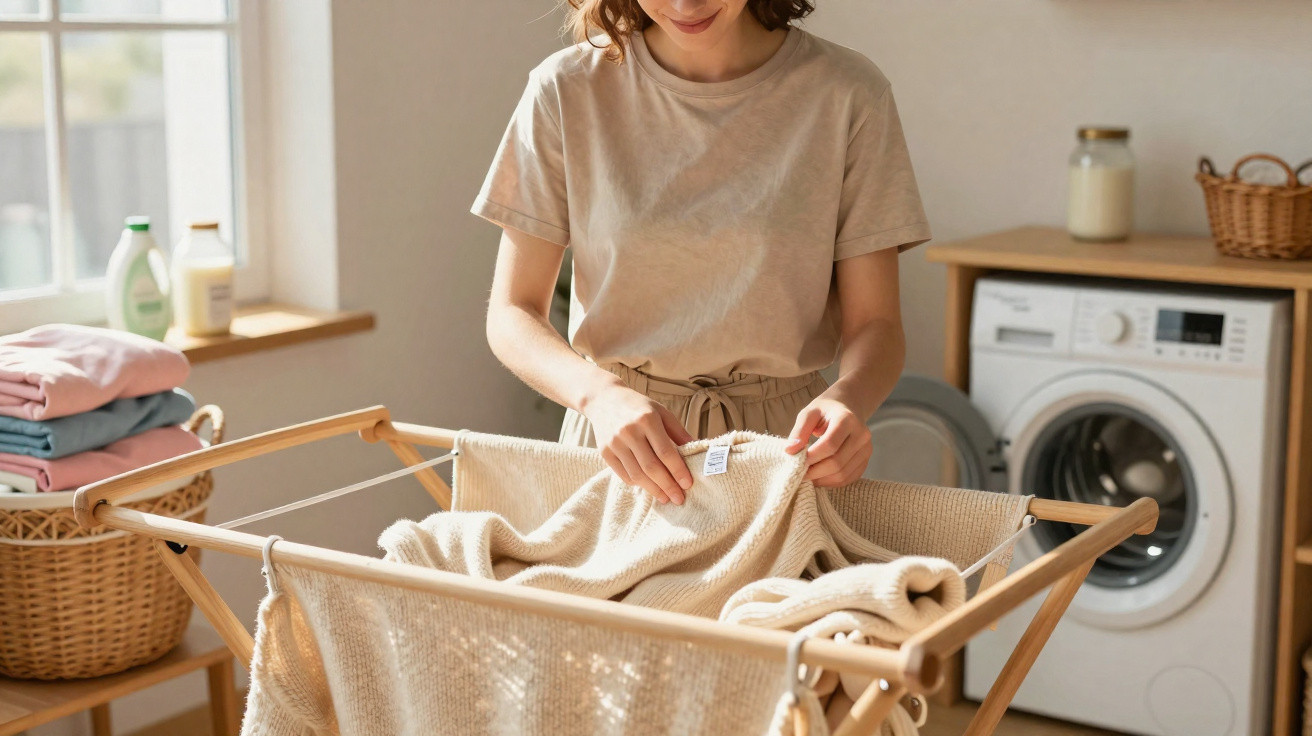
When drying, patience is the essential ingredient. Do not hang a cushion solely by its zip or from one corner. Lay it flat on an airer or a ventilated surface in a well-aired place. Turn it over several times throughout the day. Between each turn, gently “massage” the filling, drawing the fibre back towards the corners and breaking up any internal lumps with your hands. A behind-the-scenes saying I heard from a professional laundry worker sums it up well:
“A cushion is not ruined by water; it is ruined by haste.”
- Avoid strong, direct sunlight on foam, as it can dry out the material.
- Use only a little detergent and rinse thoroughly, so that no residue remains in the centre.
- Choose cold water, which is gentler on both the filling and the cover.
- If the foam is crumbling, consider replacing the inner pad rather than persisting with washing.
- Carry out a drying test: squeeze the centre. If moisture comes out, it is not ready yet.
Small habits that extend the life of cushions
Between washes, there is plenty you can do to help a cushion last longer and need intensive cleaning less often. One simple habit is to pat and shake cushions every week, opening up the fibres, releasing loose dust and restoring their volume. Rotating the cushions around the sofa also helps: the one that always supports everyone’s head during a television marathon is likely to flatten more quickly. Alternating their positions spreads the wear. Another discreet tool is a thin microfibre inner protector, which wraps around the filling and catches most of the dirt.
Many people are embarrassed to admit it, but cushions also collect sweat, make-up residue, hair, pet fur and skin oils. These substances stick to the fabric and gradually work their way into the filling. People with rhinitis or allergies tend to notice first: sneezing on the sofa, itchy eyes and that feeling of heavy air. Here, a vacuum cleaner with an upholstery attachment can work wonders. Vacuuming dry cushions once every fortnight removes most of the dust. It does not replace washing, of course, but it postpones the day of the “full wash” and helps the filling keep its structure for longer.
There is also an invisible side to the story: quiet guilt. Many people look at their flat cushions and think the whole house needs redecorating, when sometimes the problem is simply poor washing and a lack of ongoing care. Replacing the filling, learning how to wash without causing distortion and allowing enough drying time… all of this costs less than a new sofa. It also has a curious effect: when you see a cushion returning to its original shape, plump and fresh-smelling, the home feels renewed through one simple action. Small textile-care habits can become a way of looking after your own routine, and that little corner where you collapse at the end of the day and try to slow down, even while the whole city rushes on outside.
| Key point | Detail | Value for the reader |
|---|---|---|
| Separate cover and filling | Wash the cover as ordinary laundry and treat the inner pad with specific care | Reduces the risk of fabric shrinkage and distortion of the internal volume |
| Wash on a delicate cycle or by hand | Cold water, little detergent, and little or no spinning | Preserves the foam and fibre structure for longer |
| Dry slowly and flat | Lay the cushion down, turn it gradually and massage the filling | Prevents internal clumps, hidden mould and a crooked shape |
FAQ:
- Question 1: Can I wash every cushion in the washing machine? Not all of them. Cushions with a single foam insert, very dense filling or no clear label instructions are more prone to becoming misshapen. Always read the care instructions and, if in doubt, choose hand washing.
- Question 2: How often should I wash cushions? For daily use in the living room, every 3 to 6 months is usually a good interval. In homes with pets, smokers or allergy sufferers, it is best to shorten that period and vacuum more often.
- Question 3: Does fabric conditioner damage the filling? In excess, yes. Fabric conditioner can build up in the internal fibres, making the centre heavy and preventing it from drying fully. Use very little, or leave it out altogether, and focus on a good mild liquid detergent.
- Question 4: My cushion smells unpleasant even after washing. What should I do? This indicates that the centre has not dried properly. Drying it again in a well-ventilated outdoor spot can help. If the odour remains, there may be mould inside and it could be time to replace the filling.
- Question 5: Can I use a tumble dryer for cushions? Only if the label permits it and, even then, use a low temperature and delicate cycle. The high heat of standard tumble dryers can distort foam, shrink covers and shorten the useful life of the items.

Comments
No comments yet. Be the first to comment!
Leave a Comment