
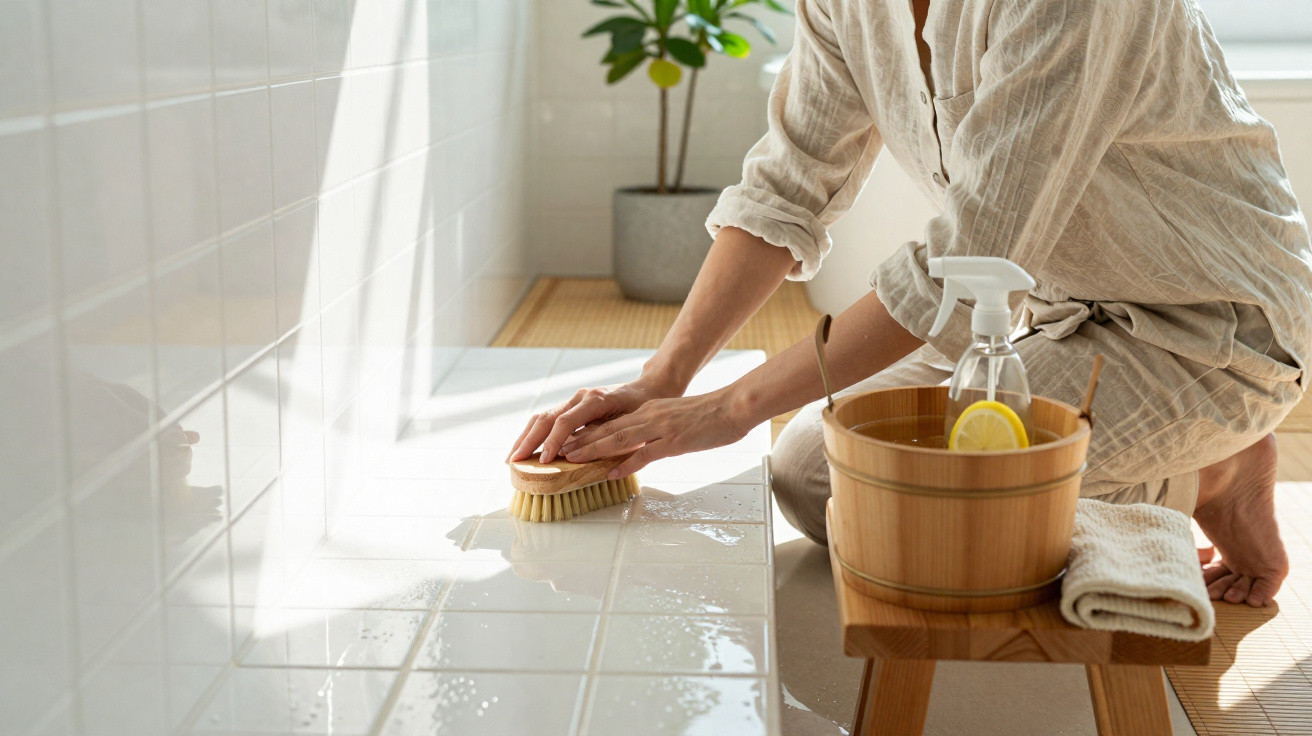
Keeping bathroom walls in good condition calls for particular care with ceramic surfaces. The Japanese method recommends an effective daily routine that lifts dirt without relying on harsh substances that wear away the glossy finish of the tiling.
How can you identify the source of dirt on tiles?
Before using any cleaning mixture, it is essential to establish the type of visible build-up. Body oils and soap scum need different treatment from water marks, helping to avoid wasted effort while protecting the structure of the material.
Knowing what the stains are made of prevents the incorrect use of cleaners that can damage grout. An accurate assessment allows cleaning to be targeted precisely, so that only the resources needed to restore the beauty of the ceramic are used.
How can you give your bathroom a hotel-like shine with an Oriental trick?
The Japanese secret to spotless glass and grout combines straightforward steps that remove invisible dirt before… Read more
Why should excessively harsh chemicals be avoided?
Very strong chemical compounds can gradually corrode the protective glaze over several weeks. This accelerated wear produces microscopic pores in ceramic tiles, allowing fresh impurities to cling more easily and making upkeep an increasingly demanding task.
Japanese wisdom encourages starting with mild options, such as diluted washing-up liquid. This approach safeguards delicate materials, balances the surface pH and provides safe degreasing action throughout the bathroom space.
Below is a video from the YouTube channel Mogi-style Cleaning Course, detailing the practical stages of this approach:
Which tools ensure scratch-free cleaning?
Abrasive materials, including steel wool and rough sponges, create irreversible micro-cracks in ceramic pieces. Over the months, these slight marks collect embedded dirt, making it essential to favour soft sponges or high-quality microfibre cloths.
Using gentle, even strokes consistently loosens accumulated deposits without requiring excessive mechanical force. This careful technique protects the glazed finish, extends its lifespan and retains the original shine for many years.
Essential cleaning care
Three pillars of the traditional technique
See the key guidelines for protecting ceramic surfaces:
- Accurate identification of the nature of accumulated residue;
- Use only mild products and non-abrasive cloths;
- Thorough rinsing followed by complete drying of the room.
Why are rinsing and final drying so important?
Allowing soap residue or cleaning solutions to dry on the wall leaves a dull film over the glaze. Rinsing generously removes suspended particles, restoring the surface’s purity and preparing the area for the next stage.
Drying is the real distinguishing feature of the Japanese method, as it prevents minerals in the water from evaporating and leaving whitish deposits. Removing remaining moisture prevents slime from forming, preserving both hygiene and an immaculate appearance.
Follow these practical actions to complete this finishing stage:
- Rinse every wall with clean water to remove all chemical residue;
- Use a soft rubber squeegee to clear away excess collected water;
- Finish by wiping the entire tiled surface with a dry microfibre cloth.
How can preventive habits maintain durability?
Preventive maintenance reduces the need for strenuous, intensive cleaning in the future. Making a habit of drying the walls straight after showering prevents calcium build-up and keeps joints protected from mould and deterioration.
Combining regular ventilation with small weekly interventions creates a pleasant, clean atmosphere every day. In this way, you protect your home’s value, use fewer products and achieve a consistently gleaming bathroom through sustainable care practices.

Comments
No comments yet. Be the first to comment!
Leave a Comment