
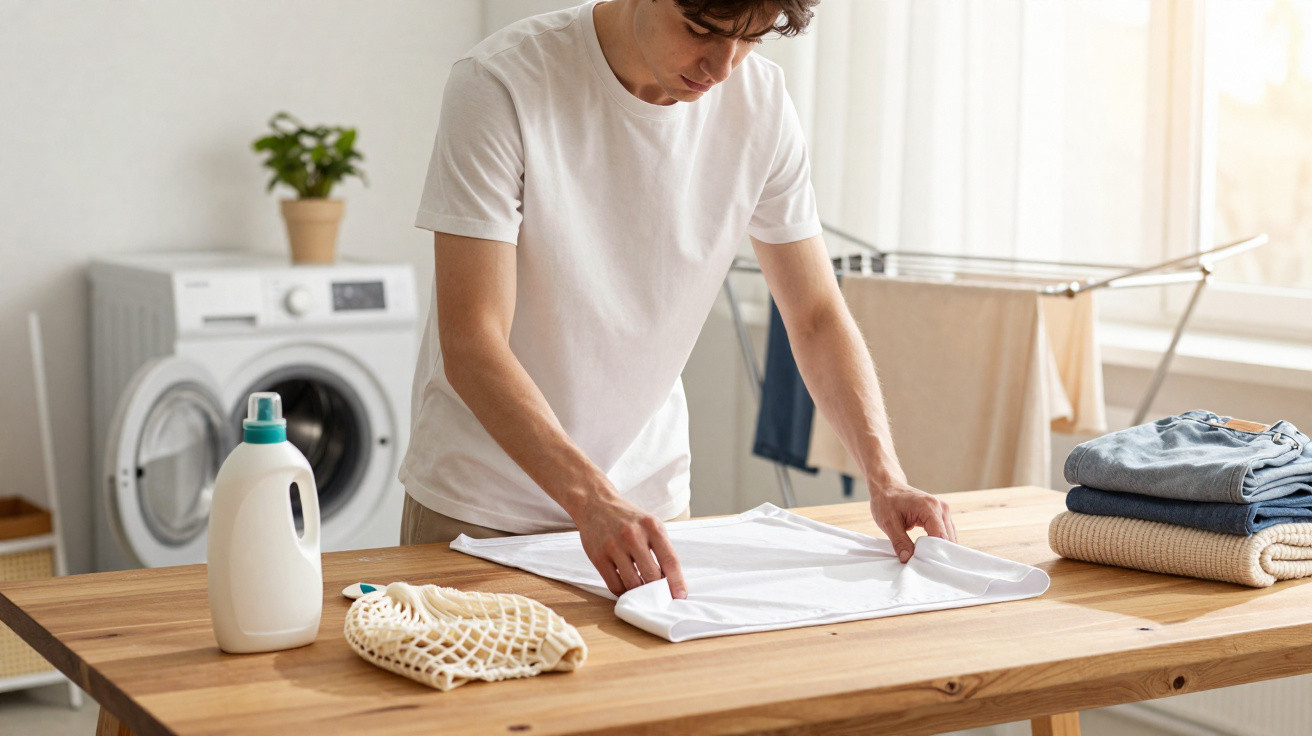
That T-shirt seemed perfectly normal when you took it out of the drum: the same white cotton, the same printed logo. Yet, as you held it up, it was clearly not quite right. The shoulders appeared narrower and the hem now sat higher on your waist. You give the material a small tug, while that familiar flicker of panic arrives: it has definitely shrunk. You are certain you did not alter the washing temperature. You chose the same programme you always use. Still, your favourite item has dropped a size.
You look towards your wardrobe, thinking about the money spent, the time invested and the outfits you had already imagined wearing. When clothes shrink, it can feel as though they have betrayed you quietly in your own home. It is easy to wonder whether washing everything cold from now on is the only solution.
Perhaps it is not.
Why clothes shrink even when you don’t change the temperature
The common belief is that hot water alone causes shrinkage. Lower the temperature dial and your clothes will be fine, surely? In reality, it is more complicated. Fabrics respond to movement, wash duration and drying methods as much as they do to the number displayed on the washing machine. A 30°C wash with an aggressive spin and a very hot tumble-dry can be harsher on clothing than a gentle 40°C cycle followed by careful drying.
Before you ever put them on, many garments are already held under tension. During manufacturing, fibres are stretched and twisted to give clothes a smooth, fitted appearance. Washing is simply the moment those fibres return to their natural form - and contract back into place.
Consider the friend who turned an expensive wool jumper into something the size of a child’s hoodie. They did not wash it in boiling water. They put it in with jeans and towels, used a fast spin, then transferred it straight into a hot dryer. The temperature was the usual one, as were the everyday settings. Once it came out, the jumper resembled a doll’s outfit. There is a reason this tale circulates in every shared laundry room.
Jeans offer another example. Many brands quietly anticipate that denim will become tighter during its first few washes. That supposedly perfect slim fit is often created after one machine wash pulls cotton fibres closer together. It is not necessarily a problem, but it is the same shrinking process happening more gradually.
Technically speaking, water relaxes fibres and agitation shifts them around. Heat and quick drying then set them in their new position. Natural materials such as cotton and wool react most strongly, although even blended fabrics may tighten when subjected to enough stress. Washing temperature is only one link in a longer chain. To stop clothes from shrinking, looking only at the hot-versus-cold question is not enough.
Instead, you need to adjust the way clothes move through the entire process, from the drum to the hanger.
Practical ways to stop shrinking without touching the temperature
The simplest improvement is to reduce the spin speed and choose a shorter programme. Keep your normal temperature, but select the “delicate”, “wool”, or “hand wash” setting for garments whose shape matters. These programmes limit agitation and spin speed, so fibres experience less movement and strain. Your clothes still get clean; they are simply subjected to less shaking.
Where your machine allows it, lower the spin to 800–1000 rpm for items that are prone to shrinking. Afterwards, allow them to dry on a rack. This one adjustment can often make more difference than reducing a wash from 40°C to 30°C.
Much of the unnoticed shrinkage happens during drying. A hot tumble-dryer is essentially a shrink machine with good PR. If you would rather leave your washing temperature alone, this is where to focus. Air-dry your most delicate favourites: T-shirts you value, jeans that fit exactly as they should, knitwear and cotton dresses. Place jumpers flat on a towel rather than hanging them, preventing them from becoming distorted or tightening in an unusual way.
If you do use a dryer, opt for lower heat and shorter cycles, then complete the drying process on a hanger or rack. That modest compromise can often prevent the loss of a whole size.
Another overlooked habit is to lightly stretch clothing as soon as it comes out of the wash. Do not pull hard enough to misshape it; simply use your hands to gently reshape seams and hems. Doing this helps fabric retain the correct form rather than drying into a smaller version of itself.
As one textile engineer told me during a factory visit: “Water lets fibres move. What you do while they’re wet decides the size they’ll keep.”
There are also a few habits worth reviewing quietly:
- Wash similar fabrics together, so heavier items do not knock lighter ones about.
- Avoid “extra dry” or “cupboard dry” settings for your favourite clothes.
- Check care labels for drying symbols, even if you disregard the other instructions.
- Turn cotton garments inside out to minimise friction on their outer surface.
- Rotate your outfits so that one item is not washed several times each week.
Rethinking our relationship with laundry and clothes
Once you begin to notice, it becomes clear how automatic laundry has become: throw everything in, press start and forget about it. A handful of small changes - a gentler programme, a slower spin and no emergency drying at maximum heat - can discreetly help your wardrobe last longer. Not in some dramatic influencer-style transformation. Just fewer T-shirts becoming crop tops and fewer jeans suddenly fitting like shapewear.
We have all experienced that moment of holding a favourite garment and feeling a slight pang of regret because it is no longer quite the same. Preventing clothes from shrinking also protects those modest everyday rituals: the shirt you wear on anxious days or the hoodie that feels like Sunday, even when it is Tuesday. Laundry becomes less of a chore and more of a quiet act of care.
Honestly, nobody manages this perfectly every day. There will be hurried evenings, overloaded machines and fast dryer runs before work. Your clothes do not require perfection; they simply benefit from slightly better routines most of the time. Less force in the drum, less intense heat in the dryer and a little more care while garments remain damp.
Some people deliberately use shrinkage to get tighter jeans or a more fitted cotton T-shirt. For everyone else, avoiding these surprises means rejecting the idea that “laundry is just laundry”. It involves fabric, physics and the quiet financial sense of not replacing the same black T-shirt four times a year.
You could begin with a single garment: the jumper you cannot bear to lose, the shirt that at last fits perfectly or the dress attached to a memory. Wash it on a gentler cycle, leave out the dryer and reshape it on a towel. Pay attention to how it wears over several weeks, rather than after just one wash.
That small trial may alter the way you think about every spin cycle. Perhaps you will mention it to flatmates or a partner. Perhaps your next purchase will take account of how a fabric ages, rather than only how it appears under shop lighting. The temperature can remain exactly where you prefer it. The control is still in your hands.
| Key point | Detail | Value for the reader |
|---|---|---|
| Gentler cycles over cold-only washing | Choose delicate or wool programmes at your usual temperature to reduce agitation and stress on fibres | Clothes retain their size while still being cleaned properly |
| Drying is where most shrinking happens | Reduce tumble-dryer heat and drying time, then finish air-drying on racks or hangers | Fewer unexpected size changes, particularly for favourite garments |
| Small habits shape long-term fit | Gently reshape clothes when damp, use a slower spin and sort loads by fabric weight | Longer-lasting garments, less wasted money and more dependable fits |
FAQ:
- Can clothes shrink even at 30°C? Yes. Agitation, spin speed and hot drying can all lead to shrinkage at low temperatures, particularly with cotton and wool.
- Is air-drying always better than a tumble-dryer? Usually, yes, when it comes to preventing shrinkage. A brief, low-heat tumble followed by air-drying can be a reasonable compromise.
- Why do my T-shirts get shorter but not narrower? The knitted structure often contracts vertically first, meaning length is lost before width. Gravity during drying may also contribute.
- Can I “unshrink” clothes once it happens? In some cases, fibres can be partly relaxed with lukewarm water, conditioner and careful stretching, but results are limited and cannot be guaranteed.
- Do synthetic fabrics like polyester shrink too? They are less susceptible than natural fibres, but blends can tighten, while rough drying may still change their shape and texture over time.





Comments
No comments yet. Be the first to comment!
Leave a Comment