
Many households struggle with a musty washing machine smell – and the real cause is often right in front of them, yet well hidden.
The drum may look spotless and the detergent may smell pleasant, but the laundry still comes out smelling somehow “like a cellar” rather than fresh. The true source of the problem is usually not inside the drum, but in the rubber seal around the opening. Carefully lifting this door seal often reveals a damp, dark area where something unpleasant has been thriving for months.
What really builds up in the rubber seal
Beneath the rubber seal of a front-loading washing machine is an ideal breeding ground: warm, damp and with almost no air circulation. This is exactly where everything that comes loose during washing, but is not rinsed away, ends up.
- Detergent and fabric conditioner residue
- Lint and fibres from textiles
- Dead skin cells and other organic particles
- Limescale deposits from hard water
This combination creates a slimy layer. Fungi and bacteria settle in this constantly damp environment and gradually spread. Eventually, the coating turns black or greenish and can sometimes become slightly sticky.
Typical warning sign: The machine already smells unpleasant before it is started, despite appearing clean on the outside.
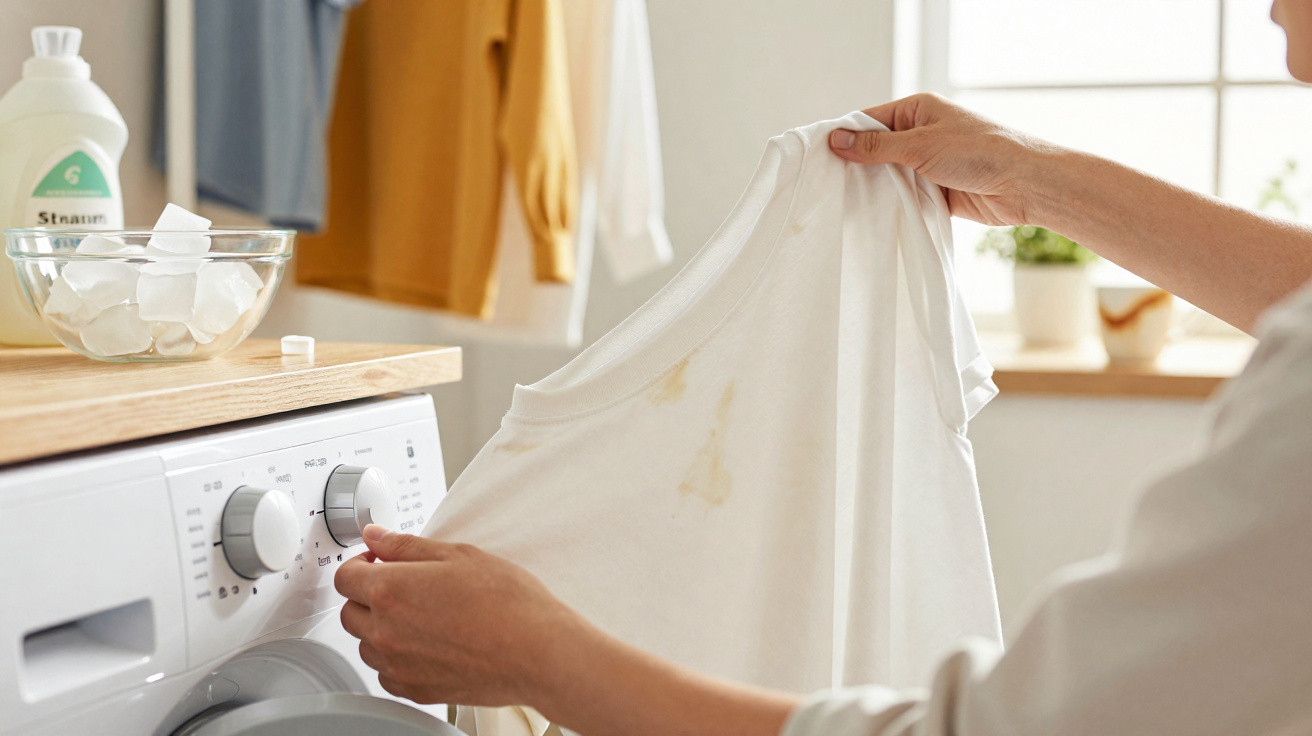
This becomes particularly obvious when washing white towels or bed linen: grey or dark streaks can appear even though there were no marks beforehand. This is not a “washing error”; it is directly caused by a dirty rubber seal.
Clear signs that the rubber seal is deteriorating
A look beneath the edge is enough, yet many people do not check it for years. The warning signs are fairly unmistakable:
- A strong smell when the door is opened, especially after the machine has stood unused for some time
- Dark spots or streaks on the rubber
- A greasy film when you run a finger across it
- Small clumps or flakes in the folds of the rubber
- Laundry that smells “clean but not fresh”
People with allergies or sensitive airways may react more quickly to this environment: damp textile dust and spores can affect the air in the room when the door is opened.
Removing the dirt: cleaning with a bicarbonate paste
To loosen these deposits, you can use something that most people already have in the cupboard: bicarbonate of soda. The key is its form: use a thick paste rather than a solution.
The right mixture for the rubber seal
A small amount is enough for an intensive clean:
- 40 g bicarbonate of soda
- A little water, added gradually
- 200 ml white vinegar (for rinsing afterwards; do not mix it in)
Stir the bicarbonate with a few spoonfuls of water until it forms a thick, spreadable paste – roughly the consistency of peanut butter. It should stick in place, not run. Thin mixtures simply slide away and have little effect.
Working through the folds
This is the slightly unpleasant but highly effective part:
- Switch off the washing machine and unplug it.
- Open the door and carefully lift the rubber seal – the greatest build-up is usually at the bottom.
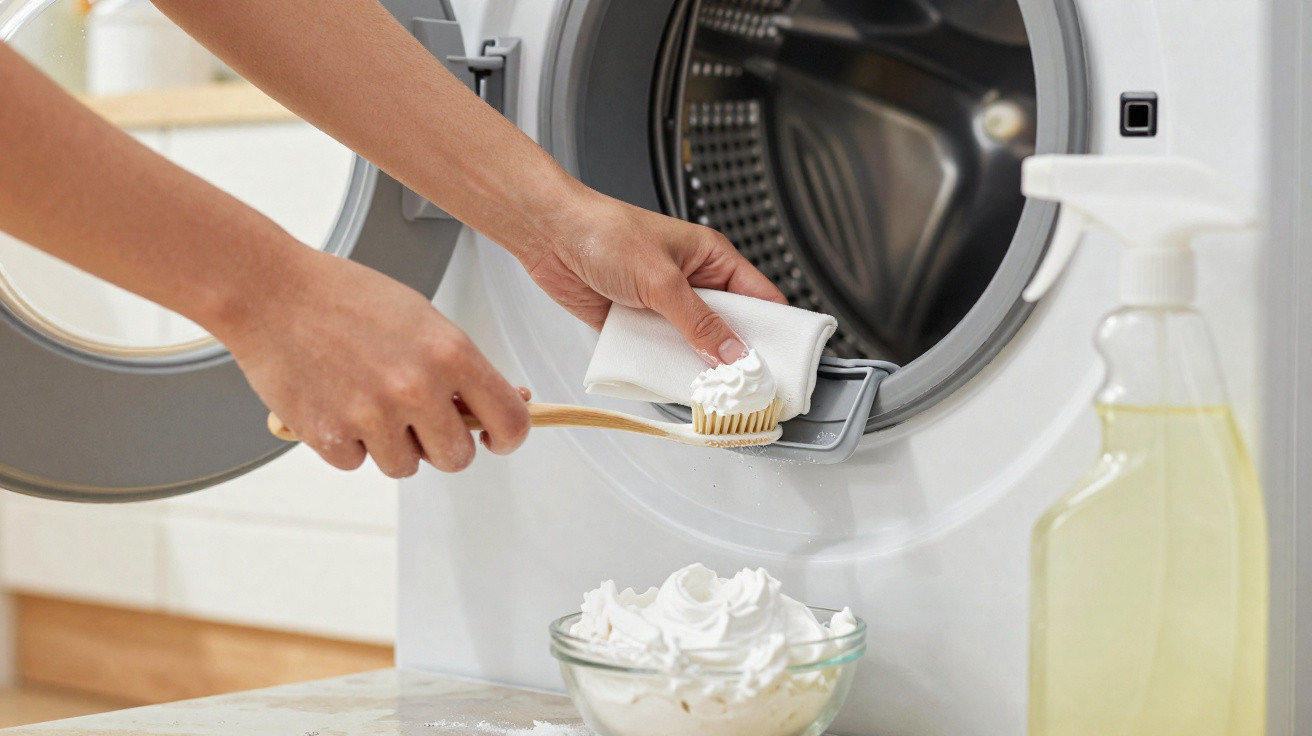
- Press the bicarbonate paste into the folds using a spoon, spatula or your finger.
- Treat every area that looks damp, dark or discoloured.
The paste must go directly onto the dirt, not into the drum. The more precisely it is applied, the better it works.
Leave the paste to work for a few minutes. The build-up will soften, lift from the surface and become easier to remove afterwards.
Brush rather than scrape
You now need a tool that can reach every groove: an old toothbrush. It is small enough to get into narrow folds while still being gentle on the material.
Brush the folds in the rubber with moderate pressure, wiping the brush regularly before starting again. The aim is to remove the loosened residue without distorting or tearing the rubber. Abrasive scouring pads and metal cleaning tools should not be used here – they damage the surface and create new places for dirt to collect.
Vinegar rinse: the step that truly removes smells
Once the heavier dirt has gone, move on to the second part: rinsing with vinegar. Important: do not combine bicarbonate and vinegar in the same container, as this reduces some of their effect.
Proceed as follows:
- Wipe bicarbonate residue from the rubber using a damp cloth.
- Soak a fresh, clean cloth in white vinegar.
- Lift the rubber seal again and wipe it down thoroughly, paying particular attention to the lower sections.
- Turn or replace the cloth as you work so that loosened dirt is not spread back over the seal.
Vinegar dissolves limescale and neutralises many odours that can remain after mechanical cleaning.
Finally, wipe over with clean water and dry the rubber seal, ideally using an absorbent microfibre cloth. Leaving the rubber damp straight after cleaning would provide the perfect fresh start for new deposits.
A hot empty cycle: resetting the washing machine interior
Even if the rubber seal looks good again, further deposits can remain inside the washing machine. An empty 90°C wash cycle brings the necessary heat to the hoses, drum and hidden areas.
Choose a long programme, leave the machine empty and allow it to complete the full cycle. Additional cleaning products are usually unnecessary. The heat loosens grease, detergent residue and deposits, then flushes them away.
If you want to be particularly thorough, deal with these three areas at the same time:
- Detergent drawer: Remove it, soak it in warm water and clean it.
- Lint filter / filter: Take it out, rinse it, and remove foreign objects and trapped lint.
- Drum and glass: Wipe both briefly with a damp cloth.
If no musty smell greets you when you open the door after the hot cycle, most of the work is done.
How to keep the problem under control long term
Anyone who only carries out a thorough clean once a year will constantly be dealing with the problem returning. A simple everyday routine makes it much easier to manage.
A monthly plan for a clean washing machine
- Once a month: run an empty 90°C cycle
- Every four to six weeks: take a quick look beneath the rubber seal
- At the first dark spots: apply a small amount of bicarbonate paste and brush briefly
- Twice a year: rinse the detergent drawer and filter thoroughly
What you do immediately after every wash also makes a major difference: roughly dry the rubber seal with a cloth, leave the door slightly ajar and pull the drawer out a little. This allows residual moisture to escape instead of collecting in folds and corners.
Dosage: too much detergent makes everything worse
One common mistake greatly encourages the problem: using excessive amounts of detergent and fabric conditioner. Anything that does not dissolve and rinse away remains as a film in the pipes, rubber seal and drum – ideal food for microorganisms.
Following the dosage guidance on the packaging and taking account of water hardness does more than save money. The machine works more easily, rinses more effectively and develops fewer deposits. Liquid detergent is more likely to create a greasy coating, while powder detergent can leave visible residue if incorrectly dosed. Both can end up back on the rubber seal.
Health, lifespan and preventing the unpleasantness
There is more at stake here than simply wanting a fresh scent. Over time, a neglected rubber seal can become brittle, split and allow water to leak out – a repair that costs far more than a cloth and some bicarbonate of soda.
You also breathe in air from inside the machine every time you open its door. Anyone with asthma, allergies or a sensitive nose will quickly notice whether slime and fungal spores are present. A clean rubber seal noticeably reduces this exposure.
Ultimately, perhaps the most important question is this: when did you last properly lift the rubber seal on your washing machine – not to clean the front, but to see what has collected underneath it?



Comments
No comments yet. Be the first to comment!
Leave a Comment