
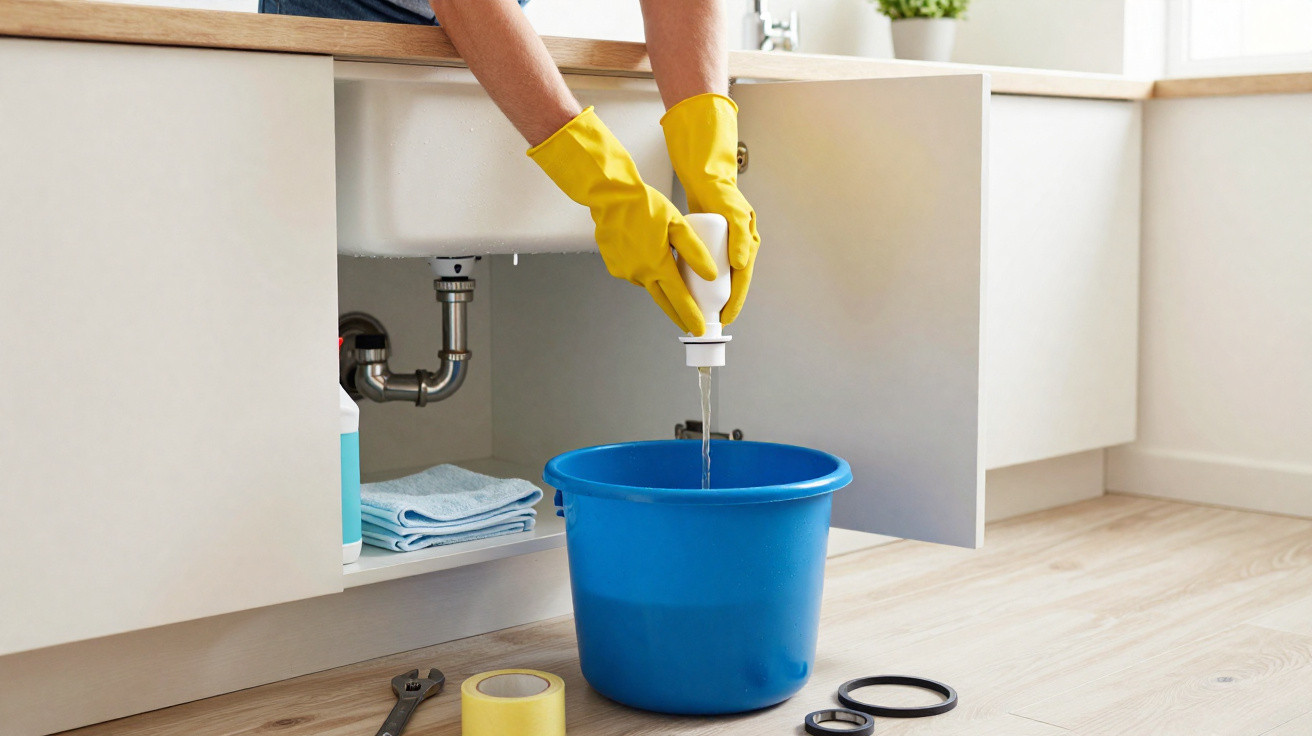
When the water in your sink starts to drain more slowly, the cause may be in a spot that’s hidden directly beneath the basin: the siphon. This curved section of pipe holds a small amount of water to stop odours from the drainage system coming back up, but it can also trap grease, food scraps, and other debris.
Why can the siphon make the sink drain slowly?
The siphon’s bend isn’t only there to guide water away. It maintains a liquid seal that helps block gases and unpleasant smells coming from the pipework.
However, that same curve creates an area where particles can build up. Food residue and grease carried along with the water may stick to the inner walls and, over time, reduce the space available for water to pass through.
When is it worth cleaning the siphon?
If the water still drains but is noticeably slower than usual, there may be a partial blockage. With accessible, removable siphons, manual cleaning can help when the build-up is concentrated in that section.
Before taking anything apart, identify which type of siphon you have installed and follow the manufacturer’s or installer’s guidance. Not every system should be dismantled in the same way.
How to dismantle the siphon safely
Start by turning off the tap and moving anything that could be splashed. Put a bucket or sturdy container directly under the siphon, as there will be water sitting inside the bend.
Carefully loosen the fittings on the removable model and allow the remaining water to drain into the container. Clear away any debris and wash the parts using water and a suitable detergent, avoiding tools that could damage the plastic or the threaded connections.
How to prevent leaks after cleaning
Before reassembling, check that the sealing rings are correctly seated and show no signs of damage. Refit the parts in their original orientation and tighten the connections according to the system used, without over-tightening.
Then, open the tap slowly and watch every joint. If you see drips, stop using it and check the fit. A poorly reassembled siphon can cause a leak inside the cupboard, even if the sink returns to normal drainage.
What if the water still drains slowly?
If cleaning the siphon doesn’t fix the issue, the blockage may be further down the pipework. In that situation, repeatedly dismantling parts or using harsh chemical products without knowing what the pipes are made from can lead to damage.
If there’s water backing up, a persistent leak, a strong bad smell, or recurring blockages, it’s best to call a professional. In short, cleaning the sink siphon can clear a minor blockage when debris is concentrated in the bend, but it needs to be done in line with the installed model and with close attention to the connections.



Comments
No comments yet. Be the first to comment!
Leave a Comment