
A fridge door can be gleaming one day and dotted with little orange specks the next. The rim of a sink can suddenly look worn out. When stainless steel starts to rust, it feels like it’s broken its promise - and it shows up anywhere water likes to sit. A cleaning professional walked us through a fix using two everyday staples: lemon and coarse salt. Add small circular movements, and the difference is dramatic.
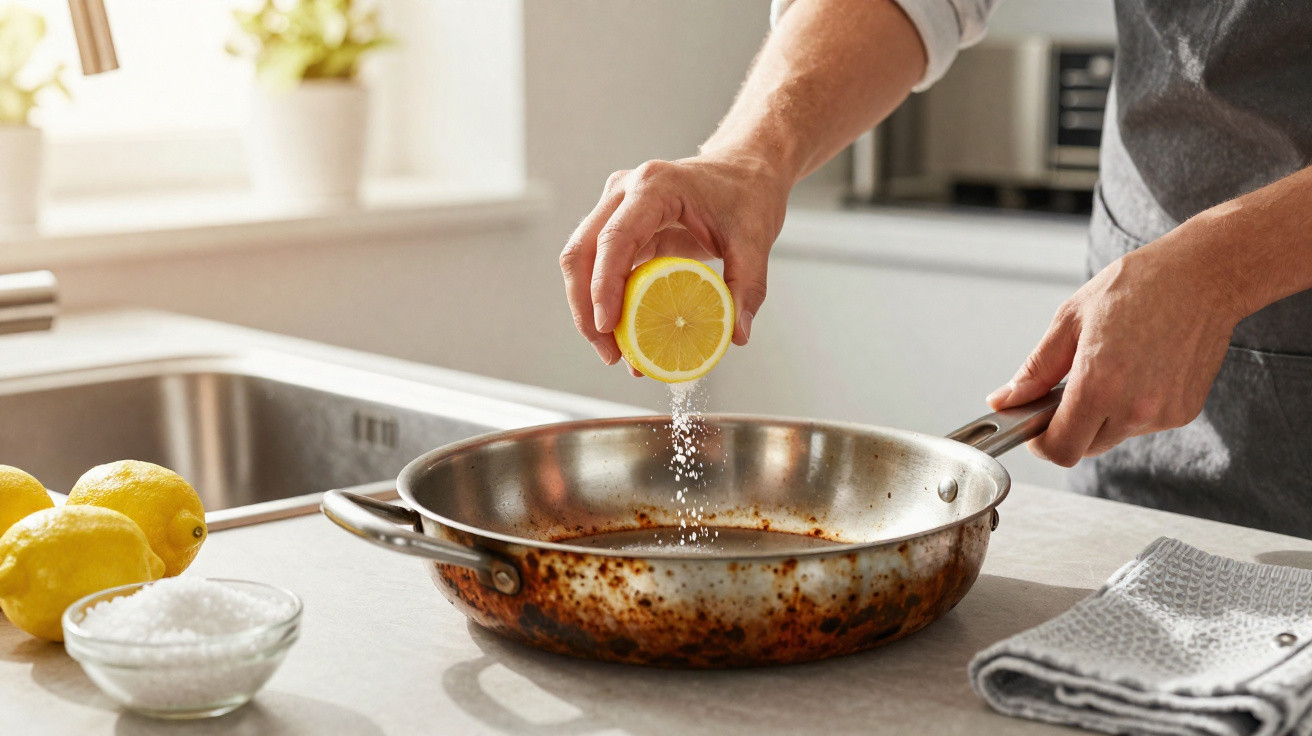
In a busy kitchen, the espresso machine is steaming, someone is calling for a clean pan, and a fine rust mark is blooming along the edge of a stainless prep bench. The pro places a lemon half down like it’s a proper bit of kit, tips on a pinch of chunky salt, and works the area the way you’d buff a coin.
Most of us know the panic of guests arriving in 15 minutes while the sink looks like it’s begging for a spa appointment. The sharp, bright lemon scent cuts through the room, and the salt makes that soft scratching hush as it travels over the steel. The stain visibly gives way, shifting from brick-coloured to faint to completely gone.
He rinses the area, then dries it with a soft cloth so quickly it almost looks like the cloth is dancing. The surface catches the light. He grins and shrugs - the trick predates the internet. It’s almost irritatingly straightforward.
Why stainless steel still rusts - and why lemon plus salt works
Stainless steel isn’t a guarantee; it’s a setup. The metal relies on a thin chromium-oxide layer for protection, but everyday use wears it down: hard-water deposits, splashes of bleach, moisture left standing, even a forgotten steel-wool pad. Once that barrier is compromised, oxygen and iron do what they always do. Rust appears - and with every droplet that dries, it can creep further.
In a small rental kitchen we visited, a landlord was getting quotes for a replacement hob after a winter of careless boiling left orange crescents around the burners. The price made the bidder flinch. Instead, the cleaning pro tried a test patch with half a lemon and a handful of kosher salt. Ten minutes later, the “ruined” stainless looked ready for photos. The bill shifted from four figures to a tip and a handshake.
What lemon contributes is citric acid, which chelates iron - in other words, it grabs hold of the rust and helps lift it. Coarse salt adds mild abrasion, helping to physically remove the loosened oxide without carving up the surface. Used together, they create a gentle scrub that’s tough on rust but respectful of the chromium-oxide passivation stainless steel depends on. The essentials are dwell time plus movement, followed by a proper rinse so nothing is left behind.
The pro’s step-by-step method, exactly as shown
Begin with a dry surface so the lemon juice isn’t watered down straight away. Slice a lemon in half. Drop a small heap of coarse salt directly onto the rust - sea salt or kosher salt, not fine table salt. Use the cut face of the lemon as the scrubbing pad, applying light pressure and working in small, slow circles. Follow the grain rather than going across it.
On more stubborn patches, allow the juice to sit for 2–3 minutes, then go back to gentle scrubbing. Wipe with a damp microfibre cloth to see how it’s progressing. Repeat if you need to. Once the rust has released, rinse with warm water until the surface stops feeling “squeaky”. Dry straight away with a clean towel to prevent fresh water marks. To finish, buff a single drop of neutral oil along the grain for a smooth, even sheen.
This is the point where people rush, and that’s when it goes wrong. Honestly, hardly anyone sticks to perfect technique every day. Don’t bear down on the salt as if you’re sanding a boat - treat it like polishing. Skip steel wool and knives; both can scratch through the protective layer. If your appliance has a fingerprint-resistant coating, try a tiny hidden area first. And on brushed finishes, keep the lemon contact time brief. Salt and acid get on well in small doses, not as long-term housemates.
“Lemon + salt is my go-to when clients think it’s time to replace a panel,” the pro told us. “It’s cheap, it smells good, and it leaves the steel calm.”
- Patch test first in an out-of-sight spot.
- Work with the grain to maintain a smooth finish.
- Keep dwell time to a few minutes on delicate coatings.
- Rinse thoroughly and dry to prevent new marks.
- Buff a drop of mineral or cooking oil for a consistent look.
What the chemistry means for real kitchens
Rust is more than a cosmetic issue; it’s a sign the protective layer needs restoring. Citric acid helps by breaking down rust and supporting fresh passivation once the surface is clean and dry again. The salt’s texture provides the lift, so you’re not relying purely on elbow grease. It’s the difference between scrubbing at random and letting the chemistry loosen things first.
Timing matters as well. If lemon juice sits for hours, it can etch the metal or encourage pitting, particularly around edges where water tends to pool. Go too gently, and you may simply shine the rust rather than remove it. The pro’s cadence - short dwell, soft circles, quick rinse and dry - keeps the reaction focused. Think steeping tea, not boiling it.
Prevention becomes interesting when it saves you money. Wipe away pooled water from sink edges, dish-drying areas, and around soap dispensers. Keep bleach off stainless steel where possible - or at least rinse and dry after any splashes, because chlorides aren’t its friend. Replace scouring pads that shed steel fragments; those fragments can rust and “seed” new stains. A minute of care after a chaotic day helps keep that thin protective film doing its job.
Beyond the hack: smarter habits that make stainless last
Build a simple weekly routine that actually suits your schedule. A quick daily wipe with warm water and a microfibre cloth stops dust and minerals from settling in. When you need a bit more bite, a drop of mild washing-up liquid is enough. And when rust does reappear, the lemon and coarse salt come out, sort it, and go back in the cupboard.
Not every mark is rust. Heat tint near hobs can look brown but behaves differently, and fingerprint-resistant finishes can turn cloudy if you rub them with the wrong product. If a stain won’t shift after a hidden-spot lemon test, don’t jump to stronger acids. Try a dedicated stainless cleaner or a bicarbonate of soda paste instead, or ring the manufacturer’s care line for your exact model.
One more practical tip: dry properly. Water is the quiet villain in most stainless stories. A clean towel - or even kitchen roll - makes a noticeable difference, especially around handles, dispenser trays, and trim seams. If you live in a hard-water area, a final wipe with distilled water can prevent mineral rings that masquerade as rust and catch your eye every time you walk past.
There’s a particular satisfaction in a remedy that feels both old-school and science-backed. Lemon loosens rust’s hold, salt helps lift it away, and the stainless steel you paid good money for looks like itself again. It’s a small ritual that gives you back a bit of control in a room that’s always busy. Pass it on to a neighbour who’s convinced their fridge has given up. Or keep it as a quiet party trick and enjoy that bright flash of silver when the light hits just right.
| Key point | Detail | Why it matters to you |
|---|---|---|
| Why it works | Citric acid chelates rust; coarse salt provides gentle abrasion | Confidence that the hack is safe and effective |
| How to do it | Dry surface, sprinkle salt, scrub with lemon along the grain, short dwell, rinse and dry | Fast, repeatable steps with clear guardrails |
| What to avoid | Long acid contact, steel wool, bleach residue, ignoring water spots | Fewer scratches, longer life for appliances and sinks |
FAQ:
- Can lemon and salt damage stainless steel? Used briefly and gently, no. Keep contact time short, work with the grain, then rinse and dry so the surface can re-form its protective layer.
- Does the type of salt matter? Yes. Coarse salt (sea or kosher) gives controlled abrasion. Fine table salt is too powdery and can be harsher without lifting power.
- What if I have a fingerprint-resistant coating? Test a hidden corner. Some coatings dislike acids. If the finish dulls, switch to a manufacturer-recommended cleaner or a mild soap solution.
- Will this remove deep pitting? No. It’s great for surface rust and stains. True pitting needs professional refinishing or panel replacement.
- Is there a lemon-free option? A bicarbonate of soda paste with water works on light stains. For mineral marks, white vinegar helps, followed by a rinse and a full dry.


Comments
No comments yet. Be the first to comment!
Leave a Comment