
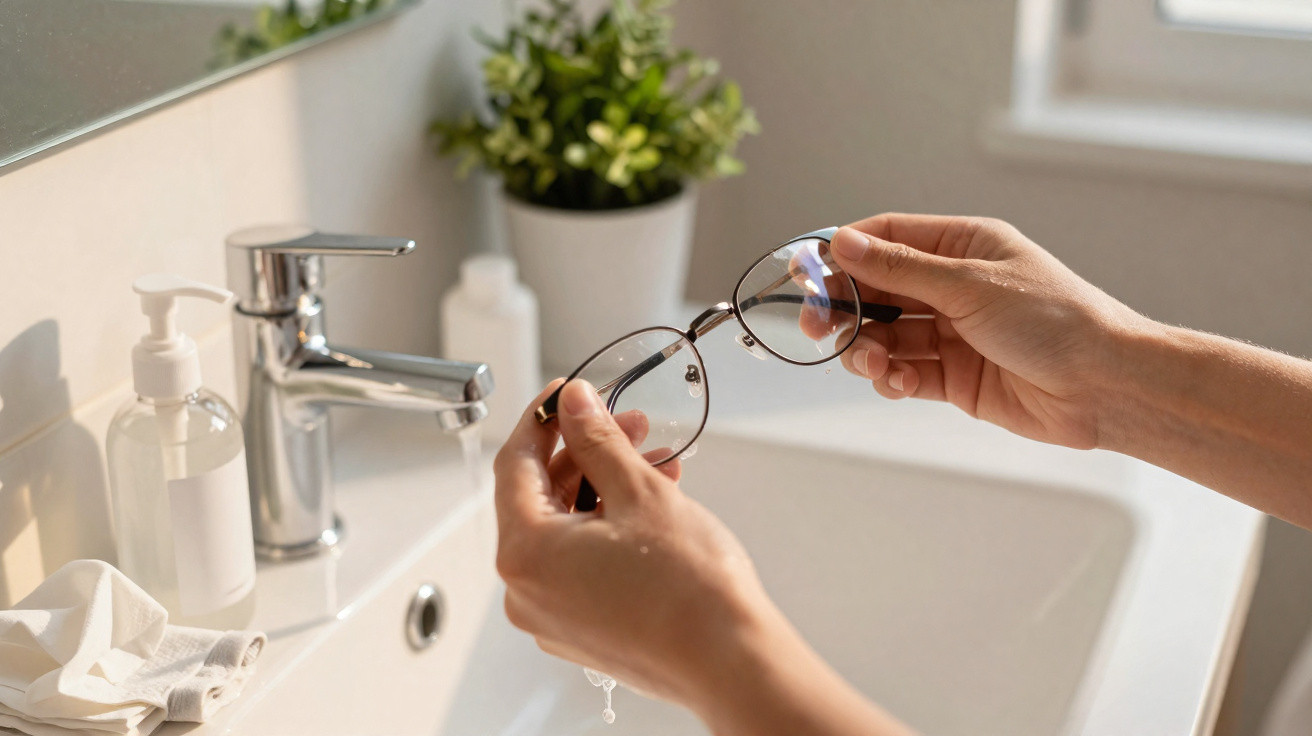
Smears come back. The sparkle dulls. Getting a truly clear finish starts before any cloth ever touches your lenses.
Opticians often recommend a simple, no-frills method that brings back clarity while looking after today’s lens coatings. All it needs is water, a tiny drop of mild soap, and something disposable for drying. The real difference is the sequence and how long the water does its job-not a pricey spray or a “pro-grade” cloth.
Why microfiber falls short over time
A brand-new microfiber cloth is excellent at picking up grease and fine dust. The problem begins once it collects grit and skin oils. From then on, every wipe can drag those tiny particles across the lens.
Plenty of high-street cleaning sprays are packed with surfactants and solvents, and some don’t play nicely with anti-reflective coating stacks. A stubborn milky look is often residue left behind, not actual dirt. Rubbing harder usually makes things worse and increases the risk of fine micro-scratches.
Dry wiping acts like very fine sandpaper. Water must remove grit before any fabric makes contact.
The routine opticians trust for a clear finish
This approach is straightforward and inexpensive, and it suits both prescription lenses and sunglasses.
- Start with a rinse under a gentle flow of lukewarm water. This step carries away dust and hard particles that can scratch.
- Put one small drop of mild washing-up liquid on your fingertips. Using short circular motions, gently work over both sides of each lens. Don’t miss the bridge, nose pads and the edge of the frame where oils tend to collect.
- Rinse well again with lukewarm water. Any remaining soap can leave a film and make lenses attract dirt more quickly.
- Dry by patting with a clean, non-fluffy disposable sheet of kitchen roll. Avoid vigorous rubbing. For any spots you’ve missed, give the lens a quick breath-fog and dab away the speck.
What soap to choose
Go for a mild washing-up liquid or gentle hand soap with no abrasives. Avoid bleach, ammonia, strong antiseptics, solvent-heavy glass cleaners and high-alcohol wipes. Aggressive chemicals can etch, dull or cloud modern coatings.
Rinse, soap, rinse, pat. That four-step rhythm prevents haze and protects coatings.
Care that respects modern coatings
Most lenses are built with layered treatments such as anti-reflective, hard coat, hydrophobic or oleophobic finishes. The initial rinse helps protect those layers by removing abrasive grit before anything is wiped. Mild soap cuts through body oils without attacking the coating chemistry.
Some less common finishes can be more sensitive. If you have mirrored, photochromic or other specialist coatings, it’s worth asking your optician to confirm what’s compatible. Professional cleaning can also help if grease has worked its way under the rim or around the pads.
Mistakes that scratch, warp or stain
- Wiping when dry. Dust can contain quartz-like minerals, and dry friction scratches.
- Reaching for household cleaners. Ammonia, vinegar or bleach can break down anti-reflective coating stacks.
- Using the same cloth when it’s dirty. Grit trapped in the fibres turns a soft cloth into an abrasive.
- Heat-drying on a dashboard or in direct sun. Heat can warp plastic frames and put stress on adhesives.
- Forgetting hinges and screws. Grime caught there can irritate skin and hold moisture, which may corrode metal.
When a professional should handle it
If oil has seeped between the lens and the frame, it often needs partial disassembly. Optical practices use ultrasonic baths to shake out dirt from tight gaps without scuffing. They can also check screw tension, inspect nose pads and spot coating damage early.
Sunglasses and polarized lenses
The same rinse–soap–rinse–pat routine helps protect polarising films. Don’t allow skin oils or suncream to dry on the lens surface-once oily marks bake on, they become much harder to remove.
With wooden frames or delicate bio-based materials, avoid prolonged soaking. Clean the lenses as normal, then wipe the frame with a slightly damp cloth.
Quick reference: cleaning options compared
| Method | Clarity | Risk to coatings | Cost | Best use |
|---|---|---|---|---|
| Rinse + mild soap + pat dry | High | Low when rinsed well | Very low | Daily and deep cleans |
| Microfiber cloth only | Medium initially | Rises as cloth gets dirty | Low | Quick touch-ups after a proper wash |
| Retail spray + cloth | Varies by formula | Medium if solvents present | Medium | Travel use, chosen for coating-safe labels |
| Ultrasonic at an optician | Very high | Low with trained handling | Low to medium | Deep grime, frame overhaul |
Practical answers to common questions
How warm can the water be? Keep it lukewarm-around hand-warm. Hot water can stress coatings and soften some plastics.
Do paper towels scratch? Use a soft, food-grade, unprinted sheet of kitchen roll. Steer clear of rough napkins and newspaper. If you’re unsure, let the lenses air-dry, then fog with your breath and dab.
How often should I do a full clean? If you wear your glasses daily, do a thorough clean two or three times a week. A quick rinse-and-pat can be done every day.
Will frequent washing fade tints? With mild soap and thorough rinsing, good-quality tints won’t fade. Problems are usually caused by harsh chemicals and heat.
Do anti-fog additives help? Anti-fog drops work with some coatings. Try a small corner first. You’ll need to reapply after washing because soap strips the layer.
Smart habits that extend lens life
During commutes, keep your glasses in a hard case to avoid micro-scratches from keys and dust. A small travel kit helps: a 10 ml bottle of mild soap, a few folded sheets of kitchen roll in a zip-lock bag, and a spare set of nose pads.
Rinse after the gym and after days at the beach. Sweat and suncream can wear down hydrophobic layers. Wipe make-up from pads and rims before it sets hard.
Clean water does most of the work. Soap loosens oils. Gentle drying finishes the job without streaks.
Extra context that saves money
Microfiber still has its uses. Reserve a freshly washed cloth for after you’ve rinsed and washed the lenses. Replace it or wash it weekly to remove abrasive grit. Don’t use fabric conditioner, which can coat the fibres with a film.
It can also be worth booking a seasonal visit to your optician. A quick ultrasonic clean, a screw adjustment and fresh pads can often put off the need for lens replacement. They can also recommend coating-safe sprays if you travel frequently or work around oil and grime.




Comments
No comments yet. Be the first to comment!
Leave a Comment