
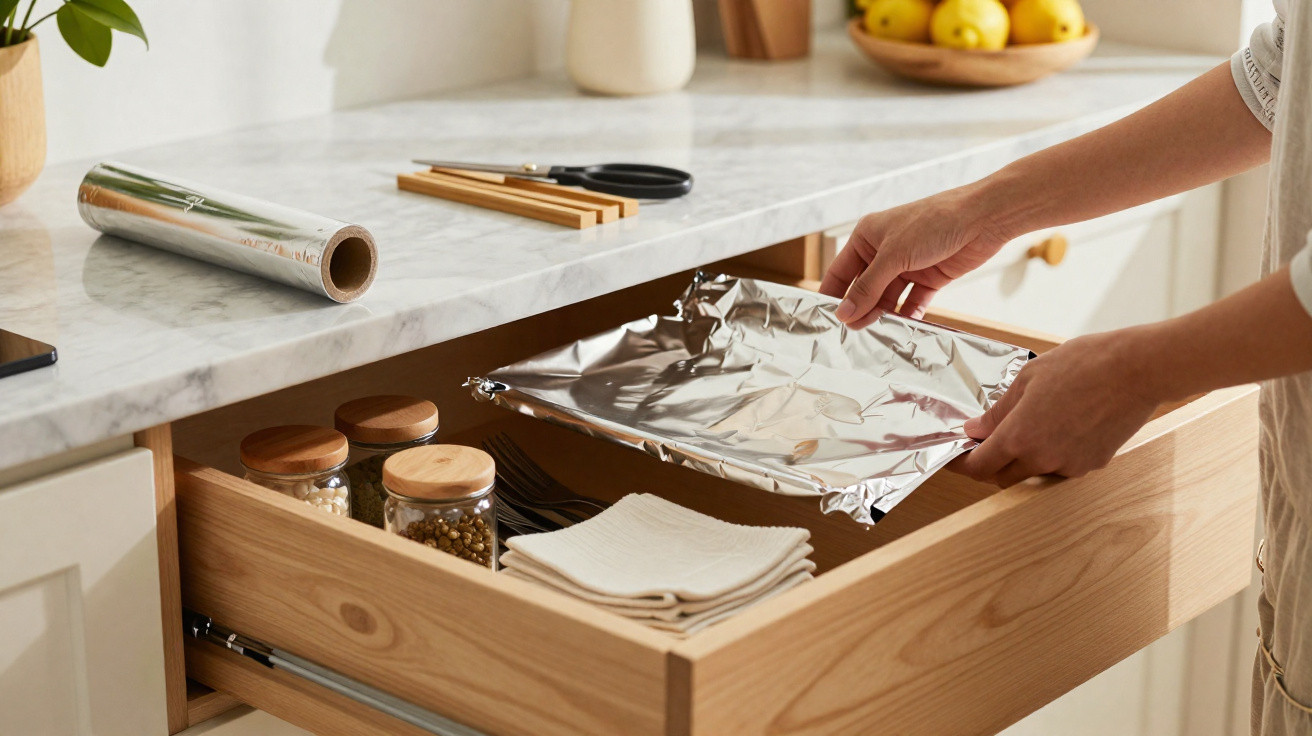
Keeping aluminium foil in kitchen drawers has moved from being a quirky habit to a home trick used in plenty of households. With a thin sheet that’s inexpensive and easy to buy, many people manage to cut down on cleaning time, help their drawers last longer, and even add an extra barrier against everyday damp, grease and dust.
Why is storing aluminium foil in kitchen drawers useful?
The main purpose of lining drawers with aluminium foil is to add a protective layer over the inside surface. This barrier catches oil splashes, crumbs, food debris and small leaks, stopping dirt from reaching the wood or the drawer lining directly.
Foil also limits how much moisture comes into contact with the drawer base, which can reduce the chance of swelling, dark stains and mould-especially with wooden units. In small kitchens or spaces with poor ventilation, this simple step helps preserve the inside of cupboards and drawers for longer.
What benefits does aluminium foil bring to drawer organisation?
As well as shielding against dirt and moisture, aluminium foil can make organisation easier. Because it’s smooth and conductive, it can help reduce the build-up of static electricity, which is useful for plastic wrap, bags and films that tend to cling to the sides of drawers.
This is particularly handy in compartments that hold small items or bottles and jars that are prone to dripping. In these cases, the foil acts as a “safety liner” you can lift out and replace once it becomes very dirty or damaged.
- Cutlery drawers: often collect crumbs and water droplets from freshly washed utensils.
- Spice drawers: are exposed to oil splatters, spice dust and leaks from containers.
- Cloth and plastic drawers: where bags and cling film commonly tangle up or stick.
How to use aluminium foil in kitchen drawers step by step?
For aluminium foil to work properly as protection, it needs to be fitted with a bit of care. No special tools are required: paying attention to measurements and doing an initial clean is enough to get a good result and avoid having to replace it too often.
- Empty the drawer: take out cutlery, utensils, containers, cloths or spices so you can clearly see the base.
- Clean the surface: wipe with a dry or slightly damp cloth, then dry it completely before lining.
- Cut the aluminium foil: trim the sheet to the internal size, leaving a small overhang at the edges.
- Place the sheet: lay it on the bottom, usually with the shinier side facing up.
- Tuck the corners: press gently to prevent loose folds that tear easily.
In most cases, the weight of the items in the drawer keeps the foil in place, so there’s no need for adhesive tape. That also makes replacement simpler: when it’s time to change the liner, you can just lift out the sheet and dispose of it along with the debris it has collected.
How often should you replace aluminium foil in drawers?
How frequently you need to swap the foil depends on how each drawer is used and what you store in it. Drawers opened and used every day-such as those for cutlery and spices-tend to wear the liner out and dirty it more quickly, so they usually need more regular replacement.
A straightforward way to decide is to check the sheet’s condition: foil that is heavily crumpled, torn, greasy or showing signs of damp should be changed. In some kitchens, replacing it monthly is enough, while drawers used less often can keep the same liner for several months without harming hygiene or the condition of the furniture.


Comments
No comments yet. Be the first to comment!
Leave a Comment