
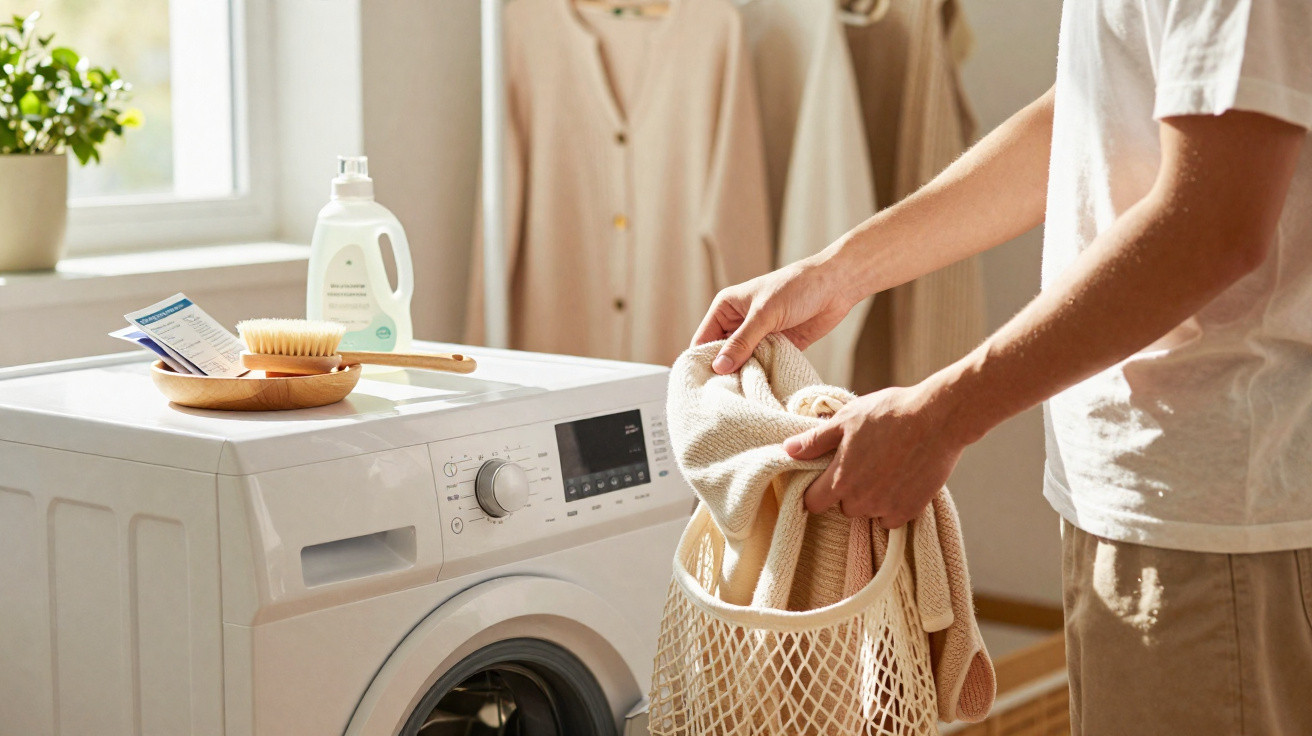
The washing machines are still churning well past midnight in a cramped London laundrette.
A woman in an oversized hoodie fishes out a knot of T-shirts, winces at the dulled colours, and lets out that familiar sigh: “I swear this top was new last month.” Beside her, a man snaps out a black jumper now speckled with miserable little bobbles, already demoted to “only for home”.
We spend more on clothes than we’d like to confess, because we want to believe they’ll stay good for years. Yet after only a few washes, they begin to look flat, saggy, and older than they have any right to be. Not charmingly “vintage”. Just… tired.
What’s odd is that it’s usually not one big blunder that does the damage. It’s a small, repeated choice we make almost every time we do the washing.
The quiet way we kill our clothes
Walk past any hallway on a Sunday night and the scene is familiar: laundry baskets spilling over, someone hurrying to wedge “just one more” T-shirt into the drum. The door clunks shut, the programme goes on “Quick 40°”, and we stroll off feeling like we’ve ticked something off the list.
We don’t stop to picture fibres twisting and grinding against each other when everything’s crammed in. We don’t watch dyes slowly leach, or elastic steadily lose its bounce. We only realise later-weeks on-when favourite jeans seem to have “mysteriously” lost their shape, or a once-soft knit starts feeling scratchy on the skin.
Clothes almost never fail in one dramatic moment. More often, they wear down quietly, inside a spinning drum we hardly glance at twice.
One British survey highlighted something telling: people thought their clothes “wore out” after roughly two years, yet fabric tests suggested many garments could, technically, last far longer. The difference wasn’t only down to poor quality. It was down to what happens once the clothes are in our wardrobes.
Think of the top that lost its brightness after three washes. Or the leggings that went thin at the knees after a month of gym sessions and hot cycles. It’s easy to blame the brand. Much rarer to question how tightly we load the machine or which settings we choose when we’re rushing.
One wash feels insignificant. Across a whole wardrobe, it’s brutal. That’s when we find ourselves buying again and again-not always because we fancy something new, but because what we already own doesn’t seem to last.
The mechanics are simple enough. Higher temperatures can relax and weaken plenty of fibres, especially elastic and delicate blends. Overfilling the drum increases friction, so fabrics scrape, twist, and stretch against each other. Meanwhile, strong “all-purpose” detergents can remove more than grime: they can strip out the subtle finishes that make new clothes look crisp, richly coloured, almost luminous.
We’ve also made “wash after every wear” the default-even for items that barely touched skin. That means more spinning, more heat, and more detergent hitting the same fibres long before they genuinely need it.
The outcome isn’t only faded denim. It’s money quietly drained away, and a steady flow of T-shirts and dresses heading sooner towards the charity bag-or the bin. All because of a routine we almost never stop to question.
The tiny habit: treating your clothes like skin, not dishes
The small habit that changes everything is almost embarrassingly simple: before you put anything in the wash, ask yourself whether it truly needs it. And when it does, wash it as though you’re caring for your skin-not scrubbing burnt-on food from plates.
In practice, it’s three small actions: pause, sort for gentleness, and go cooler. Smell and check items instead of chucking them in on autopilot. Hang up anything that only needs a night to air near an open window. For what genuinely needs washing, turn it inside out, fasten zips, close hooks, and pick a gentle, lower-temperature cycle with a shorter spin.
This isn’t about becoming that mythical person who handwashes silk blouses in a porcelain sink every evening. It’s about a 10-second check that prevents needless damage before it starts.
Think back to the last time you washed a jumper after one evening out, even though it didn’t smell and didn’t feel dirty. Or the jeans you threw in after a few hours at a desk-purely out of habit. Those are the hidden moments when clothes lose years of life with no obvious “reason”.
Let’s be honest: nobody does this perfectly every day. No one has the time or headspace to treat each garment like a museum piece. The aim is to change the default, not to become obsessive.
Reset what “normal” looks like: jeans go in after several proper wears, not after “one outing”. Jumpers get brushed, aired, or spot-cleaned before they’re washed. Dresses that got through an office day without spills can hang overnight to freshen. Shirts marked by deodorant? Yes, wash them. A blazer worn over a T-shirt? Probably not.
“The most sustainable garment is the one you already own, worn for as long as possible.”
It sounds lofty, but on a Tuesday night with an overflowing laundry basket it becomes very practical. It looks like choosing a 30° gentle cycle rather than 40° “intensive”. It looks like using half the detergent when clothes are only lightly worn. It looks like not packing the drum to the brim just to finish in a single load.
- Turn garments inside out to help protect colour and the outer surface.
- Choose 30° or cold for everyday loads.
- Don’t overfill the drum: leave roughly a hand’s width of space at the top.
- Use less detergent than the “heavy soil” marker.
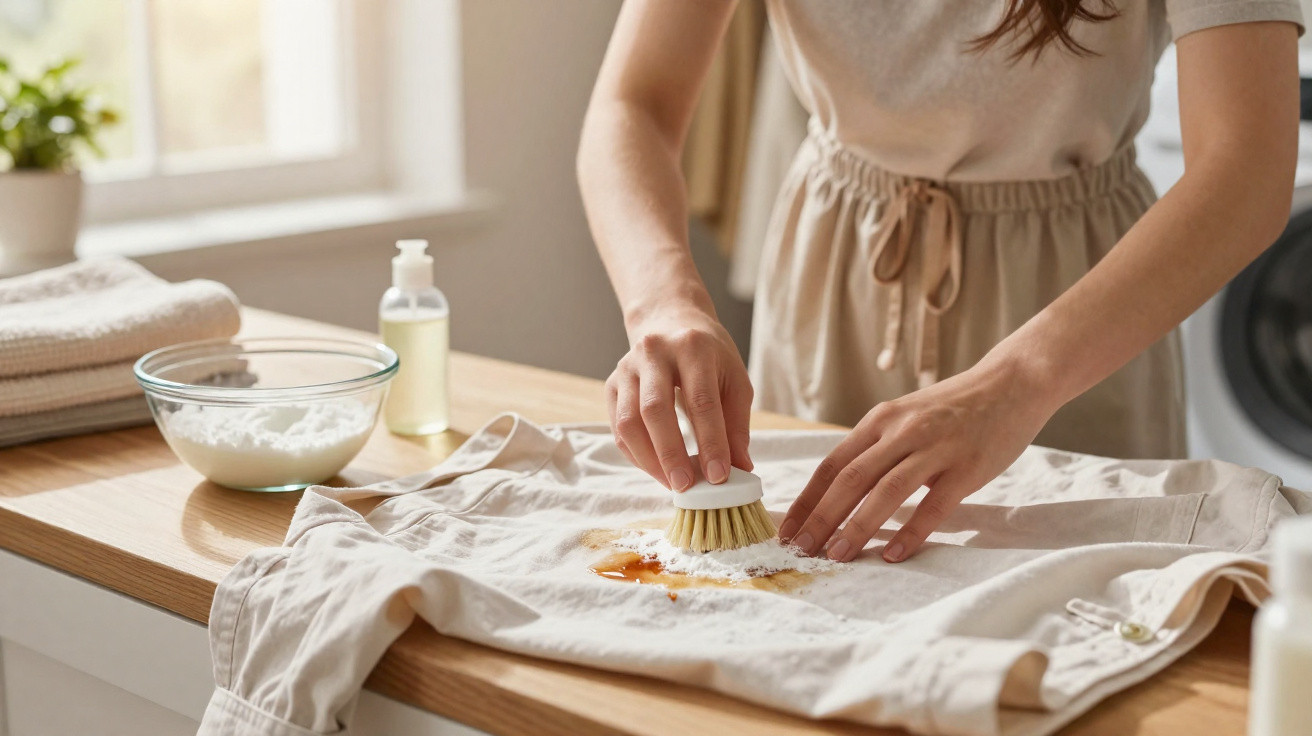
- Air, brush, or spot-clean before deciding on a full wash.
Wearing clothes longer, and what that quietly changes
Once you begin pausing before each wash, something subtle changes. You start paying attention to your clothes again-not as a never-ending pile, but as things you actually enjoy wearing. The blue of a favourite shirt stays richer. The black in your jeans doesn’t fade to that defeated grey so quickly.
You may find yourself counting wears rather than washes. A dress that used to look worn after a single season can still feel “new enough” next year. And that small habit brings a different kind of satisfaction: not the buzz of buying, but the comfort of keeping.
There’s another side to it that no care label spells out. Every wash uses water and energy, and it sends tiny fibres down the drain. Fewer, gentler washes don’t just protect your wardrobe; they also reduce your footprint-without needing a grand speech.
On a personal level, it can feel oddly liberating. Less washing means fewer nights tied to the machine, fewer hours staring at a drying rack blocking the living room. It’s one of those rare habits that returns both time and money, without feeling like deprivation.
And more quietly still, it raises a question: if a tiny, nearly invisible change can help our clothes last, where else might a small pause, a gentler setting, or a softer choice extend the life of the things-and the people-we care about?
| Key point | Detail | Why it matters to you |
|---|---|---|
| Cut out unnecessary washes | Check, smell, and air items before they go into the basket | Less wear, less hassle, savings over time |
| Wash more gently | 30° cycles, a less-full drum, reduced spin speed | Colours last, shapes hold, clothes feel better |
| Change the “laundry reflex” | A 10-second micro-ritual before every load | Easy to stick to, real impact on how long your wardrobe lasts |
FAQ:
- How many times can I wear jeans before washing? For many people, 4–6 wears is reasonable if they don’t smell and there are no visible marks. Hang them up to air between wears and spot-clean any stains.
- Is a quick 30-minute cycle better for clothes? Often, yes-particularly at lower temperatures and with a lighter load. Shorter, cooler cycles are usually kinder to fibres than long, hot programmes.
- Do laundry bags really protect clothes? Yes. Mesh bags reduce friction and snagging, especially for bras, knits, lace, and items with delicate trims or straps.
- Can I skip fabric softener to make clothes last longer? For many fabrics, yes. Softener can build up on fibres and damage elastics over time. Use less, or save it for towels and bedding.
- What’s the best way to freshen clothes without washing? Hang them where air can move, use a light fabric spray if you like, and brush off lint or dust. Often, a night on a hanger is enough.


Comments
No comments yet. Be the first to comment!
Leave a Comment