
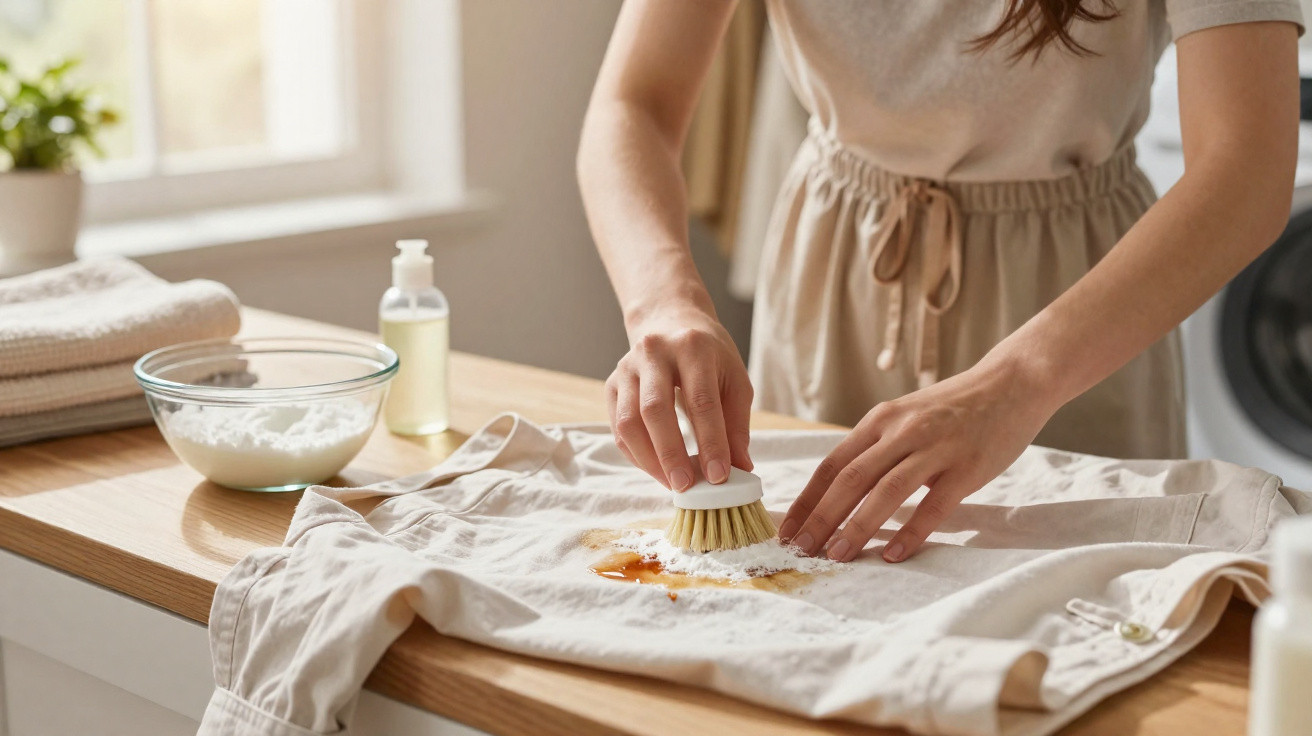
Grease stains on clothing are the sort of thing that can try anyone’s patience. You wash, you scrub, you run it through the machine, you leave it to soak… and yet the garment still has that oily sheen - especially on collars, cuffs, and clothes worn in the kitchen. And once the item has been through the tumble dryer or dried in direct sunlight, the grease can seem to bond to the fabric permanently and simply will not shift, which leaves many people ready to give up on the piece.
Why are grease stains so difficult to remove?
Grease does not mix well with water, so ordinary detergent on its own often cannot cope with concentrated marks or stains that have already dried. Fabrics such as cotton and polyester can behave like sponges, drawing oil and grime deep into the fibres.
As time passes, that oiliness combines with dust, sweat, and dead skin, creating a stubborn film - and it is even worse if the wash is quick and done in cold water. If the clothing dries with that layer still in place, removal becomes much harder, which is exactly why pre-treatment matters so much.
Which household ingredients help dissolve grease in fabric?
A few everyday household products can significantly boost cleaning by breaking down grease, loosening dirt from the fibres, and cutting down odours. They are usually inexpensive, easy to find, and - when used carefully - they do not damage the fabric.
Before applying anything across the whole garment, you must test it on a hidden area first, particularly on coloured or delicate items. Among the go-to options for tackling grease stains are:
- Mild washing-up liquid: works directly on the greasy film, breaking it up and lifting the excess.
- White vinegar: helps soften residue and can leave fabric feeling softer.
- Bicarbonate of soda: acts like a gentle scourer on more stubborn, stuck-on grime.
- Coconut soap: cleans effectively without being as harsh on fibres.
- Alcohol: quickly dissolves fresh grease, such as cooking oil.
How can you remove fresh grease stains safely?
New stains are far easier to rescue, so acting quickly makes all the difference. On hard-wearing fabrics like cotton and denim, a solid pre-treatment with mild washing-up liquid often delivers excellent results.
Blot away any excess with kitchen paper, apply the washing-up liquid neat to the greasy area, rub gently, and leave it to work for 10 to 15 minutes. Then rinse in warm water and wash as normal - and do not dry the garment if there is still any shiny halo left behind.
How to deal with old grease stains on different fabrics
If the stain is old, you will need more patience and slightly stronger combinations, always keeping the fabric type in mind. For durable clothes, a mild paste made from mild washing-up liquid, white vinegar, and a little bicarbonate of soda can help a great deal, as long as you rinse it extremely well.
For delicate fabrics - such as silk, fine viscose, lace, or garments with lots of embroidery - it is best to dial back the strength of the products: use only well-diluted mild washing-up liquid, with a little vinegar and a shorter contact time. Do not allow the stain to dry between attempts, and if you notice fading or fibre damage, stop the home treatment and consider professional cleaning.

Comments
No comments yet. Be the first to comment!
Leave a Comment