
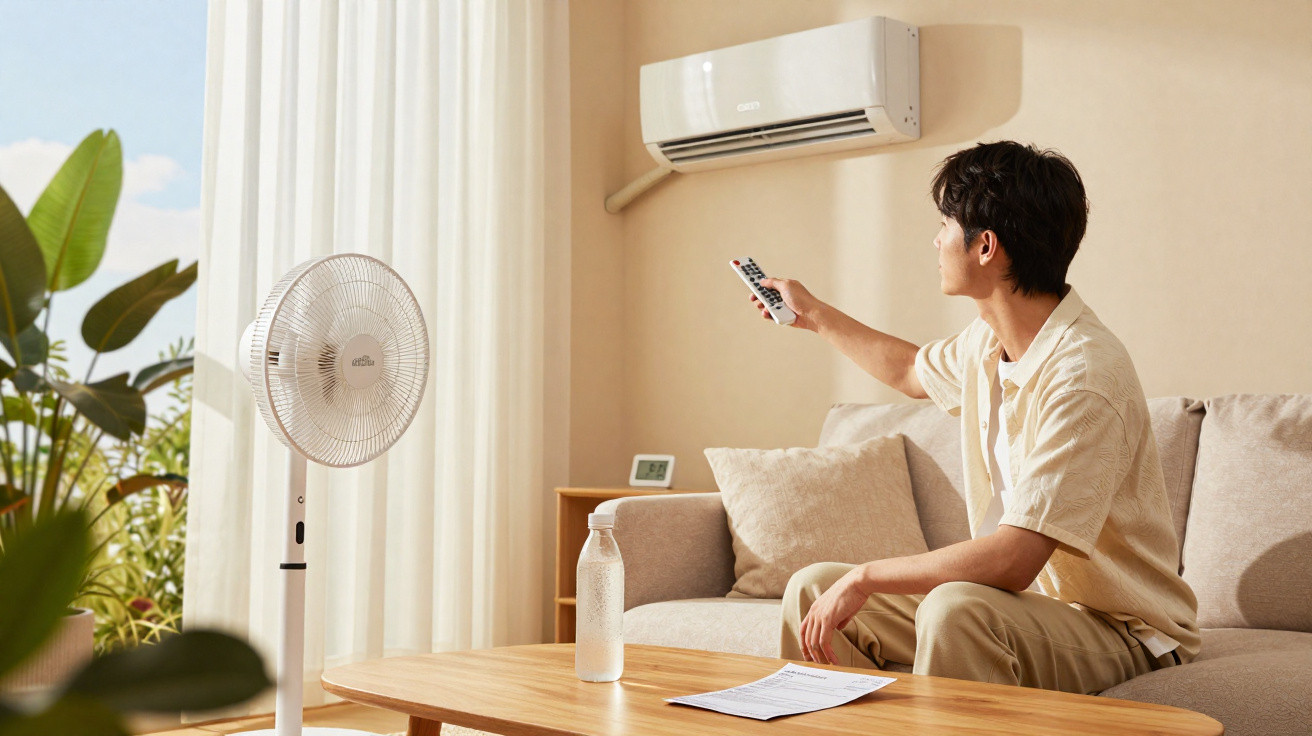
In many homes, summer arrives with a familiar pattern: the air conditioner running for hours and a fan humming away somewhere in the room. It often raises questions about thermal comfort, electricity use and possible health effects, yet the outcome depends less on the devices’ raw power and more on how they are used-where the fan is placed, the temperature selected and how long everything stays on.
How to set up the room to use an air conditioner and fan efficiently
Before looking for tips for families who rely on both an air conditioner and a fan, start with the layout of the room itself. Long spaces, tall furniture or partitions can interrupt airflow, and the fan then works as a kind of “pusher” for the already-cooled air, carrying that coolness into spots that would otherwise remain warmer.
A practical approach is to create “zones” in the room: a resting area, a walkway and the area closest to the unit. Position the fan so it links these zones without blowing straight at anyone’s face; in many cases, directing the airflow towards the ceiling or a side wall produces a gentle circulation that spreads cool air more evenly and reduces discomfort.
Which daily habits make combined use cheaper and more comfortable
Certain routines make using the two appliances together more sensible, helping to balance comfort with the energy bill. Keeping a steady reference temperature on the air conditioner prevents consumption spikes, while the fan boosts the feeling of coolness without forcing the cooling system to run at full effort all the time.
Among the most helpful day-to-day practices are straightforward steps that fine-tune air movement in the room and support longer use with lower energy spend:
- Set a moderate temperature range on the air conditioner, rather than making sudden changes to “cool fast”.
- Run the fan on low or medium speed, favouring continuous circulation instead of a strong direct blast.
- Keep doors and windows shut while running the appliances, and open them during cooler times to refresh indoor air.
- Avoid airflow directly onto anyone who is sleeping, pointing the fan towards a wall or the ceiling instead.
In which situations is the air conditioner and fan combination most advantageous
Not every space needs both appliances at the same time; in well-sized bedrooms, the air conditioner alone may be enough. The pairing becomes more valuable when there are many people in the room, areas that are hard to cool, or electronic equipment generating constant heat, such as large televisions and computers.
In these situations, the fan does not replace the air conditioner, but it improves how the cooled air is distributed, reducing hot spots and avoiding the need for extreme temperature settings. In large living rooms, very sunny flats or homes with undersized units, this partnership tends to increase comfort without necessarily increasing consumption.
Which health and maintenance precautions keep the environment comfortable
Beyond saving energy, households using both devices should pay attention to everyday wellbeing. Overly dry air can irritate skin and mucous membranes, and dust build-up on filters and fan blades can worsen respiratory irritation-especially for children, older people and anyone with allergies.
A few simple measures help minimise these effects: clean filters and blades regularly, take breaks to ventilate the room at milder times of day, keep properly hydrated and avoid prolonged exposure to cold air blowing directly onto the body. With these habits, combined use stops being only a response to heat and becomes part of a more mindful way of managing comfort at home.






Comments
No comments yet. Be the first to comment!
Leave a Comment