
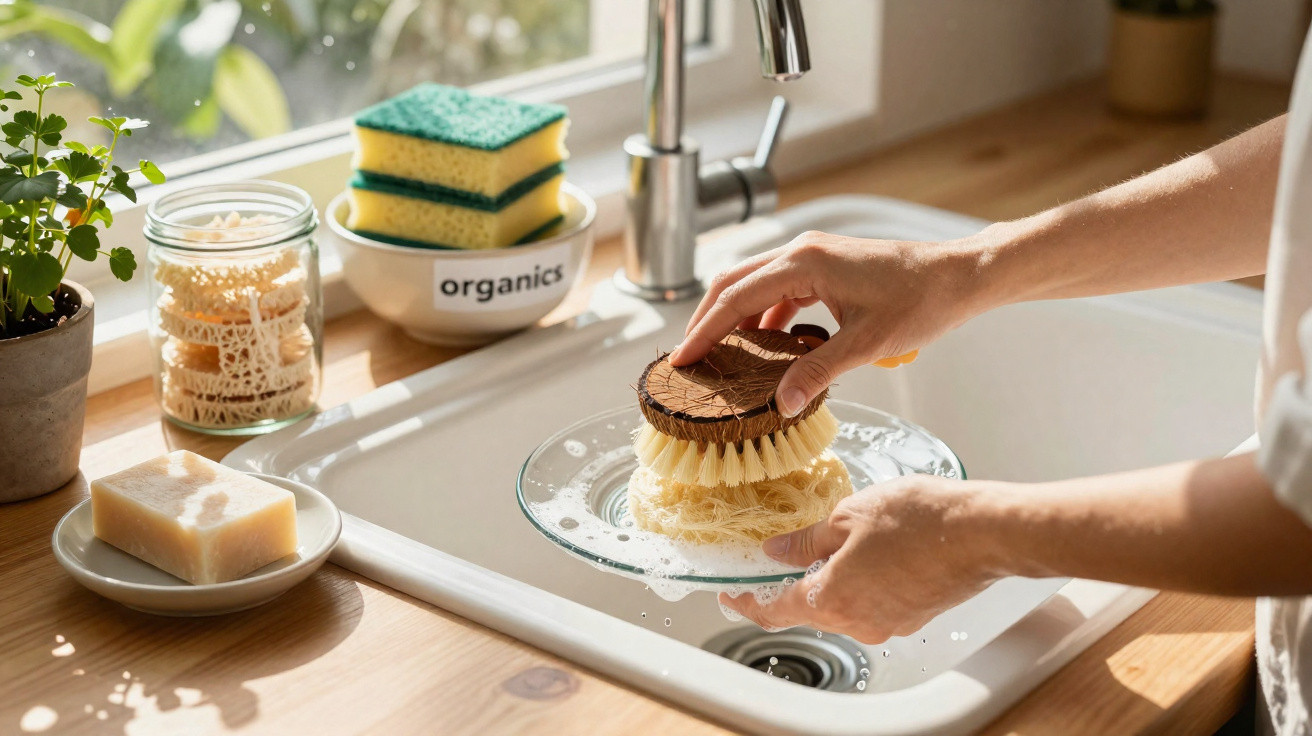
Washing up and keeping the kitchen sink hygienic have changed noticeably in recent years. The familiar synthetic kitchen sponge found in many homes has come under scrutiny from researchers and environmental professionals because it can contribute to microplastics entering the water system. That concern has encouraged many people to look for more sustainable ways to keep the kitchen clean.
Why has concern about microplastics from kitchen sponges increased?
A conventional kitchen sponge is typically made from plastic-based materials such as polyurethane or melamine. With daily friction against plates, pans and work surfaces, the material gradually wears down. As it breaks up, tiny fragments are released, travel down the drain with the water, and are rarely fully captured by wastewater treatment plants.
These particles fall into the category of microplastics-small pieces of plastic measuring a few millimetres or even microscopic in size. Studies suggest that a single item can shed millions of fibres over its usable life. Some of this ends up in rivers, seas and soils, where it can be eaten by aquatic organisms and make its way into the food chain.
Which sustainable alternatives can replace the traditional kitchen sponge?
As research has progressed, interest has grown in eco-friendly options for washing up that still clean effectively while reducing plastic use. The focus is on renewable or biodegradable materials that, when disposed of properly, leave behind less long-lasting waste in the environment.
Among the most common alternatives are plant-based items and natural fibres, which can cover everything from heavy-duty scrubbing to everyday sink cleaning:
- Loofah (plant sponge): taken from a climbing plant, it becomes fibrous once dried; it is biodegradable and can be composted with food waste if it is not heavily contaminated with chemical products.
- Coconut fibre sponges: made from fibres taken from the coconut husk, often combined with other natural materials, offering good durability and moderate abrasion.
- Wooden brushes with natural bristles: practical for pans, grills and baked-on residue, helping reduce the need for excessive force.
- Cotton or cellulose cloths: suited to light cleaning of worktops, tables and appliances, replacing disposable products.
How can you make washing up more sustainable day to day?
Switching away from the standard kitchen sponge is only one step within a wider set of habits aimed at keeping the home clean with less environmental impact. Small changes to routine can cut resource use and plastic consumption without sacrificing utensil hygiene.
Sustainability specialists recommend paying attention to how cleaning items are used and disposed of, as well as how refills, packaging and washing-up liquids are chosen. They advise prioritising refillable options and keeping the amount used under control.
How should you care for and dispose of sponges to reduce environmental impact?
Even when you choose natural alternatives, hygiene and disposal still matter to avoid contamination and unnecessary waste. Keeping loofahs and brushes clean-rinsed thoroughly and left to air-dry-helps extend their lifespan and reduces how often they need replacing.
Worn-out synthetic sponges should not be flushed down sinks or toilets. Instead, they should go into general waste, securely contained. Plant loofahs, meanwhile, can be composted with organic waste when they are not saturated with chemical products, supporting a cleaning routine that is more closely aligned with environmental responsibility.

Comments
No comments yet. Be the first to comment!
Leave a Comment