
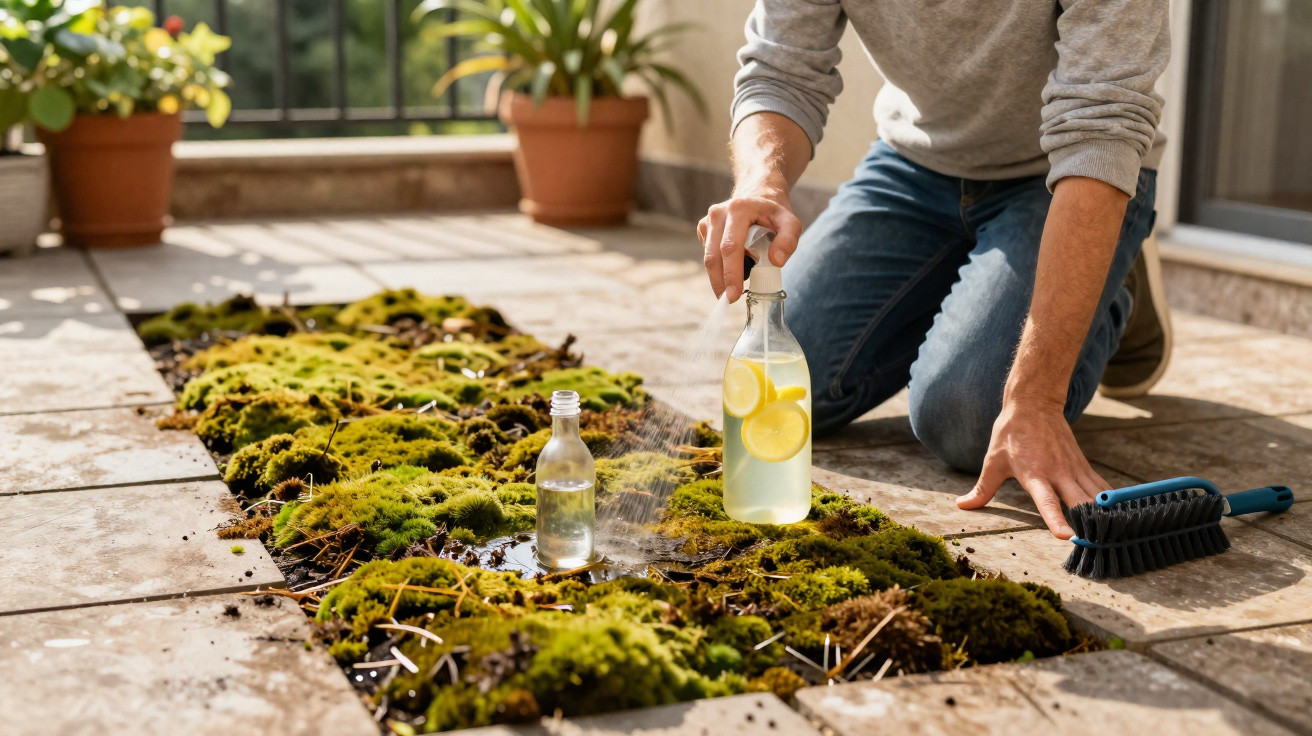
A quick reach into the kitchen cupboard can deliver a surprisingly thorough fix.
Homeowners often get fed up year after year with stubborn moss that creeps into every joint and turns stone surfaces dangerously slippery. Pricey specialist cleaners promise a lot, but they often harm nearby plants and the environment. In reality, the most effective option is usually already at home - and costs only a few pence.
Why moss takes over patios and garden paths so quickly
Moss thrives in damp, shaded conditions. That’s exactly what you get on many patios, paved paths, garage driveways and garden walls - especially after a long, wet winter. Moisture sits in the joints, the sun struggles to reach the surface, and before long a green carpet appears.
Most people react instinctively with a stiff brush or scrubbing brush. It looks clean for a moment - but a few days later the moss is back. The reason is straightforward: you remove what you can see, but spores and the root-like rhizoids remain tucked into tiny cracks. Without something that targets these structures, the moss quickly regrows.
Chemical moss removers can work fast, but they often contain harsh ingredients. These can damage bordering plants, flowerbeds or the lawn. Anyone who invests time in a healthy lawn and a stable garden ecosystem won’t want to gamble on aggressive chemical run-off.
"Moss isn’t beaten by sheer muscle power, but by the right product in the right situation."
Timing matters too. If you clean during rain, or straight after hosing down, you’re wasting effort and product. Water dilutes the mixture, washes it off the surface and carries it into the soil. A dry day with light cloud is far better: the liquid won’t evaporate instantly, it won’t be rinsed away, and it has time to do its job.
The kitchen combination that gets rid of moss
In most homes you’ll find two everyday items that, together, are impressively effective: standard household vinegar and bicarbonate of soda (baking soda). Dissolved in warm water, they make a solution that not only loosens moss, but also helps prevent a quick comeback.
Vinegar contains acetic acid, which penetrates the moss tissue and attacks it from within. Bicarbonate of soda is mildly alkaline and draws moisture from plant cells. Used together, they hit moss in two vulnerable places: the visible growth and the structures lodged in the joints.
A small squirt of washing-up liquid boosts the results further. It acts as a wetting agent, helping the liquid cling to leaves and cushions instead of running straight off.
What you’ll need for the moss offensive
- Household vinegar (clear/white, not flavoured)
- Bicarbonate of soda (baking soda)
- Washing-up liquid (a small squirt is enough)
- Hot water
- A bucket or bowl
- A stiff brush or a yard brush with hard bristles
With this kit you can treat more than just moss cushions on stone. Other unwanted plants in joints and between slabs are often sensitive too. For persistent weeds, though, it’s usually better to treat each type in a targeted way rather than using the same approach everywhere.
Step by step: how to remove moss from outdoor surfaces
1. Prepare the area properly
Before any solution goes down, clear away loose leaves, soil, small twigs and sand. Sweeping the patio first ensures the mix hits the moss directly rather than disappearing into grime.
2. Mix the cleaning solution
Fill the bucket with hot water, then add a generous amount of vinegar. Stir in two to three tablespoons of bicarbonate of soda until it has mostly dissolved. Finish with a small squirt of washing-up liquid. The mixture will fizz briefly - that’s normal. Once the reaction settles, it’s ready to use.
| Ingredient | Purpose |
|---|---|
| Vinegar | Attacks the moss’s cell tissue |
| Bicarbonate of soda | Draws out moisture, makes regrowth harder |
| Washing-up liquid | Helps the solution cling to the surface |
| Hot water | Strengthens the effect and loosens dirt |
3. Apply the mixture and leave it to work
Pour the solution straight onto all mossy patches, or distribute it with a watering can. The key is an even covering. Then leave it alone. Allow at least 15 to 30 minutes so the acetic acid and bicarbonate can reach deeper layers.
If you start scrubbing too soon, you reduce the effect. With thicker moss pads, it’s worth giving it a little longer.
4. Follow up mechanically
After the wait, work over the area with a stiff brush or yard brush using circular motions. In many cases the moss lifts off in flakes or even in whole mats. Any remaining bits can be pushed out of the joints with firm pressure.
Then rinse the entire surface well with clean water. This removes dead plant residue, leftover vinegar and bicarbonate from the stones.
While rinsing, pay attention to what’s nearby: avoid directing the water straight into beds, planters or the vegetable patch. Vinegar can harm sensitive plants, particularly at higher concentrations.
Keeping moss away long term: how to keep the patio cleaner for longer
A single clean rarely lasts forever. If you want to get rid of moss for good, you need to change the site conditions. The biggest lever is moisture. Where water constantly sits or drains slowly, green growth has an easy time.
- Rework joints and stabilise any loose stones
- Check the slope so rainwater can drain away
- Clean channels and drains regularly
- Position planters so water can’t collect underneath
Light is also crucial. Overhanging branches and dense shrubs cast shade over patios and paths. A moderate prune lets more sun reach the stone. Dryness and brightness make it difficult for moss to thrive.
A gentle preventative step can help as well: apply a diluted vinegar–bicarbonate mixture every two to three months to the most vulnerable areas, before a green carpet becomes visible again. That gives spores less chance to take hold.
What households should definitely keep in mind
However useful home remedies are, nobody should grab the watering can without thinking. Joints between natural stone, clay pavers or concrete can react differently. On very soft materials or polished surfaces, it’s best to test in an inconspicuous spot first.
In some areas, there are strict rules about using vinegar- or salt-based solutions on hard surfaces, because residues can enter surface drains or groundwater. If you’re unsure, check local guidance with your council first.
One more thing: not every green cushion is automatically a problem. On old natural-stone walls or in damp corners of the garden, moss can even be a deliberate design feature. The real concern is slippery surfaces where people walk.
Practical everyday examples
On a balcony with concrete slabs, a small bucket of the mixture is usually enough for an initial test clean. Often it’s sufficient to treat the worst-affected corner to see the difference. On a driveway or wide paths, it’s best tackled on dry days that aren’t too hot, so the liquid has enough working time.
If you have children or pets, it’s sensible to wait until the area is completely dry after treatment. By then, most vinegar and bicarbonate will have evaporated or been rinsed away, and the surface can be used as normal.
In the end, the rule is simple: if you keep an eye on moss on patios and paths, sweep regularly and top up occasionally with the kitchen mixture, you can avoid expensive specialist products - while also cutting the risk of slips on slick surfaces.


Comments
No comments yet. Be the first to comment!
Leave a Comment