
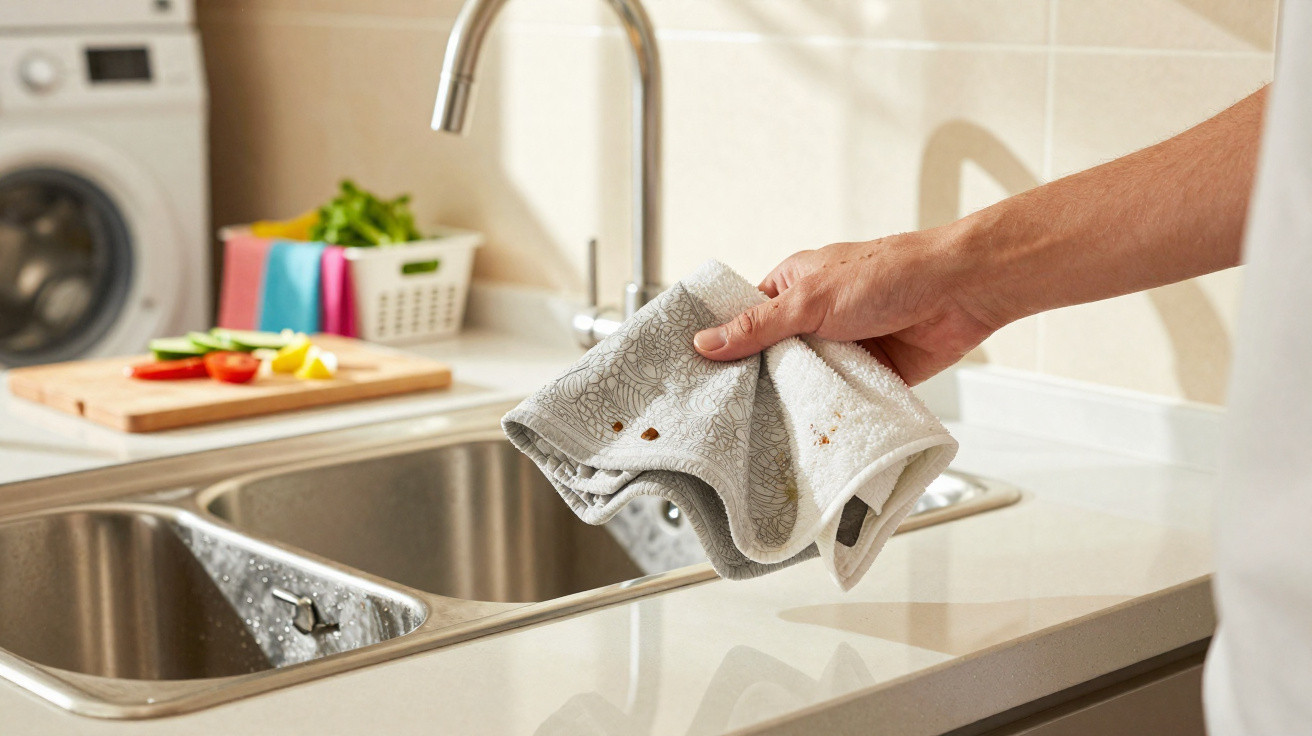
Many kitchens look spotless – yet an innocent everyday helper by the sink can quietly turn into a germ spreader.
Worktops wiped down, floors mopped, dishes put away – everything looks in order. But right there, often hanging within arm’s reach, is an unremarkable piece of fabric that soaks up moisture, food residues and bacteria. This isn’t about the cleaning sponge or washing-up brush, but a textile we use all day without thinking twice about hygiene.
The underestimated risk: why kitchen towels become contaminated so quickly
A standard kitchen towel ends up doing countless jobs. It dries glasses, mops up splashes from the worktop, dries hands, and sometimes even gets shoved under a damp pan. It’s this constant multi-use that turns it into an ideal playground for micro-organisms.
"Kitchen towels are often damp, warm and contaminated with tiny food residues – perfect conditions for bacteria."
Researchers at the University of Mauritius examined household kitchen towels. The findings may sound harmless at first glance, but they’re concerning: almost every second towel tested was contaminated with bacteria. The most common were:
- Faecal bacteria (coliform bacteria)
- Enterococcus faecium
- Staphylococcus aureus
These particular germs are important contributors to food poisoning and stomach bugs. If one towel is expected to do everything – hands, clean dishes, worktops – germs end up being redistributed across the whole kitchen.
A typical scenario: someone quickly wipes up leaking juice from raw meat with the towel. Soon after, someone dries a clean knife with it, or a child dries their hands. The bacteria travel with the towel and are transferred to plates, cutlery, or directly onto skin.
How often should you change kitchen towels?
Hygiene specialists largely agree on one thing: kitchen towels don’t stay “safe” for long. The recommended maximum time is shorter than many people assume.
"If you use one towel for everything and it often hangs in the kitchen while damp, you should replace it after two to three days."
Experts in virology and dermatology suggest similar time frames:
- Heavily used towels (hands, dishes, surfaces, frequent hand-washing): change every 2 days, at the latest on the third day.
- Less used towels (households with a dishwasher, mainly for hands): in some cases, once a week may be enough.
There are also situations where you should swap the towel immediately:
- Contact with raw meat or poultry juices
- Contact with raw eggs or egg-containing dough
- Wiping up food that has fallen on the floor
- A stomach bug in the family
- Households with babies, pregnant people, older adults, or immunocompromised individuals
In these cases it’s worth being especially strict about kitchen hygiene. Reaching for a fresh towel quickly lowers the risk – particularly for the most vulnerable members of the household.
How to get kitchen towels properly clean
Many people simply hang the towel up after cooking, dry it on a radiator, or give it a quick rinse in the hand basin. That won’t meaningfully reduce the bacterial load.
The right washing temperature
Specialists clearly recommend washing at a higher temperature:
- At least 60°C for a normal wash cycle
- Occasionally 90°C as a “deep clean”, especially after stomach illnesses or very heavy use
A standard cotton programme with a typical detergent is usually sufficient. If you like, you can add a little white vinegar to the fabric softener compartment. It may reduce odours and provide an additional disinfecting effect.
Drying properly matters just as much
After washing, the towel needs the chance to dry completely. If it sits half-wet and scrunched up in a basket or cupboard, some of the benefit of washing is lost.
- Let the towel spin thoroughly
- Air-dry it spread out, not in a bundle
- Don’t put it away damp in a drawer or cram it into a corner
"A dry towel slows bacterial growth – a constantly damp towel acts like a mini incubator."
Organise smartly: one kitchen towel for everything is a bad idea
One simple change can improve hygiene immediately: stop relying on a single towel for every task. Using several towels at the same time significantly reduces how widely germs spread.
A practical split that’s easy to stick to:
- One towel only for dishes and glasses
- One towel only for hands
- One towel only for worktops / spills
Coloured towels or small patterns make it easier to keep tasks separate. For example: blue for dishes, white for hands, grey for surfaces. That way children are more likely to grab the right towel too.
| Area of use | Recommended change | Notes |
|---|---|---|
| Dishes & glasses | Every 2–3 days | Only for clean items; not for the floor and not for raw meat |
| Hands | Every 2–3 days, more often with children | Change immediately if someone in the household is ill |
| Worktops & spills | Daily, more often with heavy use | After contact with raw animal products, put it straight into the laundry basket |
Warning signs: when the kitchen towel should go straight into the wash
Sometimes your eyes and nose are enough to tell you the towel has had its day – even if it wasn’t washed that long ago.
- It smells musty or sour, even when dry.
- It feels persistently clammy, even though it should be dry.
- There are obvious stains from sauce, coffee, juice or other foods.
- Several family members dry their hands on it one after another – especially after handling raw foods.
At that point, it’s better to change the towel rather than hoping it’ll be “fine for one more day”. The effort is minimal, but the health benefit can be substantial.
Why vulnerable people in particular should be protected
Many people recover from mild food poisoning without too much trouble. For others, the same germs can have far more serious consequences. Extra care is advisable for:
- Households with toddlers or babies
- Pregnant people
- Older adults
- People with a weakened immune system or chronic conditions
For them, germ transfer from the kitchen is more likely to lead to more severe symptoms – from intense diarrhoea to longer-lasting illness. Clean towels are one of the simplest levers for reducing that risk.
Practical examples: what a hygienic towel routine looks like
A realistic routine in a busy family home might look like this:
- Monday: hang up three fresh towels (hands, dishes, surfaces).
- Wednesday evening: put all three into the laundry basket and replace them.
- Saturday: a cooking session involving meat and eggs – replace the surface towel immediately afterwards.
- Sunday: run a 60°C wash and put the towels back in the cupboard.
In a one-person household with a dishwasher, a slower rhythm may be sufficient – for example, changing every three to five days, as long as the towel is mainly used for hands and isn’t constantly soaking wet.
What many people mix up: cleaning cloth, sponge and kitchen towel
In some kitchens, the line between dish cloth, sponge and towel becomes blurred. A cloth used to scrub the worktop shouldn’t then touch clean dishes. The same goes for sponges used to wash pans.
"Each tool has its role – the clearer that separation stays, the fewer germs travel through the whole room."
If you keep kitchen textiles clearly separated, wash them regularly, and change them more often during illness or heavy use, you can noticeably reduce the risk of stomach upsets and foodborne infections. In practice, it mainly means keeping a few extra towels in the cupboard and getting used to a new change schedule – a small habit with a big impact on health.





Comments
No comments yet. Be the first to comment!
Leave a Comment