
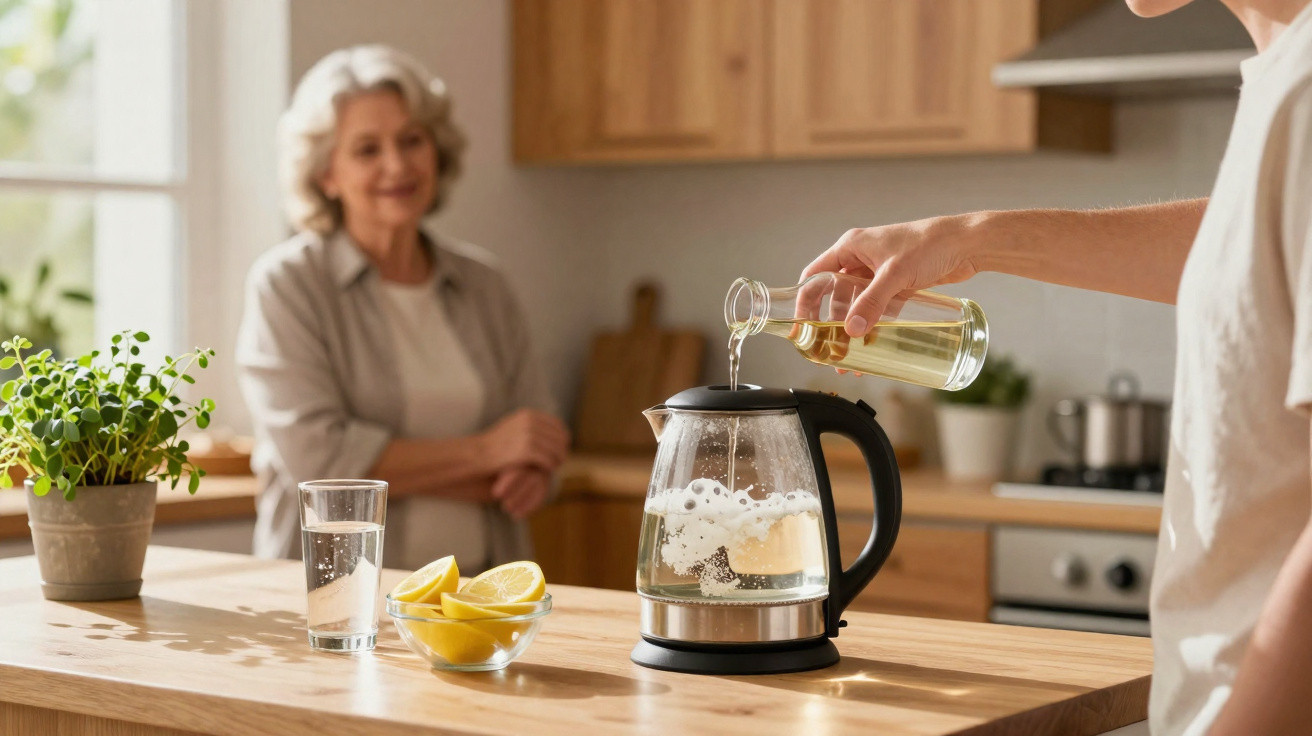
A simple solution has been sitting quietly in the kitchen cupboard, and it is returning at exactly the right moment.
From Manchester to Montreal, homeowners describe the same irritation: a chalky build-up that drags out boiling and mutes flavour. Engineers now point to an everyday pantry item that can deal with it, without expensive specialist chemicals.
Why kettles scale up
Hard water contains calcium and magnesium. When water is heated, those minerals are forced out of solution. They then deposit on the kettle’s base and sides as limescale. This crust acts like insulation around the heating element. Boil times get longer. Power consumption edges upward. Tea and coffee can taste more dull because the minerals latch onto flavour compounds.
A pantry fix gets scientific backing
Water-treatment specialists highlight acetic acid, the working ingredient in white vinegar. At normal household strength, it reacts with calcium carbonate, turning it into soluble salts plus carbon dioxide. In practice, that lifts scale without scraping or scuffing metal surfaces. It also works its way into tight corners where a brush cannot reach.
"Low-strength acetic acid dissolves carbonate scale while leaving stainless steel and most heating elements unharmed when used with rinsing and short contact times."
Step-by-step method that works
- Fill the kettle to the halfway line using a 50/50 mix of cold water and white vinegar.
- Heat it until it reaches a gentle boil, then turn it off and leave the solution to sit for 30–60 minutes.
- If the limescale is stubborn, extend the soak (up to overnight) but do it without heat.
- Tip out the mixture, then remove any loosened bits with a non-scratch sponge.
- Rinse twice, then boil and discard fresh water once or twice to remove any lingering aroma.
In most homes, everything you need is already to hand. The cost is pennies, and it usually takes less time than going out to buy a commercial cleaner.
How often to descale
How frequently you should descale depends on how hard your water is and how often the kettle is used. In hard-water areas where the kettle boils several times a day, a monthly clean may be necessary. With softer water, cleaning once a quarter is often enough. A fast visual check helps: look for a faint white ring on the base or a film gathering on the spout filter.
"A light, regular descale prevents thick crusts that waste power and shorten appliance life."
How vinegar compares with other options
| Method | Cost per use | Effect on heavy scale | Time required | Odour | Notes |
|---|---|---|---|---|---|
| White vinegar (5–8% acetic acid) | Very low | Strong if given soak time | 30–60 minutes | Noticeable, rinses out | Food-safe, widely available |
| Citric acid (powder) | Low | Strong | 15–45 minutes | Mild, lemony | Good for aluminium caution zones |
| Commercial descaler | Medium to high | Very strong | 10–30 minutes | Varies | Follow label to protect finishes |
| Baking soda | Low | Poor on limescale | Not recommended | Neutral | Better for odours than mineral crust |
Taste and safety basics
A proper rinse removes any sharp aftertaste. One or two boils with fresh water will clear the smell. At kitchen strength, white vinegar does not leave harmful residues once rinsed away. Keep the liquid inside the jug only, and avoid splashing the electric base or the control housing.
"Never mix vinegar with bleach or other descalers. Some combinations release toxic gases."
What about materials and seals
Most modern stainless-steel and glass kettles cope well with vinegar. However, it is best to avoid very long soaks on plated finishes or decorative metals. If your kettle includes aluminium parts, consult the manual. Where there are rubber gaskets, sensors, or adhesives close to the waterline, reduce contact time. If you are unsure, use citric acid instead: it works in a similar way and smells less.
Filter, baseplate and spout care
- Take out the mesh spout filter and soak it in warm vinegar for 10 minutes.
- Clean around the baseplate with clean water only, keeping all power components dry.
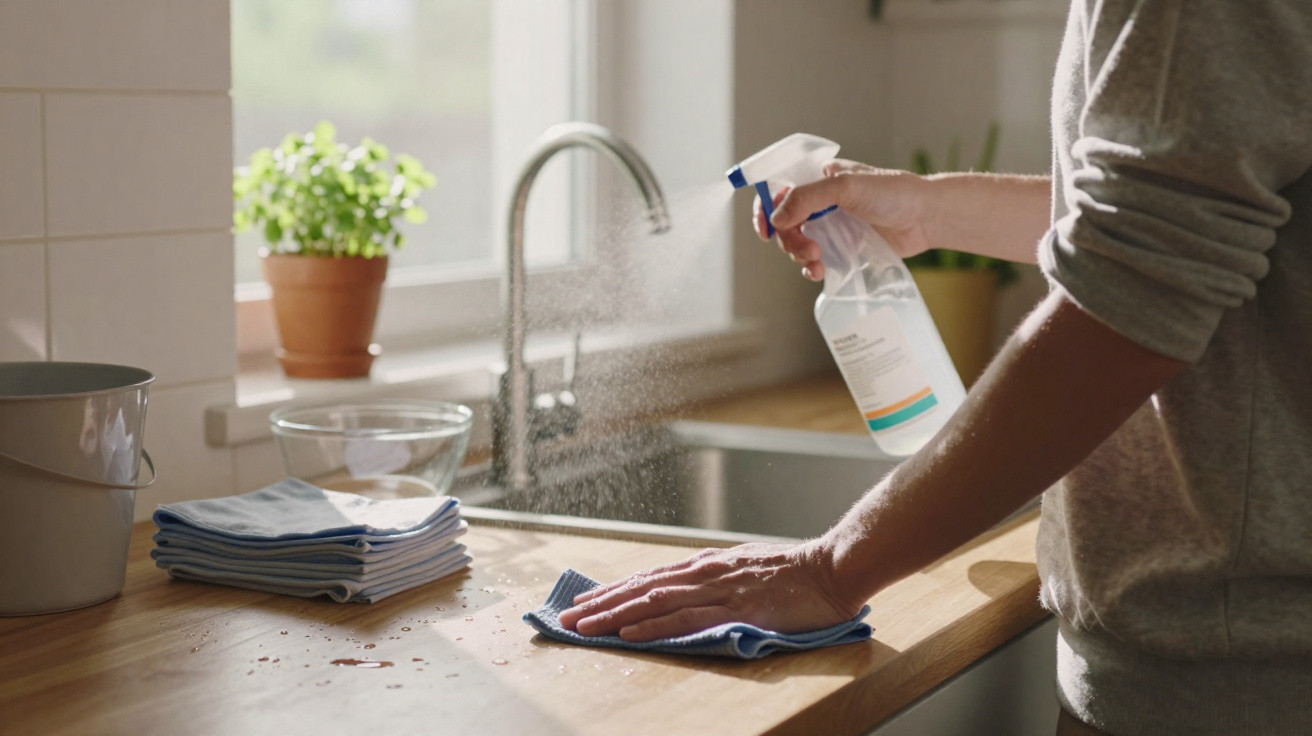
- Wipe the outside with a damp cloth and a drop of washing-up liquid.
Energy and money on the line
A kettle coated with scale takes longer to reach the boil. Each use may only be slightly slower, but the extra time accumulates across the weeks. With a clean element, heat moves into the water more efficiently, so you get faster tea and lower electricity use. Keeping scale thin also helps the appliance last longer.
Preventive habits that slow limescale
- Only boil what you plan to use, which reduces deposits and saves energy.
- After boiling, pour out any leftover water. Dry the lid and spout to limit residue.
- If your tap water is very hard, consider using a filter jug.
- Alternate a monthly vinegar or citric rinse so layers do not build up.
- Add an inexpensive stick-on kettle descaler coil to catch loose minerals between cleans.
What the experts say about hardness
Water hardness is measured as the amount of calcium and magnesium expressed as milligrams per litre of calcium carbonate. Anything under 60 mg/L is classed as soft. Readings above 180 mg/L are very hard. The higher the number, the quicker scaling happens and the less time you can leave between cleans. Test strips are inexpensive and provide a reading in one minute.
A quick schedule based on hardness
- Soft water: inspect every two months, clean as needed.
- Moderately hard: clean every six to eight weeks.
- Very hard: clean monthly or when a white ring appears.
Real-world use case
Renters, students, and retirees report similar results when they bring back the vinegar approach. Boil times return to normal. The kettle stops rattling because bubbles are no longer battling against a roughened surface. The same chemistry can also help coffee machines and irons, provided you use shorter contact times and rinse carefully.
"A pantry acid breaks down scale, protects flavour, and keeps appliances in service without specialised products."
Extra tips you will actually use
- If you cannot stand the smell, put a slice of lemon into the final rinse boil.
- For heavy build-up, run a shorter cycle twice rather than forcing one very long soak.
- If the kettle has a non-stick interior, use lukewarm solutions and avoid abrasive pads.
- While it soaks and vents acidic steam, keep children and pets away.
Beyond the kettle
Shower heads, tap aerators, and dishwasher spray arms accumulate the same minerals. A brief soak in warm vinegar or a citric solution can bring the flow back. Rinse thoroughly, then run a plain-water cycle on appliances. Do not use acid on natural stone worktops or marble, as it will etch the surface.
If you want to estimate what you might save, count how many times you boil the kettle each day and multiply that by the reduced heat-up time after descaling. Even a 10–20 second improvement per boil, repeated several times a day, adds up to hours saved over a year and a lower electricity bill. Small habits make a noticeable difference in hard-water homes.



Comments
No comments yet. Be the first to comment!
Leave a Comment