
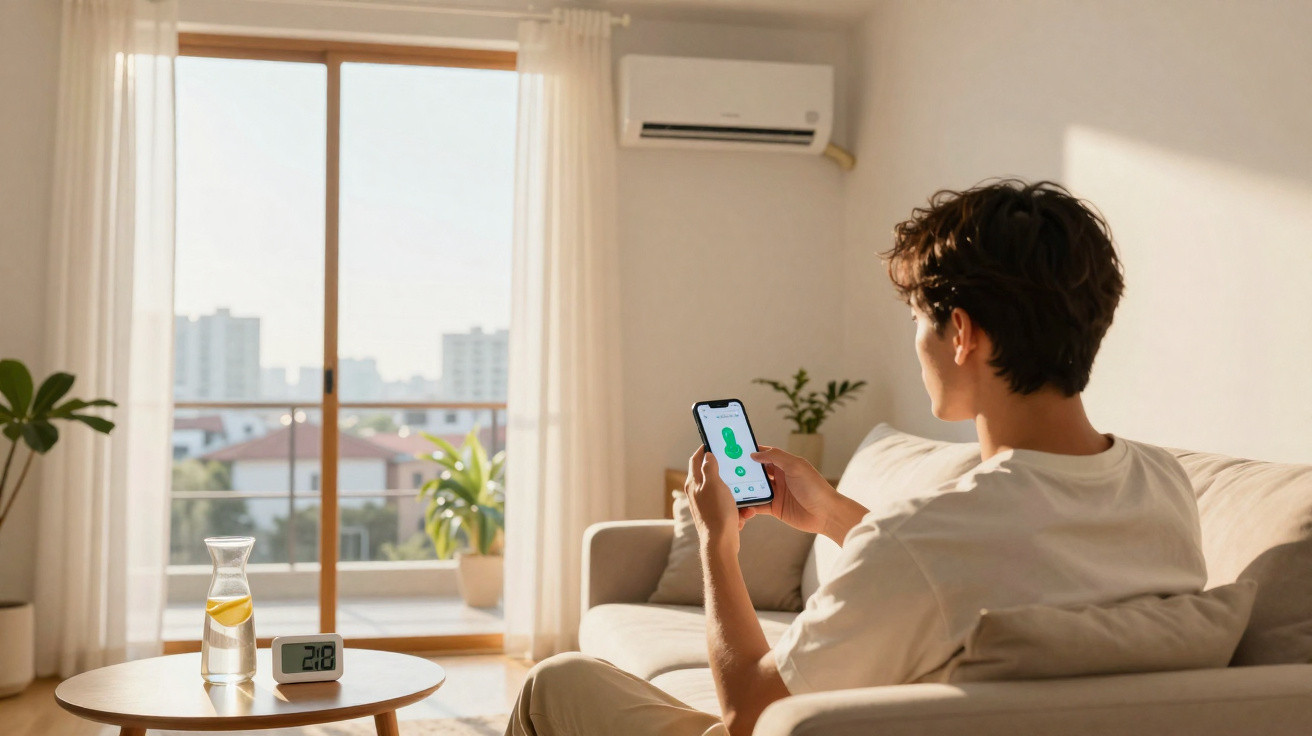
Rising heatwaves in 2026 have made air conditioning almost essential in many homes and offices. However, using it poorly can drive up electricity use, create thermal discomfort, and shorten the unit’s lifespan.
How do you use air conditioning to spend less energy?
A key factor in cutting electricity costs is the gap between the indoor and outdoor temperature. When that difference is too large, the system has to work much harder and uses more energy, without necessarily making the room feel more comfortable.
As a rule of thumb, it is better to keep the room around 6–8°C cooler than the temperature outside, rather than setting the remote to very low values. It is also worth remembering that air conditioning does not refresh the air: it simply removes heat from the indoor space, so natural ventilation at certain times of day is still necessary.
Watch a video on the YouTube channel PLANARQ CAMPOS / Ralph Dias about the thermal efficiency of household appliances, correct air-conditioning use, and strategies to reduce the amount you pay on your energy bill:
Which air conditioner modes help or hinder energy saving?
The modes available on the remote control have a direct impact on both power use and comfort. Turbo mode, for instance, runs the compressor and fan at maximum output, giving a quick response, but with higher consumption and no real efficiency benefit.
Dry mode, on the other hand, is helpful on humid days because it prioritises removing moisture and can improve comfort even without a big drop in temperature. For everyday use, it helps to understand the most common functions:
- Cool mode: continuously regulates the room temperature.
- Dry mode: lowers humidity, recommended for rainy or muggy days.
- Turbo mode: speeds up cooling, but increases consumption significantly.
Is it better to leave air conditioning on continuously or switch it on and off?
The unit typically works hardest when the compressor starts. Because of that, turning it on and off repeatedly throughout the day tends to increase electricity use and also causes more wear on internal components.
In spaces that are occupied continuously, it is more efficient to keep the air conditioning running at a moderate level, using features such as automatic mode, a timer, and intermediate fan speeds. When the room will be empty for hours, that is when it makes sense to switch it off completely.
Daily good practice to stay comfortable and save energy
A few straightforward steps can make a difference: shield glazed areas with curtains or blinds, use fans to distribute cool air more effectively, and keep doors and windows closed while the unit is running. Models with an up-to-date efficiency label and inverter technology can also help reduce consumption.
Regular maintenance is another essential point: clean filters and heat exchangers prevent performance loss and can cut the extra energy waste caused by dirt by up to 20% to 30%. With consistent cleaning, moderate temperature settings, and careful use of modes like turbo and dry, an air conditioner is more likely to run in a steadier, quieter, and more economical way-even during intense heatwaves.



Comments
No comments yet. Be the first to comment!
Leave a Comment