
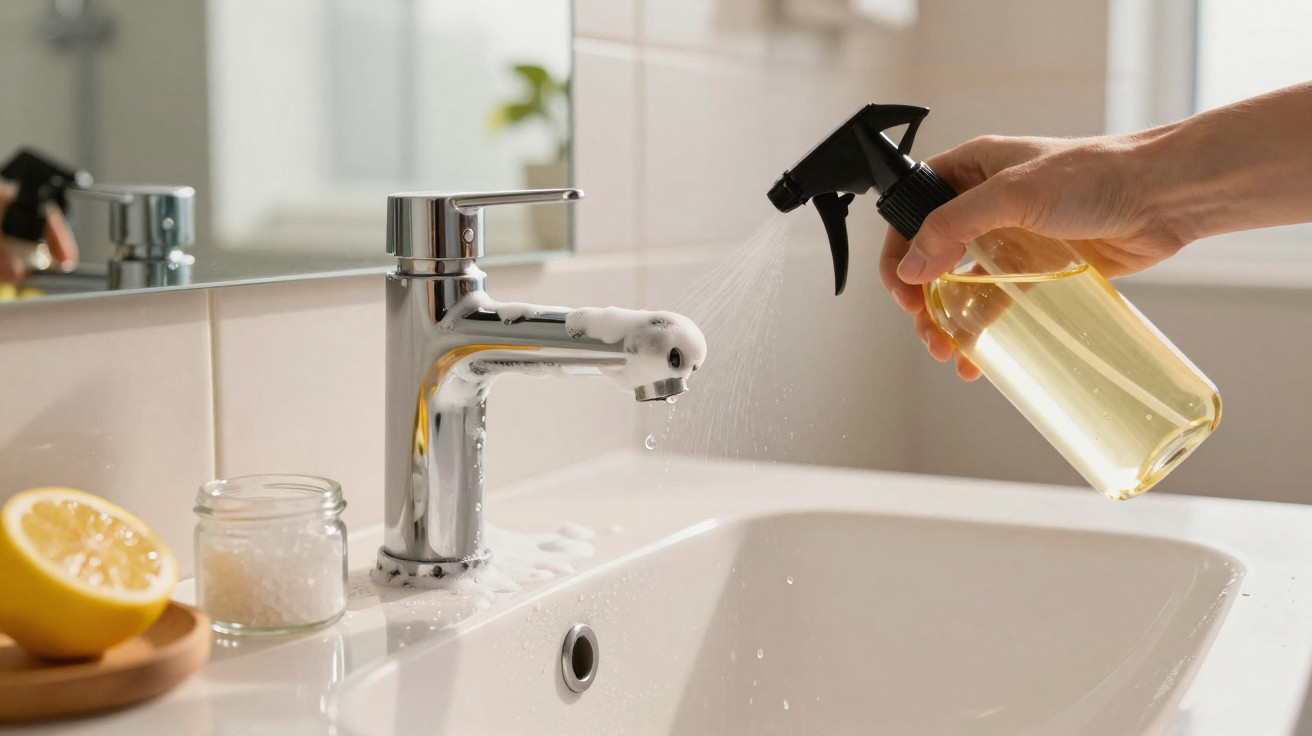
You want a proper clean without filling the room with a chemical fog. We’ve all seen it: the kettle starts spitting chalky bits, and the bathroom tap ends up wearing a white, armour-like crust.
I clocked it first in a neighbour’s kitchen on a damp Tuesday. She spooned pale crystals into warm water, gave it a quick swirl, then poured the clear mix into a kettle whose interior looked furred with scale. Ten minutes later it was gleaming again, and the spout had stopped that angry hiss. She misted the same solution over the tap, wiped once, and the chalk ring slipped away like soap scum. No rubber gloves. No burning throat. Just a faint citrus note. She smiled and said, “Old café trick.” I assumed it was too good to be true.
Meet the natural workhorse hiding in plain sight
Those crystals were citric acid: a kitchen-safe acid with a subtle lemony smell and a very unglamorous talent for solving limescale. It breaks down scale because it happily binds to minerals, so the crust loses its grip. It also drops the pH far enough to cut down a range of everyday germs on hard surfaces. No bleach. No fluorescent gel. Just a cupboard staple that earns its keep twice over.
In a small London café, limescale is the quiet enemy-an espresso machine can’t perform if it’s clogged with minerals. The owner keeps a jar of citric acid under the counter and whips up a fast 5% solution in a squeezy bottle. She backflushes the steam wand, wipes the drip tray, and then carries on to the sink. One bottle, three tasks, five minutes. With a scale-free boiler heating more efficiently, the energy bills ease off too. Customers don’t notice the chemistry; they notice cleaner-tasting coffee.
The science is straightforward: citric acid is a weak organic acid that chelates calcium and magnesium-the main troublemakers in limescale. Once it touches the deposit, it disrupts those mineral bonds and lifts the crust without you having to scour and scratch. Used at the right strength and left in place for long enough, it can also inactivate many common bacteria on non-porous surfaces. Bleach tends to brute-force its way through; citric acid works by unhooking and neutralising.
How to use it so it actually works
Make up a spray once, then keep it within reach. For descaling and light disinfection, dissolve 2 tablespoons (about 20 g) of citric acid powder into 300 ml of warm water to get a ~6–7% mix. Spray taps, shower heads, drains and stainless-steel sinks. Leave it wet for 5–10 minutes, then wipe and rinse.
For kettles, pour in enough solution to fill it halfway, top up with water, and let it sit while it fizzes quietly. Once it’s done, rinse twice.
Realistically, nobody keeps up with this daily. A sensible rhythm is weekly for taps and kettles, and monthly for shower heads. If you live with very hard water, go up to a 10% mix and stretch the contact time to 15 minutes. Don’t cheat the waiting-this is when the acid does the unhooking. If scale has built up for ages, repeat the treatment instead of scrubbing harder.
Big rule: don’t use citric acid on natural stone like marble, travertine, or limestone. It can etch the surface and leave it looking dull. Be cautious with chrome and rinse thoroughly; long soaks can cloud plated finishes. Keep it away from unsealed wood, and never combine it with anything chlorine-based. Most days, a soft cloth beats an abrasive sponge. The scent is lightly lemony-more “clean kitchen” than “chemical aisle”.
“Citric acid isn’t just ‘green’; it’s effective when you let it sit. Most failures are from wiping too soon.”
- Best ratio for scale: 5–10% citric acid in warm water
- Germ reduction: keep surfaces wet for 5–10 minutes on hard, non-porous materials
- Never use on marble or limestone; rinse metals and rubber gaskets thoroughly
- Keep the mixed solution in a labelled spray bottle for up to two weeks
- For high-risk messes, use an approved disinfectant and follow the label
Room-by-room, one mix, many wins
Kitchen: mist the sink rim, the base of the tap, and the underside of the spout-exactly where scale likes to hide. Leave it on while you empty the dishwasher. Wipe once with a microfibre cloth, then rinse. Descale the kettle while you reply to a message. For chopping boards, wash first with hot soapy water, then use a quick citric spray to help with odours and mineral staining.
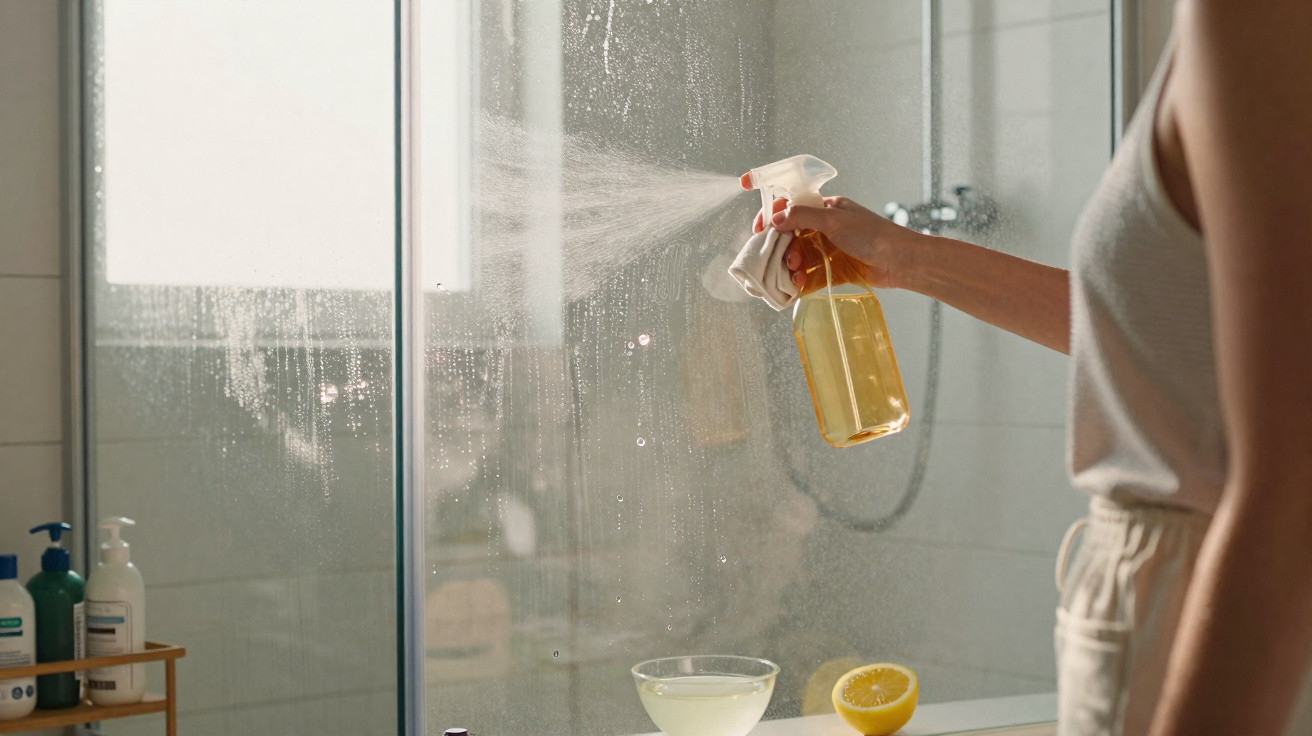
Bathroom: soak a cloth in the solution and wrap it around the tap or shower hose like a scarf. After ten minutes, that stubborn ring is usually gone. For a shower head, unscrew it and soak it in a bowl for 20 minutes, then rinse well and enjoy the water pressure you’d forgotten existed. On glass, spray, wait, and squeegee. No chalky film, and none of that sharp vinegar smell.
Laundry and small appliances: run an empty hot cycle with 1 tablespoon of citric acid to reduce mineral build-up and that musty whiff. Follow with a plain rinse. For a drip coffee maker, add the solution to the tank, brew halfway, pause for 15 minutes, then finish the cycle. After that, run two full cycles with water only. You’ll get fewer streaks, fewer clogs, and quieter hums from clean, scale-free parts.
Why this tiny habit changes the way your home feels
Citric acid brings a quieter kind of clean-one that encourages small, regular touch-ups so problems don’t harden into weekend projects. You spend less time scrubbing and waste less money on single-use bottles that shout at you in neon. The house smells like your house, not a janitor’s cupboard.
There’s a practical side as well. Limescale steals heat, clogs seals and gaskets, and can shorten the life of appliances. So you’re not only cleaning; you’re taking strain off the things you rely on every day. It’s maintenance disguised as a five-minute job. Pass the trick on to the friend who hates a bleach plume and loves a shiny tap.
One bottle by the sink changes the routine without changing your life. Keep it simple, keep it safe, and keep it consistent. The result is a clean you can notice-and breathe.
| Key point | Detail | Benefit for the reader |
|---|---|---|
| Cleans and descales in one | 5–10% citric acid dissolves limescale while reducing everyday germs | Saves time and replaces multiple products |
| Gentle but effective | No bleach fumes; works with contact time, not brute force | Better air, less scrubbing, kinder on surfaces |
| Smart limits | Avoid natural stone and long soaks on plated finishes; rinse metals | Protects your fixtures and keeps results glossy |
FAQ:
- What exactly is citric acid? A food-grade organic acid found in citrus fruit, sold as a powder. It’s common in canning, sweet-making, and eco-cleaning.
- Will it kill all germs like bleach? No. It reduces many everyday bacteria and some viruses on hard surfaces with proper contact time. For high-risk messes or specific pathogens, use an approved disinfectant according to its label.
- What ratio should I mix for home cleaning? Start around 6–7%: 2 tbsp (20 g) per 300 ml warm water. For heavy scale, use up to 10%. Let it sit before wiping.
- Is it safe on everything? No. Skip marble, travertine, limestone, and other acid-sensitive stone. Rinse chrome, aluminium, rubber seals, and grout after use. Spot-test anything delicate.
- Can I swap vinegar for citric acid? Vinegar works, but it’s weaker and smellier. Citric acid is more potent on scale, less pungent, and easier to dose precisely.



Comments
No comments yet. Be the first to comment!
Leave a Comment