

A bottle had been sitting beneath my kitchen sink for so long it felt like a leftover artefact. It was bright blue, a bit tacky to the touch, and plastered with a label promising “streak-free shine” in that aggressively early‑2000s style. I dragged it out the other day while hunting for a missing sponge and it hit me: I hadn’t reached for it in months. Possibly longer. And yet the glass in my flat still looked perfectly fine. The mirrors weren’t misty. My phone screen had managed without it.
Somewhere along the line, window cleaner stopped being the star of the cleaning cupboard and slipped into the role of… background clutter.
Still, in almost every home there’s the same bottle, tucked beside the bin bags and the stash of old carrier bags.
So why do we keep holding on to something most of us barely need in day‑to‑day life?
The slow fade of the once-essential window cleaner
Step into any supermarket and the glass and window cleaner aisle is still there: lines of blue and green sprays, all promising “crystal clarity”. Not long ago, they felt as basic as washing‑up liquid or toilet cleaner-one more dedicated bottle for every surface that could possibly shine.
But our routines moved on faster than the shelves did.
These days, most people grab a microfibre cloth, a quick mist of an all‑purpose cleaner, or simply warm soapy water to wipe down glass. Nothing dramatic happens. Windows don’t revolt. Mirrors keep going. Meanwhile that familiar blue spray mostly sits under the sink, quietly getting older.
Try to remember the last time you cleaned your windows properly. Not a quick wipe-an actual window clean. For many people it’s tied to a house move, a rare deep‑clean weekend, or the moment a parent is due to visit and, suddenly, a single greasy handprint catches the light.
Modern life isn’t centred around flawless glass. City windows look dusty again a day after you’ve done them. Car windscreens are handled at the car wash. Phone screens get rubbed on a pair of trousers or a T‑shirt. And if we’re being honest: almost nobody is doing this every day.
That old “Saturday is window day” routine disappeared along with net curtains and lace doilies. The bottle, however, stayed put.
There are practical reasons it dropped out of heavy use. Many homes simply don’t have as many surfaces that truly require a specialised glass cleaner. Double‑glazing stays clearer for longer. Newer coatings on screens and glass doors repel smudges a little better. And plenty of people are more cautious about strong chemicals around children, pets, and food.
On top of that, multi‑surface sprays and concentrated cleaners muscled in and took over its job. Why keep five different bottles when one claims to handle “kitchen, bathroom, glass, and more”? The sales pitch shifted from “perfect shine” to “one product for the whole house”.
The funny part is that the single‑purpose product that once felt modern now comes across as oddly old‑fashioned.
How to clean glass with almost nothing (and do it better)
If you’d like to ditch that neglected bottle but still want clear windows, the approach is refreshingly straightforward. Fill a bucket or bowl with warm water and add a tiny drop of washing‑up liquid. Not a squeeze, not a generous glug-just a drop. Stir gently so you don’t whip up a load of foam.
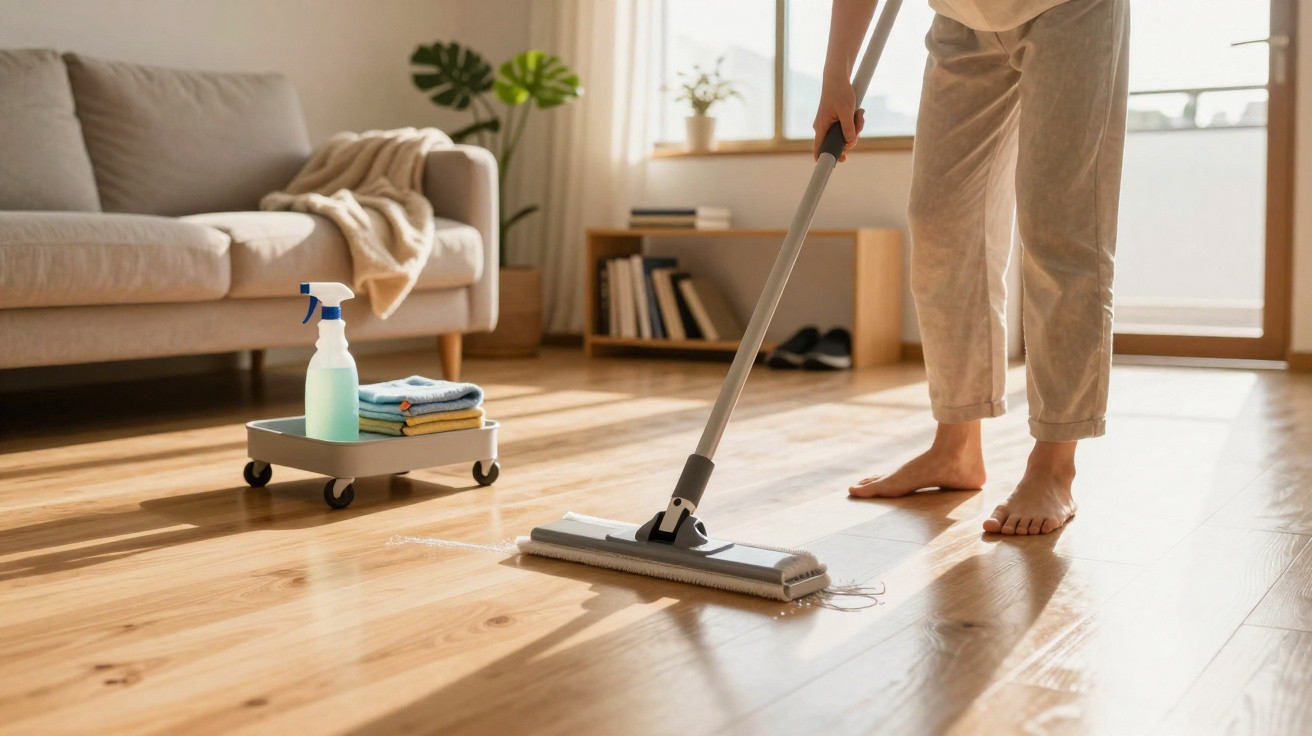
Wet a clean cloth or sponge, wring it out thoroughly, and wipe the glass from the top down. You’re not trying to flood the surface; you’re loosening dust and lifting grease. After that, take a dry microfibre cloth and buff with quick, light circular motions.
That’s the whole method. No blue spray. No synthetic fragrance. Just water, a hint of soap, and a little patience when you catch streaks in the light.
This is where most people go wrong: too much product, too much water, and the wrong material. A soggy paper towel tends to smear grime and leave lint behind. A strongly scented cleaner sprayed directly onto the glass can run into frames, down walls, and even towards electronics.
There’s also the temptation to do every window in one marathon session. Halfway through, you’re flagging, the water is filthy, and the final pane looks worse than the first. It’s completely fine to do one large window today and the bathroom mirror tomorrow. Homes aren’t showrooms, they’re places where people actually live.
If you’ve ever felt a bit ashamed of dusty glass, you’re in good company. Many of us were raised on the idea that shiny windows were proof of a well‑kept home.
“Sometimes, less product is not just cheaper, it’s cleaner,” says a professional cleaner who works mostly in small city flats. “If you have a good cloth and clean water, you already have 80% of the result. That blue spray is often just habit.”
- Use microfibre, not paper
It grabs dust and grease rather than pushing it about, and it won’t leave fluff on the glass. - Work in the shade, not direct sun
In bright sun the glass dries too quickly, leaving streaks before you can wipe properly. - Clean the frames first
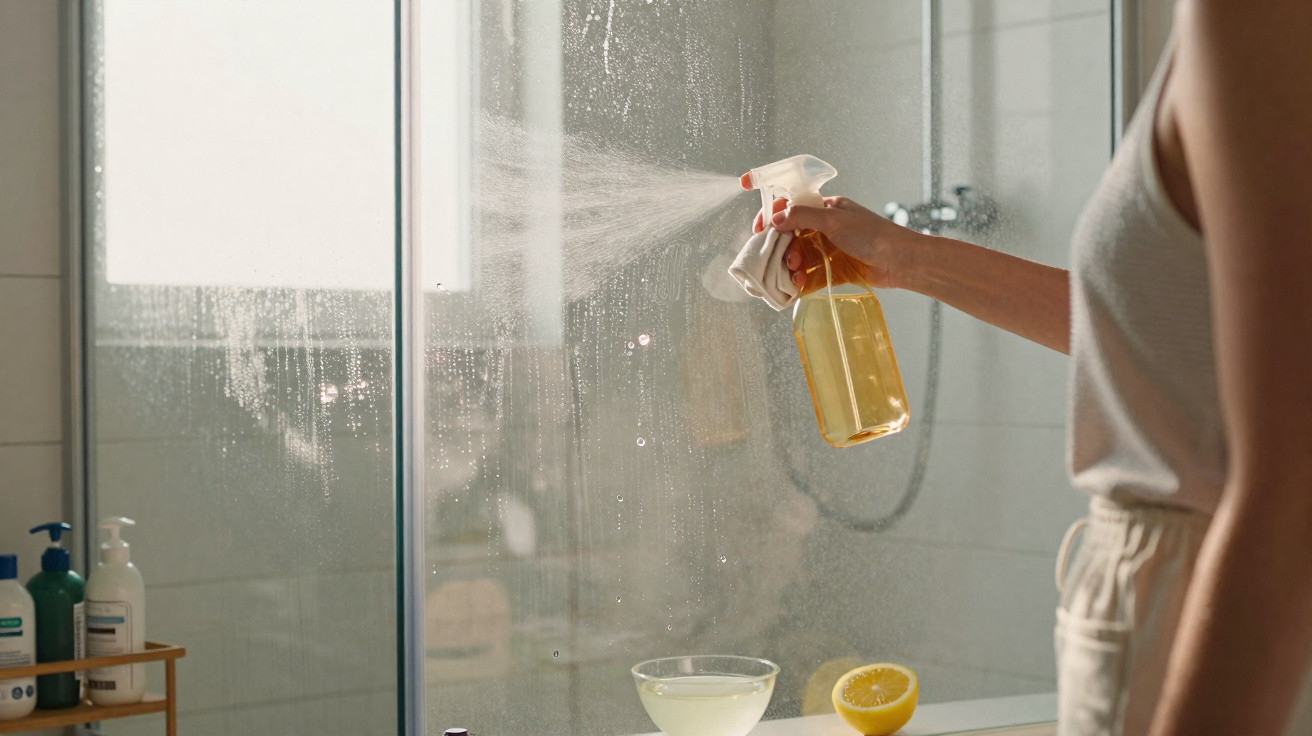
If you start with the pane, grime from the frame can slide straight back onto the glass. - A tiny bit of vinegar helps on greasy spots
A small splash in the bucket is enough for fingerprints and cooking residue. - Wash your cloths often
A cloth loaded with old product will streak regardless of what you spray.
Why we still keep buying a product we barely touch
That bottle under the sink can feel strangely emotional. It’s like a badge of being a “proper” grown‑up: you’ve got toilet cleaner, washing‑up liquid, washing detergent… and glass cleaner. Even if it quietly goes off long before you finish it.
A lot of it is marketing muscle memory. For years, gleaming windows featured in adverts, chore lists, and magazine cleaning guides. The image lodged itself in our heads: a home wasn’t merely clean-it had to sparkle in the light, with absolutely no streaks. The product became part of that ideal.
Yet in many modern flats, what stands out isn’t dirty glass. It’s fingerprints on the fridge door, crumbs under the table, and dust settling on shelves. Glass just isn’t top of the list.
There’s also the reassuring comfort of a specialised label. When a bottle says “glass”, it feels safer-less risky for your TV, laptop, or mirror. So people buy it “just in case”, use it a handful of times a year, and forget about it again.
Meanwhile, almost every cleaning guide online-from zero‑waste bloggers to professional organisers-keeps repeating the same message: you can halve the number of bottles, get the same results, and save both space and money. A small set of basics, used properly, is usually enough.
The blunt reality is that plenty of what’s under our sinks is there because of habit and anxiety, not because we genuinely need it every day.
So what if you simply… stop buying window cleaner? Most people who try it don’t return to it. They notice their glass looks the same with water, a drop of washing‑up liquid, and a decent cloth. Their routine gets simpler. The under‑sink chaos drops by a notch.
You also cut down on artificial fragrances and dyes in the home, which can matter for anyone with allergies or sensitive skin. And you start eyeing every “special” cleaner on the aisle-oven, stainless steel, marble, screen-and asking the obvious question: do you really need five separate bottles for five surfaces?
Some products earn their space because they do something nothing else can. For a lot of households, window cleaner stopped meeting that standard years ago.
A new way of looking at that crowded cleaning shelf
Once you treat window cleaner as a nice extra rather than an essential, it becomes easier to question everything else living under the sink: the impulse buys, the half‑tested eco experiments, the strongly scented sprays you used twice.
You don’t need to become a perfect minimalist or bin everything overnight. Start by paying attention to what never gets moved. The heft of an almost‑full bottle tells you something about your real routine, not the life a label tries to sell you.
Some people will keep their glass spray because they enjoy the smell, the ritual, or the comfort of having a dedicated product. Others will finish what they have and simply not replace it. Both are perfectly valid ways to run a home.
| Key point | Detail | Value for the reader |
|---|---|---|
| Window cleaner is rarely essential | Most glass surfaces can be cleaned with water, a drop of dish soap, and a microfiber cloth | Fewer products to store, less money spent, same visual result |
| Habits are stronger than needs | The product stays in cupboards because of old routines and marketing, not frequent use | Helps readers rethink what they actually need in their cleaning kit |
| Simple methods work just as well | Basic techniques and tools often outperform multiple specialized sprays | Gives readers confidence to declutter and simplify their cleaning routine |
FAQ:
- Question 1 Can I really clean all my windows without traditional window cleaner?
Yes. Warm water, a tiny drop of dish soap, and a clean microfiber cloth are enough for most home windows and mirrors.- Question 2 Won’t I get more streaks if I stop using glass cleaner?
Streaks mostly come from dirty cloths, too much product, or cleaning in direct sun. With clean microfiber and light buffing, you can get clear glass without the blue spray.- Question 3 Is vinegar better than window cleaner?
Vinegar works well on grease and hard water marks, but it’s strong. A small splash diluted in water is usually enough; don’t use it pure on delicate surfaces.- Question 4 What about screens and electronics-do they still need special products?
For most screens, a slightly damp microfiber cloth is safest. For sensitive devices, always follow the manufacturer’s advice before using any liquid at all.- Question 5 I still like my window spray. Should I feel bad about it?
Not at all. If you enjoy it and actually use it, keep it. The real shift is asking whether each product earns its place, not following a strict rule.


Comments
No comments yet. Be the first to comment!
Leave a Comment