
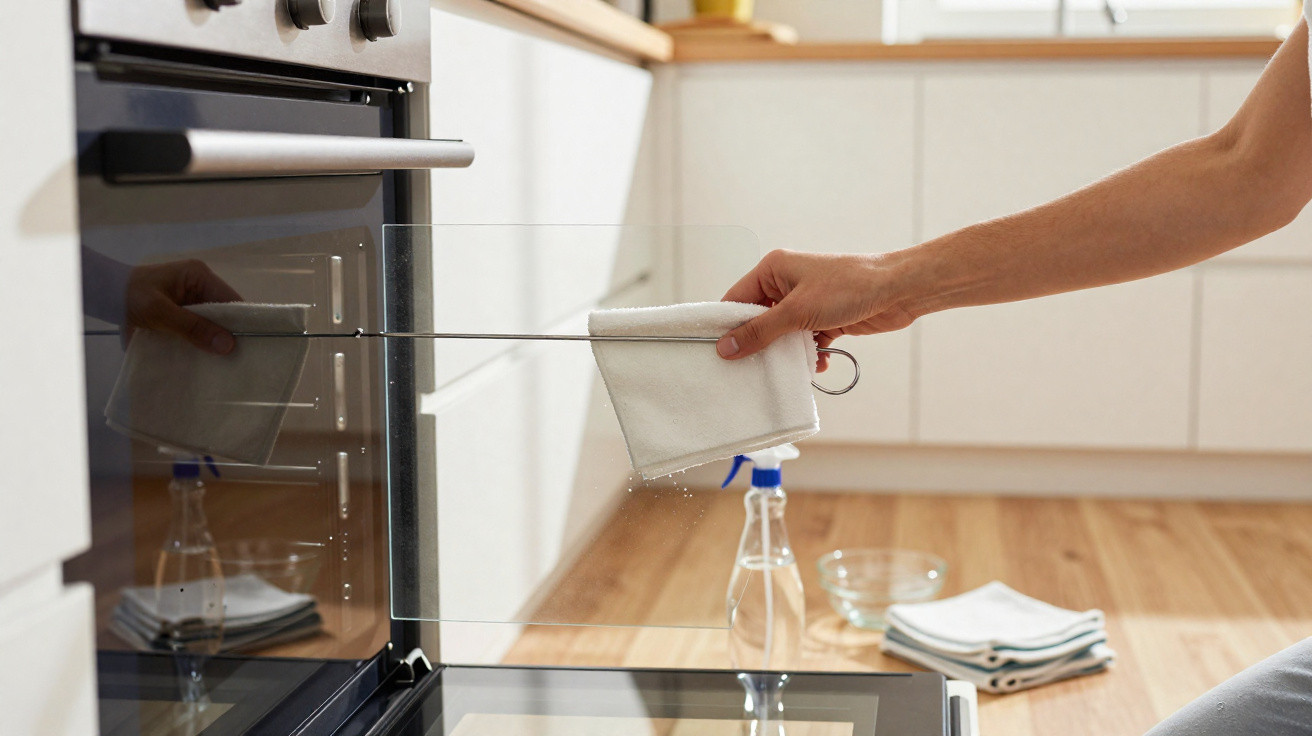
If you use your oven regularly, you will know the problem: the outer surface of the door glass may look reasonably clean, while a grey-brown film is visible inside. Grease clings between the two glass panels, crumbs collect out of sight and burnt-on marks become increasingly noticeable. Many people assume the entire door must be removed. A professional chef demonstrates that an everyday item and a simple water-and-vinegar solution make the job far easier.
Why the space between oven door glass panels is so frustrating
Most ovens have a multi-layer glass door, creating a narrow cavity between the panels. Grease splashes, steam and tiny crumbs can find their way into it, especially when you bake or grill frequently at high temperatures.
The difficulty is that ordinary cleaning cloths and sponges can barely reach this gap. Eventually, many users give up or clean only the outside. As a result, the glass always appears dirty, even when the oven interior has just been cleaned.
Some modern appliances can be partly dismantled, for example by taking off the complete door or sliding out the individual glass panels. In practice, however, many people are reluctant to try this, fearing they may bend the hinges or damage the glass.
“Rather than dismantling the oven door, use the openings already there and simply extend your cleaning cloth – it saves time, stress and money.”
The good news is that most ovens have small slots or openings along the bottom edge of the door. That is precisely where this method comes in.
The homemade cleaning solution for clear oven door glass
Before tackling the hidden areas, a straightforward mixture can help loosen grease and dried-on sauce residue. It uses just two standard kitchen ingredients.
What you will need
- 1 spray bottle
- 1 part water, preferably warm
- 1 part clear household vinegar
- 1 absorbent microfibre cloth or thin cotton cloth
Pour the water and vinegar into the spray bottle, then give it a quick shake. The solution cuts through grease, loosens baked-on splashes and does not harm the glass. Its smell fades fairly quickly after airing the room; if you wish, you can add a drop of washing-up liquid.
If your appliance manual says the glass panel can be removed, you can use the following process directly: take out the panel, spray it with the solution, leave it briefly, wipe it with a damp cloth and polish it dry. For all other models, the metal hanger trick is more useful, particularly where the panels are permanently fitted.
The metal hanger trick: how to clean between the glass panels
The key item for this method is something almost everyone has in a wardrobe: a simple metal clothes hanger, like the type often supplied by dry cleaners.
Step-by-step instructions
- Pull out the drawer underneath the oven completely. On many appliances, this reveals small slots on the underside of the door.
- Take a metal clothes hanger and carefully straighten it until it forms the longest, most stable rod possible.
- Wrap a small microfibre cloth or thin cotton cloth tightly around one end of the wire.
- Secure the cloth with a sturdy elastic band or a strip of tape so that it cannot slip while you push it through.
- Spray the cloth with the vinegar-and-water mixture. It should be thoroughly damp but not dripping.
- Slowly guide the improvised cleaning rod through the narrow openings at the bottom of the oven door and into the gap between the glass panels.
- Move it calmly across the inner surfaces of the panels, working from left to right and then from top to bottom.
- Remove the rod regularly, rinse the cloth briefly, soak it again and repeat until no grey or brown marks remain visible.
Many people report that, with some patience, even streaks that have been there for years become noticeably lighter or disappear entirely. The finer the cloth and the more securely it is attached, the better you can reach the inside corners.
“The trick works because the clothes hanger acts as an extended arm – allowing you to reach the area between the panels without undoing a single screw.”
How often you should clean oven door glass
The glass panels in the door are continually exposed to heat, condensation and greasy vapours. If you clean them only rarely, you will later have to deal with thick, baked-on layers. Removing small marks early is much less of a chore.
As a general guide:
- for frequent bakers and regular use of the grill setting: once a month
- for normal use: every two to three months
- when heavy streaks are visible between the panels: act sooner and use the metal hanger trick
Wiping over the oven promptly after a particularly fatty roast or an overflowing bake prevents grime from settling in the gap. Before attempting any cleaning, ensure the oven has cooled down completely and is disconnected from the power supply, particularly where there are sensitive door contacts.
What to avoid when cleaning an oven
Not every household product is suitable for glass surfaces in an oven. Some mistakes only become apparent months later, when the glass looks dull or develops fine scratches.
Common pitfalls
- Steel wool or abrasive scouring pads: These leave micro-scratches, making it easier for fresh dirt to cling to the surface.
- Oven-cleaning spray in the gap between the panels: Many products are strongly alkaline, and residue can end up in seals or ventilation openings.
- Too much liquid: If the cloth is dripping, liquid may run into the door mechanism.
- Forcing the wire while bending or pushing it: Applying too much pressure can cause stress cracks in the glass or bend metal components.
Soft cloths, mild cleaners such as vinegar water or a small amount of washing-up liquid, and a slow approach are more useful. This is particularly important with older ovens, whose seals may already be slightly worn.
When it is still worth checking the instruction manual
Many people overlook the fact that their appliance manual includes precise guidance on cleaning the door. With some models, the panels can be unhooked or folded forwards in just a few steps. The metal hanger trick can still be a useful addition, for example for narrow edges that cannot be reached by hand.
If you own a very new or expensive appliance, check whether the manufacturer gives any warnings about the door before trying this method for the first time. Some high-end ovens have special coatings or sensors in the door area. In these cases, it is worth consulting the manual briefly before getting inventive yourself.
Why vinegar water works so well in an oven
Vinegar contains acid that breaks down grease and softens limescale marks. Both occur in an oven: grease splashes from roasts and bakes combine with condensed steam. This mixture particularly likes to stick to glass, which is exactly where vinegar water shows its strength.
Compared with aggressive specialist cleaners, the advantage is that it is sufficient in most cases, is less irritating to skin and airways, and is available in almost every home. If you dislike the smell, wipe over the surface with clean water afterwards and leave the appliance open until everything has dried.
Practical additions for a clean kitchen
Taking a little care while cooking means you will need to scrub intensively less often. Placing a deep baking tray beneath bakes or pizza stops cheese and sauce dripping directly onto the oven base. Food being grilled is best placed on a rack with a drip tray, so less steam settles in the door.
A quick check after every major cooking session also helps: if marks are visible, a damp cloth with a little washing-up liquid is usually enough. The metal hanger only has to do the hard work when grime has been ignored for months.
Once you get into the habit of using the clothes hanger trick, it can save plenty of frustrating moments. The oven door looks transparent again, roasts and pizzas are easier to watch, and the kitchen appears better cared for overall – all without expensive specialist products or complicated dismantling.


Comments
No comments yet. Be the first to comment!
Leave a Comment