
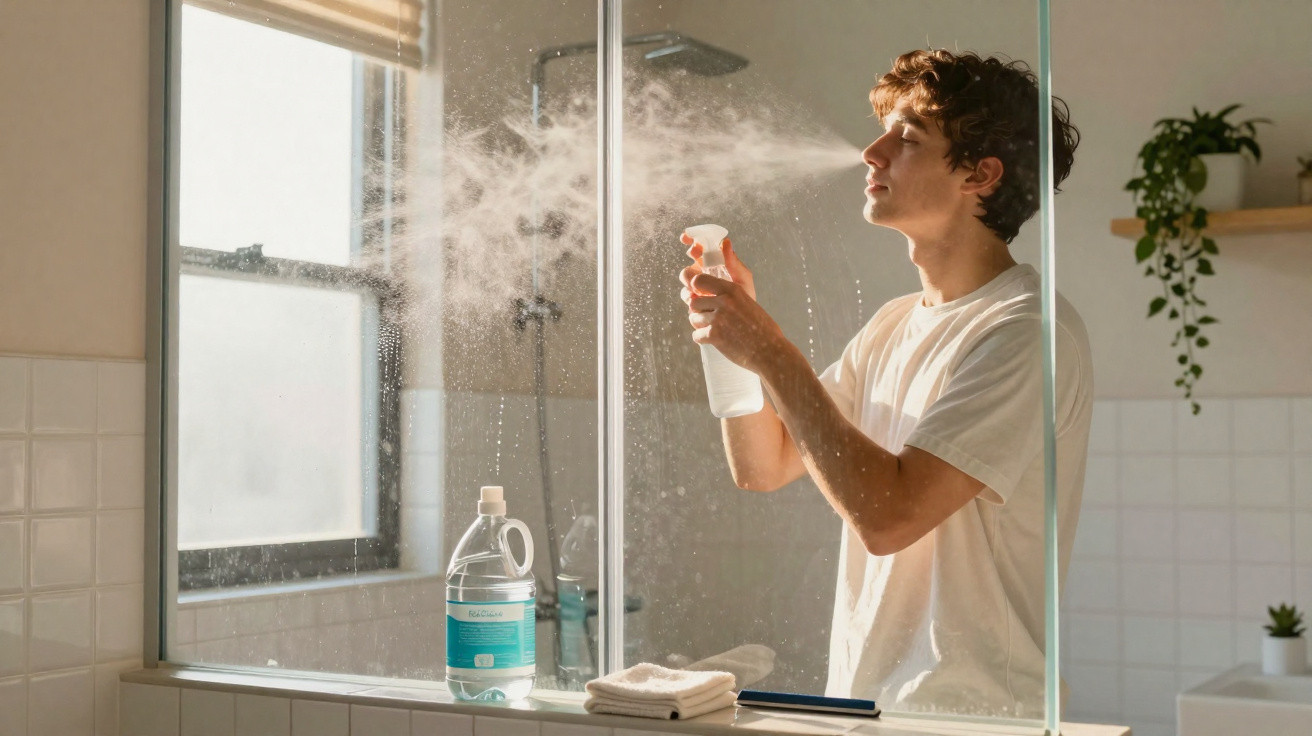
At the moment, it is your shower glass. Some cleaning professionals champion an often-neglected natural liquid for keeping panels brilliantly clear. Others dismiss it as a supposed shortcut with no substance behind it. The steam is genuine, and the argument is too.
Sunshine cuts across the bathroom, exposing everything. Glass that seemed spotless the night before is suddenly covered in pale specks, smears and the cloudy strip where water repeatedly hits. Rub it with your sleeve and one patch clears, only to mist over again, as though the panel is breathing. We have all seen a shower look acceptable at night, then look reproachful by morning.
I spent a morning observing housekeepers at a city-centre hotel as they cleaned a row of bathrooms enclosed in glass. Their trolleys held bottles in formation: alkaline cleaner, neutral soap, vinegar and alcohol. Last came the tiniest bottle-odourless, colourless and making no claims on its label. They sprayed, squeegeed, wiped the edges and moved on. As the room cooled, the panel dried without a mark. It was an understated technique sitting in plain view.
Apparently, the most unassuming liquid can inspire the fiercest disagreement.
The distilled water debate
This is the central point: plenty of professionals use distilled water for the final rinse on shower glass. Nothing fancy. No fragrance and no foam. They apply a light mist, use a squeegee carefully, then quickly wipe the edges with microfibre. The reasoning is straightforward: if the final liquid touching the panel contains fewer minerals, fewer marks remain once it dries. Distilled water leaves nothing behind, and that is the entire technique.
A cleaning supervisor at a boutique gym told me that the change began after complaints. People on the treadmills could see spotting in the spa-area showers. The team tested stronger products, milder products and then a “no touch” coating. The coating offered a little improvement, while the chemicals did not. Warm distilled water, followed by a squeegee, rapidly reduced the number of spots. They recorded 68% fewer visible dots over one week, using quick smartphone photographs taken beneath the same ceiling light. It was a modest measure that quietened a major complaint.
The explanation is unexciting on paper, which may be why it gets overlooked. Tap water contains dissolved minerals that remain as flecks when the water evaporates. Distilled water has had those minerals removed. Used as the last spray, it dilutes tap-water residue left on the glass. It also lifts thin soap film so that the squeegee can carry it away. This is not cleaning in the traditional sense: there is no acid or surfactant working on the surface. Instead, it changes what is left to dry on the glass. And what remains is… virtually nothing.
How to use a distilled water rinse without fuss
The method is simple: clean the shower glass as you normally would. Use tap water to rinse away visible foam. Next, gently warm a small amount of distilled water-not hot-and transfer it to a spray bottle. Mist the glass from top to bottom, squeegee it in steady overlapping strokes, then run a dry microfibre cloth along the edges and bottom track. Make warm distilled water your final rinse, then squeegee-there is no need for a scrubbing battle.
The main error is assuming distilled water takes the place of proper cleaning. It is a finishing step, not an answer to every problem. For chalky deposits, use a citric solution or calcium remover first, then neutralise and rinse the surface. Another mistake is applying too much spray and leaving it in place. The benefit depends on movement: the squeegee completes the job. Realistically, no one keeps up that routine every day. Do it two or three times weekly and you should still notice an improvement.
The surface itself also needs consideration. Acidic rinses may damage natural stone, while certain water-repellent glass coatings do not respond well to vinegar treatments. Distilled water is suitable for nearly all surfaces, but check the glass warranty if it has a factory-applied coating.
“DI or distilled water is the window cleaner’s quiet edge,” says Jorge R., who trains hotel crews in Austin. “It shortens the job and dodges call-backs. That’s money and morale.”
- Choose a soft-edged squeegee rather than a rigid, brittle one.
- Store distilled water in a labelled bottle and keep it away from heat.
- Change microfibre cloths regularly; dirty ones create haze.
- Never combine acids and bleach-use them on different days and for different tasks.
- If the glass appears “frosted”, it may be etched rather than dirty.
What the distilled water debate reveals about clear glass
Distilled water cannot repair etched panels or erase hard-water damage built up over years. This is where claims of a myth become louder. Someone may use it once on damaged glass, see no dramatic transformation and decide it is nonsense. The reality lies between the extremes: it is a preventive measure. Applied regularly, it makes post-shower care easier and helps stop surfaces reaching the stage where intensive work is needed. Myth or method, the pane never lies.
The internet prefers certainty; bathrooms do not. Glass has to cope with steam, shampoo, changing pH levels and hurried routines. A gentle, mineral-free rinse suits everyday life because it requires less force rather than more product. The check is easy: does tomorrow morning’s light reveal fewer dots? If it does, continue. If it does not, you have learned what your particular glass needs-and that is worthwhile in itself.
This small bottle can also reshape how we define clean. Not every issue calls for another chemical or a sweeping promise. Sometimes the solution is about removing something rather than adding it. Spray, sweep, breathe. Morning sunlight will deliver the verdict, and a phone camera can confirm it. That is not a shortcut. It is feedback.
| Key point | Detail | Benefit for the reader |
|---|---|---|
| Distilled water as the final rinse | Low-TDS spray, followed by squeegeeing and edge wiping | Fewer mineral marks with minimal effort |
| Not a replacement for cleaning | Remove soap scum and limescale before the distilled water rinse | Creates realistic expectations and better results |
| Glass and surface safety | Avoid acids on natural stone and respect protective coatings | Prevents damage and expensive repairs |
FAQ
- What is the “overlooked natural liquid” that everyone is debating? Plain distilled water. It contains no minerals or additives: simply H2O that dries clean.
- Can distilled water replace vinegar or glass cleaner? No. Use cleaning products to remove soap film and limescale. Distilled water is the final rinse that limits new spots.
- Will it repair etched or cloudy glass? Etching is permanent surface damage. Polishing or replacement will be needed; the distilled water rinse prevents new spotting rather than reversing etching.
- Is filtered water the same as distilled water? Not quite. Many filters improve taste and odour but leave minerals behind. Distilled or deionised water contains far fewer dissolved solids.
- How often should I use the distilled water rinse? Ideally, use it after each cleaning session or every few showers. If that is unrealistic, try it two to three times a week and monitor the difference with photographs.



Comments
No comments yet. Be the first to comment!
Leave a Comment