
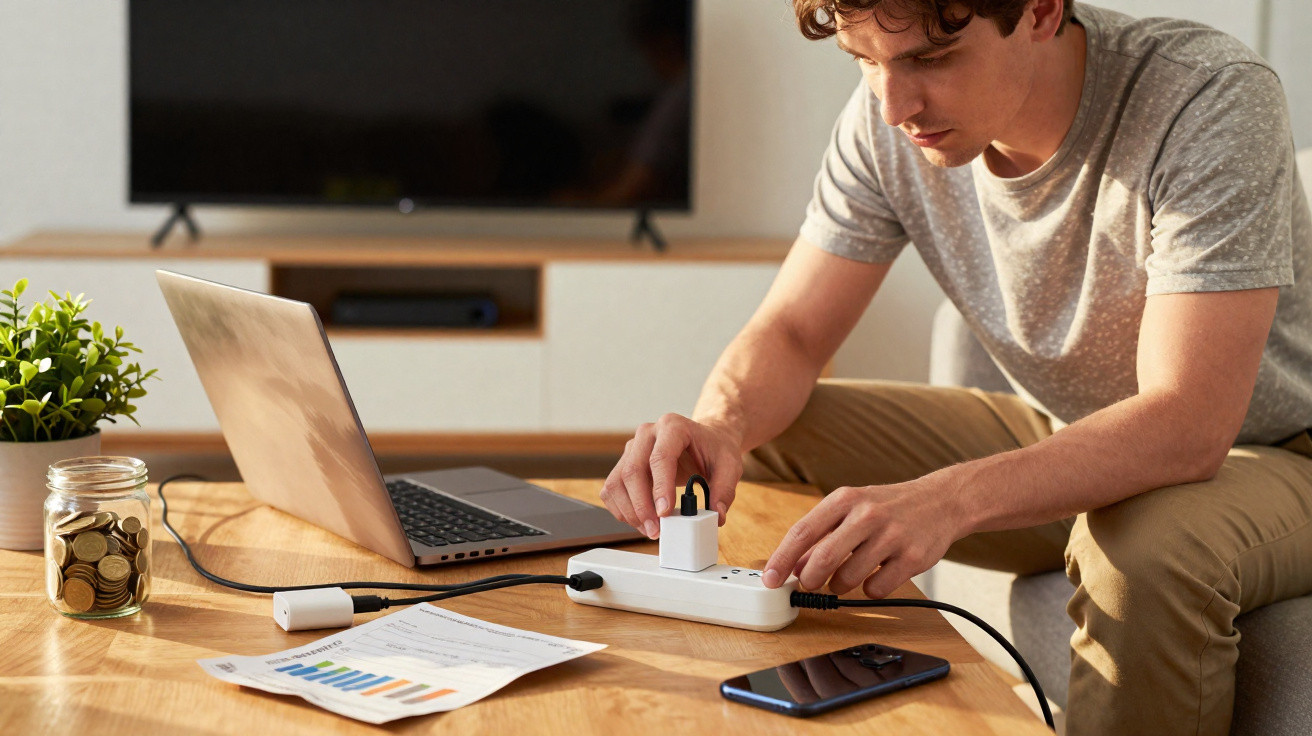
With electricity bills expected to rise by nearly 10% in France, here are 7 devices you can unplug each day to bring your monthly costs down.
At a time when controlling energy use has become essential-both to save money and to reduce environmental impact-it is worth taking a hard look at everyday habits. Industry estimates suggest that up to 10% of an electricity bill can come from appliances left in standby mode. In other words, a meaningful share of a household’s annual energy spend can be avoided with a few simple changes to how home equipment is used.
In France, the number of electrical and electronic devices left on standby in a single home ranges from 15 to 50, according to the same estimates. Even when they appear to be “off”, standby settings still draw a noticeable amount of power.
Standby mode and your electricity bill: why “off” still uses power
Many of these products keep a small transformer running continuously, converting alternating current into direct current and creating extra energy consumption. Since 2017, a European directive has capped standby consumption so it should not exceed 0.5 W, and up to 3 W for connected devices.
Even with these limits in place, leftover consumption can still add up to more than 50 watts per household. In practice, that can mean a sizeable increase in your electricity costs, estimated at at least €80 per year.
The list of 7 devices to unplug to reduce your electricity bill
To cut costs, you simply need to unplug a few items each day. Be aware that some equipment-such as washing machines and dishwashers-needs to remain on standby for safety and longevity reasons. However, other devices can be disconnected to lower your monthly spend. Here is the list of the 7 most electricity-hungry devices.
- Television: the clear winner for standby consumption. A TV can use up to 180 kWh per year, similar to a fridge that runs continuously. In standby, its draw typically sits between 1 and 2 W per hour.
- Desktop computer: with so many components, a desktop is a heavy energy user-especially in standby, where it can add up to a significant annual cost. The more powerful the machine, the more it consumes. Gaming PCs, for example, can be real money pits, particularly if they include LED lighting.
- Games console: surprisingly, 91% of the energy used by a games console is attributed to the time it spends in standby. It is therefore advisable to unplug it after each use to avoid wasting electricity-unless updates matter more to you than your energy bill.
- Internet router: while it uses 30% less energy in standby than when operating, unplugging your internet router can still help reduce your electricity bill. Clearly, switching it off can be inconvenient, so it is best done when you are not at home.
- Smartphone charger: often left plugged in all the time, a charger draws electricity even when no phone is connected. If you have a latest-generation smartphone, there is a good chance you have a smart charger that uses almost nothing in standby.
- Printer: occasional use does not justify constant standby draw, so it is better to unplug it after you have finished. Most printers also have a timer that switches them off after a period without printing.
- Small kitchen appliances: coffee makers, espresso machines, toasters, and other kitchen devices left on standby consume power for no real benefit. It is better to unplug them when they are not in use.
Other ways to save electricity
Beyond these targeted actions, building everyday eco-habits can make a real difference to your energy bill. Using high-consumption appliances during off-peak periods, turning the heating down by one degree, choosing eco modes, and fitting programmable switches are all helpful practices.
Responsible buying is another important lever for reducing energy use. Before purchasing a new appliance, it is advisable to check the energy label and prioritise equipment carrying the Energy Star label, which indicates better energy efficiency.





Comments
No comments yet. Be the first to comment!
Leave a Comment