
By 3 p.m., the little fan on the kitchen worktop has already surrendered. The dog is sprawled flat on the tiles. Outside, the street is buzzing, yet indoors the air sits thick and sluggish, as if someone has draped a warm blanket over the entire house. You open the fridge purely for a second of cold air on your face. It’s that sort of heat.
You look over at the thermostat, quickly calculate what another afternoon of air conditioning will do to the bill, and pause. The blinds are half-drawn, with a thin band of sunlight slicing across the living room floor. You can sense the building itself clinging to the day’s warmth like a sponge.
A neighbour passes with the windows firmly shut and the curtains pulled closed, and you think: are they genuinely cooler than you right now? Oddly enough, yes - and the solution is almost embarrassingly straightforward.
Why your house gets so hot in the first place
Take a walk through any suburb on a scorching day and certain habits stand out. Homes with windows flung open and sunshine pouring through look welcoming from the pavement. Walk inside, though, and it’s like stepping into a slow cooker. The houses that appear “sealed up” - curtains down, rooms a bit dim - are often the ones where someone is dozing under a light blanket.
Most of us enjoy a home that feels open to the outside. Light feels energising. Fresh air feels freeing. But on a blazing afternoon, those innocent-looking sunbeams on the sofa are quietly turning it into a store of heat. Upholstery, plaster, brickwork, floors - they absorb warmth and then continue to release it long after the sun has moved away.
In Spain, Italy and Greece, this has been understood for generations. Walk through an old town at midday and you’ll see shutters closed, streets hushed, life slowed down. That isn’t laziness; it’s routine and design working together. There’s a reason thick walls and shaded windows remain common in places that truly know heat.
Treat your home like a living thing trying to cope with a heatwave. Sunlight strikes the glass, passes through easily, then becomes trapped indoors as heat. It’s the greenhouse effect - just happening in your living room. Dark furniture and flooring take in more energy and give it back gradually, pushing the indoor temperature up even if the outdoor reading has dipped slightly.
Opening windows at the wrong moment simply replaces warm indoor air with even hotter outdoor air, while the structure of the building stays baked. By evening, your walls can still be giving off yesterday’s errors. That’s why some houses feel stifling well into the night, even when it’s tolerable outside. The issue isn’t only the air; it’s the heat the sun has already “charged” into your space.
The simple trick: treat your home like a human body
The most straightforward way to keep your home cooler without air conditioning is the same approach people in hot climates have relied on for ages: close up by day, open up by night. In everyday terms, it comes down to one principle. You keep out sun and heat during the hottest hours, then let the cool air in when it finally arrives.
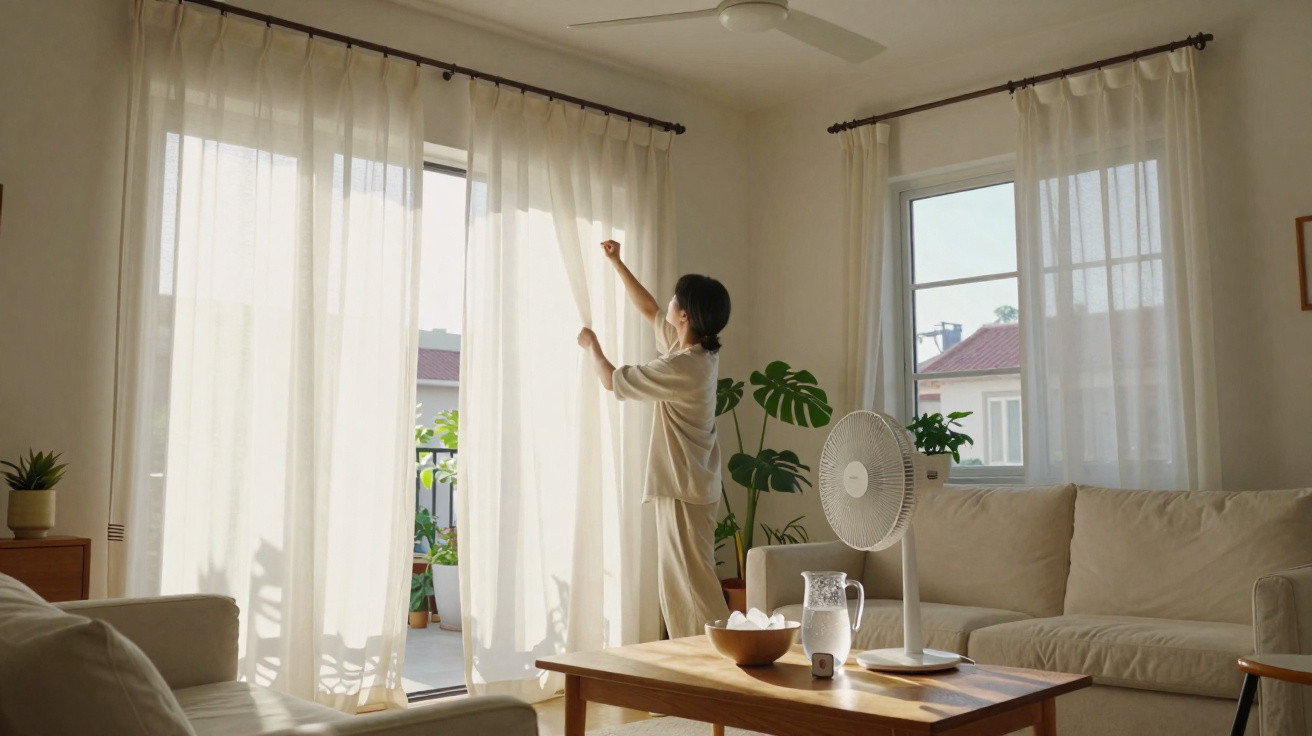
Imagine you’re dressing the house for the weather. Early on, before the sun gets high, close curtains, blinds or shutters on any window that receives direct light. Focus on the ones that turn glaringly bright when the sun hits them. Pull them fully down - not halfway. You’re aiming for shade, not “gentler sunlight”. Then, when the air outside becomes cooler than the air inside - usually late evening or very early morning - open everything up and let the place breathe.
The pattern is easy: shade + seal when it’s hotter outside; ventilate + flush when it’s cooler outside. Stick with this for several days during a heatwave and the change can be surprisingly big. Some people notice a 3–5°C drop indoors simply by timing windows and blinds properly. No gadgets. No magic. Just habits and timing.
This is where many of us slip up. We do it halfway. We pull the curtains a little, then forget. We open windows too soon because the air seems like it should be fresh, even though it’s 32°C outside. We leave a kitchen window on the latch “for a bit of air” and end up giving heat an easy way in.
Let’s be honest: almost nobody keeps this up perfectly every day. You oversleep, you dash to work, you don’t stop to think which side of the house catches the morning sun. That’s normal - so reduce the effort. Choose one or two priority zones, usually the rooms you actually use in the afternoon, and start there: the bedroom, the living room, the children’s room. That alone is enough to feel the difference.
If your blinds have slats, tilt them upwards so the light is directed towards the ceiling rather than straight onto the floor or sofa. If you’ve only got thin curtains, add an inexpensive reflective blind - or even hang a temporary white sheet over the sunniest window. It may not look great, but you’ll thank yourself when you’re less sticky later.
“The day I started treating my home like something I had to ‘dress’ for the weather, everything changed,” says Claire, 34, who lives on the top floor of a small apartment block. “I used to think it was just bad insulation. Turns out I was basically slow-cooking my own living room by letting the sun hit the same wall every afternoon.”
A quick mental checklist for when a hot day is on the way:
- Morning: close blinds/curtains on sun-facing windows before the heat peaks.
- Daytime: keep windows shut if it’s hotter outside than inside.
- Evening: once outside feels cooler, open opposite windows to create a cross-breeze.
- Night: leave safe windows open with fans facing out in one room and inwards in another.
- Next morning: close everything again before the sun and heat build back up.
Small tweaks that make the trick even stronger
Once you’ve established the shade-by-day, ventilate-by-night routine, a few small adjustments can make it feel almost like manual air conditioning. One of the easiest is to use fans with intent. Rather than blasting a fan at your face all day, put one in the hottest room facing out of a window to pull hot air out. Then, in a cooler room or on the shaded side of the home, use a second fan to push cooler air in.
If your local air is very dry, hanging a damp sheet in front of an open window can add a little evaporative cooling. Not glamorous, highly effective. Cold packs or frozen bottles placed behind a fan can create a small stream of cooler air. It won’t drop the room by 10 degrees, but sitting in that airflow while the rest of the home stays shaded can feel like you’re getting away with something.
More generally, light-coloured blinds or curtains reflect more heat than dark ones. Putting rugs over dark floors can reduce how much warmth those surfaces absorb. Even simple choices - like switching off unused lights and avoiding large appliances in the late afternoon - can gently push the indoor temperature in the right direction.
| Key point | Detail | Why it matters to you |
|---|---|---|
| Close by day, open by night | Block sun and heat during the hottest part of the day, ventilate when outdoor air is cooler | Can cut the indoor temperature by several degrees without air conditioning, using one simple daily habit |
| Manage window orientation | Prioritise windows in direct sun (east, south, west) with curtains, blinds or shutters | Maximises the “cool house” effect even if insulation isn’t great |
| Use fans intelligently | Create airflow (one fan exhausting, one bringing air in) and cool locally | Improves comfort without sending your electricity bill through the roof |
FAQ:
- What if I don’t have blinds or thick curtains? You can improvise with a light-coloured sheet, reflective car sunshades, or even cardboard on the sunniest windows. The goal is simple: stop direct sunlight hitting surfaces inside.
- Should I keep windows open all night? If it’s safe to do so, yes. That’s when your walls and floors finally cool down. If safety is an issue, prioritise early morning and late evening with a strong cross-breeze.
- Does this work in humid climates? It still helps. You might not get the same dramatic drop as in dry heat, but blocking sun and using night air smartly always makes rooms feel more bearable.
- Can indoor plants help keep a house cooler? A few won’t change the temperature much, but groups of plants near windows can provide light shade and slightly cooler, more humid air around them.
- Is it worth investing in reflective film for windows? On very exposed windows, especially those you can’t shade from outside, reflective film or thermal blinds can make a real difference across the whole summer.




Comments
No comments yet. Be the first to comment!
Leave a Comment