
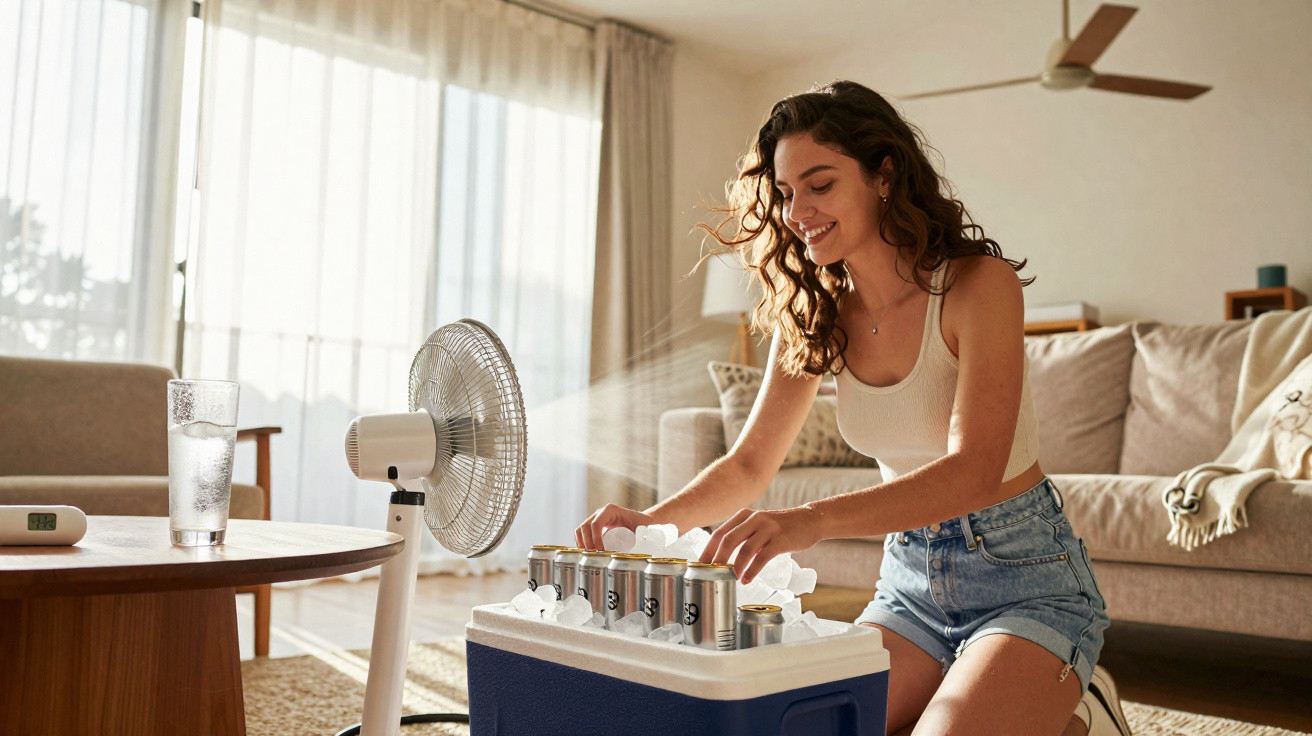
Coping with intense heat indoors without any cooling appliance can feel like a real ordeal on muggy days. That is why many people try inventive, low-cost fan tricks in the hope of cooling a small bedroom before going to sleep.
How does heat exchange with cans work?
The idea of attaching aluminium cans to the appliance is based on the metal’s ability to conduct heat. In theory, if the metal is cooled first, it could slightly lower the temperature of the air the fan pushes out, increasing thermal comfort for anyone struggling with sticky conditions in small spaces.
This sort of home hack is often sold as a major energy saver compared with the running costs of a conventional unit. Even so, it is important to understand the physical limits involved before assuming it will stand up to the hot afternoon weather.
Can you cool your home using almost no energy?
There is a very practical method that uses fully accessible materials to reduce the room temperature without increasing your… Read more
Does a home-made air conditioner actually work?
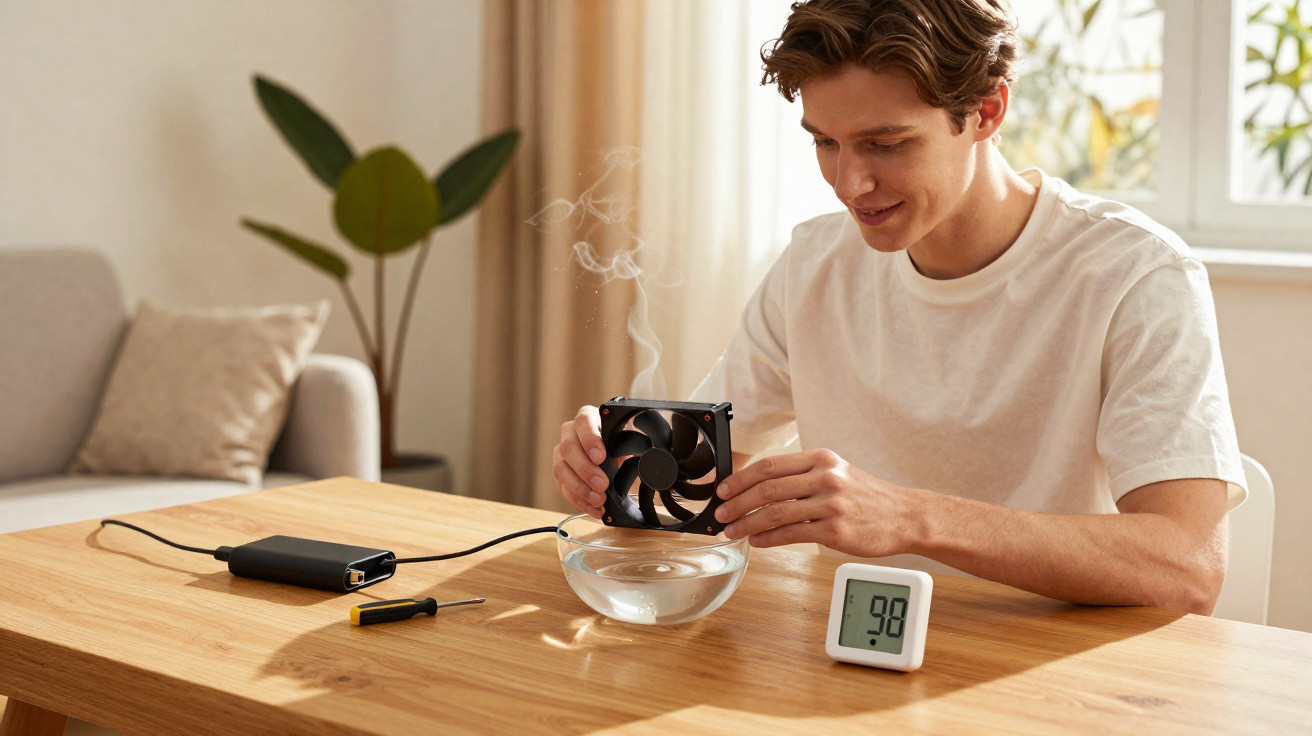
In practice, the results from a contraption that runs pipes into a box of ice are usually underwhelming. Tests indicate that the amount of chilled air these more complicated builds deliver is extremely small, with performance that is negligible against the ambient heat.
Even if the air leaving the pipes is a little cooler, the overall volume of cooled airflow is not enough to change the temperature of a small bedroom. As a result, spending time assembling these elaborate setups can end in complete frustration during periods of intense summer weather.
Below is a video from the Manual do Mundo YouTube channel that goes into more detail on this hands-on experiment:
What is the simplest alternative for cooling down?
For stronger results without the hassle, placing open containers of ice directly in front of the fan blades tends to work noticeably well. This straightforward approach puts the ice in the path of a constant airflow, helping cooler air spread quickly around a small bedroom.
Another option is to set plastic bottles filled with frozen water right in front of the unit, which can provide immediate, perceptible relief. This no-frills method beats complex constructions for practicality, delivering quick, uncomplicated refreshment to take the edge off the afternoon heat.
Home Cooling Kit
Materials needed
To put together this simplified system and ease that stuffy feeling, gather the following:
- A standard desk fan or pedestal fan;
- Plastic bottles filled with frozen water;
- A sturdy container to hold the ice.
How can you save energy with daily habits?
Using household appliances more consciously is the safest way to avoid nasty surprises on your monthly electricity bill. Small day-to-day tweaks can lead to a significant reduction in wasted power, supporting sustainability while delivering a clear financial benefit.
When buying new devices for your home, choosing models with a higher energy rating makes a real difference. This sensible decision provides strong operating results with lower consumption, tackling waste in a highly efficient way over the long term.
Adopt a few practical habits in your routine to optimise everyday energy use:
- Turn off lights when leaving empty rooms;
- Make the most of natural daylight;
- Spend less time in a hot shower.
Which actions prevent thermal waste?
Keeping doors and windows fully closed while coolers are running is essential to maintain system output. Otherwise, cooled air escapes quickly, forcing the motor to work twice as hard under heavy pressure and creating major waste.
It also helps to avoid opening the fridge repeatedly for no good reason, as this supports steadier electricity use. Small, consistent care when using appliances is key to maintaining good thermal comfort and achieving genuine savings in the household budget.




Comments
No comments yet. Be the first to comment!
Leave a Comment